Loading...
Loading...


Reportage on important issues around the world, from human rights to elections results, conflicts and geopolitical crises.
2018


2016


1998
Streaming availability information not available
2020
2020


2021
2022
2024
2021
2025

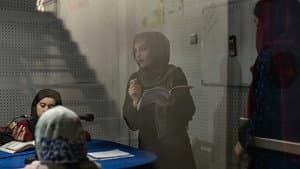
Since August 15, 2021, when the Taliban retook Afghanistan, Afghan women, silenced, have suffered a gender apartheid unique in the world. / Hindu Oumarou Ibrahim is a cartographer, activist, Fulani woman from the herding tribes of Chad. Faced with the scarcity of resources and deadly conflicts for their control, it launched a vast participatory mapping operation.

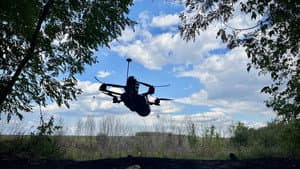
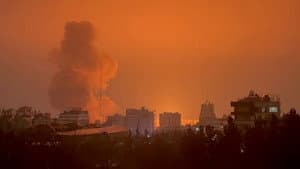
Between the reality of combat and video games, portrait of a young drone pilot on the Ukrainian front. Fifteen to twenty times a day, this soldier launches his kamikaze drones loaded with explosives and napalm on Russian positions. / Gaza: psychologists are on all fronts, with their patients and their own families.

Liberia, crushed by two civil wars, is today ravaged by kush, the undead drug. / In the middle of the Pacific Ocean, the island of Bougainville could become the youngest state in the world by 2027.

Presented by Andrea Fies from Harvard, Massachusetts, a special edition dedicated to the United States, with two reports: "Kentucky: Trump, against all odds" and "Colorado: migrants under pressure".

In Chile, water is becoming scarce, monopolized by artificial intelligence and its energy-intensive data centers. / Fifteen years after the Fukushima disaster, Japan is relaunching nuclear power, while old waste remains radioactive.

Tajikistan is the only Muslim country in the world to repress the signs of Islam, for strict secularism. / In Uganda, in a slum in Kampala, a film studio dreams of a glorious destiny in Hollywood.

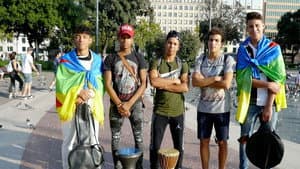
Embodied by Gen Z, Moroccan youth are mobilizing to demand social and economic reforms. / In South Africa, black children from townships are introduced to the violin to fight against social divides.

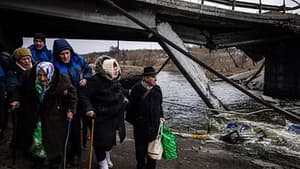
Georgia: as Moscow's influence grows, the population fears an authoritarian shift in power / Ukraine: ordinary hero, Konstantin is committed, at the risk of his life, to saving victims of the atrocities of war.

For years, the Assad regime's intelligence service took thousands of children of opposition members and made them disappear. Asma al-Assad was responsible for these crimes against children and their families. / ISIS in Syria took advantage of the fall of the Assad regime at the end of 2024 and the security vacuum in the first weeks afterward: its members spread throughout the country.

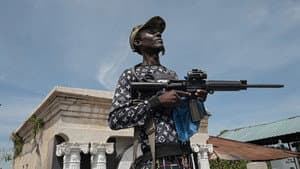
(1) The Coalition of Criminals: Criminal gangs turned Port-au-Prince into a war zone with thousands of victims, destroying entire neighborhoods and depopulating them. (2) Descent to Hell: The government of Haiti has lost control. In the capital, criminal gangs rule the population. More than 1.3 million people are on the run.
2026

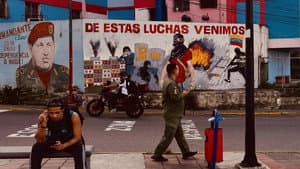
(1) Venezuela: Following the arrest of Nicolás Maduro by the US military and his indictment on charges of "narco-terrorism," the report shows his supporters and their reactions. (2) Somalia: After its failures in Iraq and Syria, the terrorist group Islamic State strengthened its forces on other continents, especially in Africa. Somalia is its stronghold.

(1) Donald Trump's Health Secretary and vaccine skeptic Robert Kennedy Jr. sealed his alliance with him during the 2024 election campaign with the founding of the MAHA (Make America Healthy Again) movement. (2) Since taking office a year ago, Donald Trump has deported over 100,000 Mexicans. This has had economic repercussions for many Mexican villages.

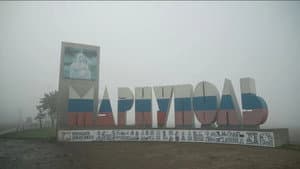
(1) Russia-Ukraine: The city of Mariupol in the Russian-occupied Ukrainian Donbas is being Russified by the occupiers. The Ukrainian heritage is to be eradicated. (2) Gaza: Desperate relatives are searching for their missing family members. Since October 7, 2023, the fate of more than 11,000 people remains uncertain.

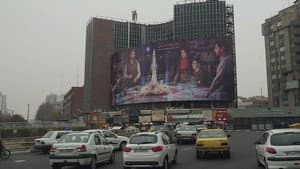
(1) Ten Days of Resistance: Journalist Kajin Azadi traveled to Iran in early January and returned with exclusive photos. His travelogue is a chronicle from the heart of the revolt, from Tehran to the north of the country. (2) No More Silence: Since the end of 2025, the population has once again been rising up against the rule of the mullahs. The authorities are responding with countless arrests, enforced disappearances, and summary trials.

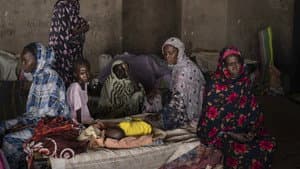
(1) Sudan: In El Fasher in Darfur, FSR militias killed 60,000 inhabitants in three days. The world's worst humanitarian crisis is simmering, triggered by a forgotten conflict. (2) Russia: Networked and under the yoke of propaganda, Russian youth wavers between patriotism and apathy.

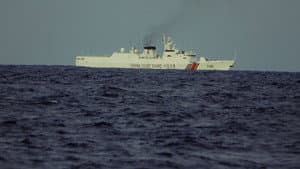
(1) China - Philippines: A bitter struggle is underway at sea for every island and reef in the South China Sea, with warships on a collision course, shipwrecks, and likely soon, fatalities. (2) Japan: In Tokyo, a 74-year-old retired Yakuza founded a softball team to help young criminals leave organized crime.

(1) Ukraine: February 24, 2026, marks four years since the start of the Russian invasion of Ukraine. Putin had not anticipated the fierce resistance from Ukraine. (2) India: They wanted to find well-paid work, but ended up in war: Around 20,000 foreigners fought under the Russian flag in Ukraine.

(1) USA: The killing of Renée Good and Alex Pretti by ICE officers acted as a brutal wake-up call for many people in Minneapolis. (2) Gaza: The report provides insight into Israeli prisons where Palestinians are held in inhumane conditions.

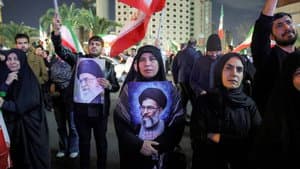
(1) Iran: In the first days of this war, many Iranians cheered, some even openly in the streets. Those loyal to the mullah regime, however, protested against the attack by the US and Israel. (2) India - China: For decades, parents in India and China only wanted sons; girls were aborted, abandoned, or sold. This has been changing for some time now.

(1) Colombia: Drug cartels are increasingly recruiting minors as contract killers. In 2024, more than 200 minors stood trial for murder in Colombia. (2) Argentina: Budget cuts and staff reductions under President Milei are jeopardizing the rescue of the Riachuelo River in Buenos Aires.

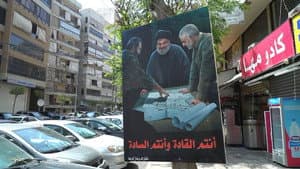
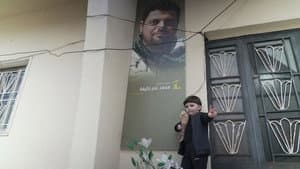
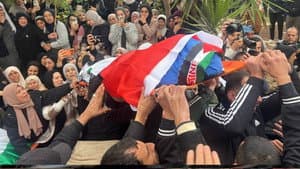
(1) Iran: ARTE reporters secretly film the daily lives of people in war: In Tehran, a young woman reflects on her future and that of her country. (2) Lebanon: Hundreds of thousands of followers of the Shiite movement felt like "orphans" when their leader Nasrallah was killed in Israeli airstrikes.
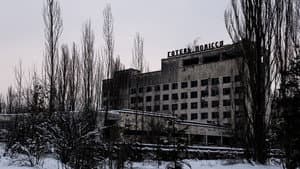
(1) Ukraine: Since 1986, the name Chernobyl has been a reminder of the nuclear reactor explosion. Today, it stands beneath a concrete sarcophagus – threatened by Russian drones. (2) Chile: The cooling systems of data centers are extracting so much water that the swamps near Santiago are drying up, the groundwater level is dropping, and farmers are being forced to emigrate.

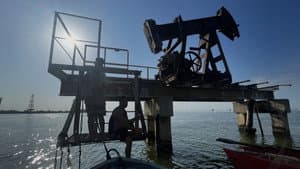
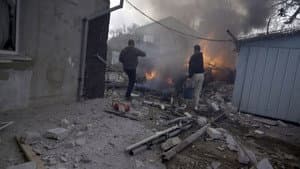
(1) Venezuela: The population finds hope under Maduro's successor, Delcy Rodriguez, tolerated by the US. (2) Lebanon: Since the start of the war on March 2, 2026, a quarter of the Lebanese population has fled. (3) Lebanon: Nahida Choobi and her family lived as displaced persons for a year and a half. When the family returned, their village lay in ruins.

(1) Russia: A central tenet of Putin's domestic policy is to defend traditional values against the corrupt West. This includes promoting families and striving for high birth rates. (2) Syria: For years, the Assad regime's secret service systematically made thousands of opposition children disappear.

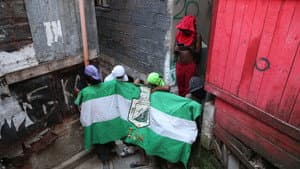
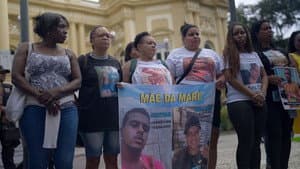
(1) Brazil: Across Brazil, 6,000 people die every year during police operations; most are young Black men from the slums. (2) Iraq: In Mosul, the church bells are ringing again. The Al-Tahira and Mar Toma churches, icons of Eastern Christianity that had been destroyed by ISIS, have been restored and reopened.

(1) Cuba: With the arrest of Venezuelan President Maduro by the US, Cuba lost an ally and thus also the supply of Venezuelan oil, which covered half of its needs. (2) Argentina: The Andean condor has been on the Red List of Threatened Species since 2020. Argentine biologist Luis Jácome is trying to save it.

(1) Japan: A tsunami warning was enough to revive the trauma of March 11, 2011, and the fear of another meltdown at the Fukushima Daiichi nuclear power plant. (2) Bhutan: Along with Panama and Suriname, it is one of only three countries in the world with a negative carbon balance. But now, its glacial lakes are threatening to overflow as a consequence of climate change.

(1) Ukraine: Anastasia’s father, Oleksandr, spent nearly three years as a prisoner of war in Russia. Thanks to a prisoner exchange, he finally returns home in 2025. Eight months later, he dies of a heart attack. (2) Russia: Hundreds of thousands of Russians have been fighting in Ukraine since February 2022. People who have spent a long time at war are changed forever.

(1) Greenland: Donald Trump wants to annex Greenland for the USA, but they are resisting: The peaceful struggle of Inuit women for their identity. (2) Cambodia: Brick factories fuel Cambodia's construction boom. As a result, workers held in debt bondage toil day and night in these brick factories.

(1) Kyrgyzstan: Driven by fear, Jama Bekten organized what may be the last demonstration – only a few women gathered to defend their rights in a state undergoing an authoritarian transformation. (2) Colombia: Drug cartels are increasingly recruiting minors as contract killers. In 2024, more than 200 minors stood trial for murder in Colombia.

(1) Ukraine: In April 2026, reporter Edward Kaprov lived for two weeks with the remaining residents of Kherson – under daily attack from Russian drones. (2) Kazakhstan: In the vast halls of the cosmodrome, old Soviet rockets and spacecraft serve as reminders of the race to the moon between the USA and the Soviet Union.

"As a journalist, I tell other people's stories. For the first time, I tell my own." Beirut, March 2026: As Israel launches a new military campaign in Lebanon, Lebanese filmmaker and journalist Wissam Charaf reflects on how decades of conflict shaped his childhood, family and life in this powerful first-person account.

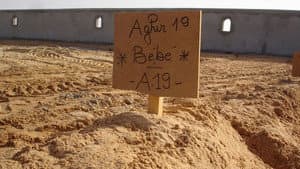
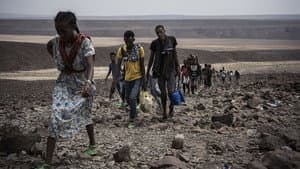
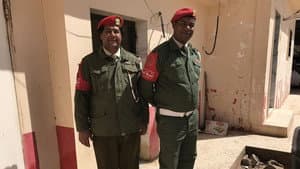
(1) Mexico’s Cartels: An End to Impunity?: On February 22, 2026, Nemesio Oseguera Cervantes died during a Mexican Army operation supported by the US. Mexico and the US aim to break the power of the cartels. (2) Libya: The Trap for Migrants: EU countries pay large sums of money to Libya so that its security forces intercept as many migrants heading toward the EU as possible, even though the methods used are controversial.

(1) West Bank: Violence escalated in 2025: 58 minors were killed, a sad record. The Israeli army as well as the Israeli police do not wish to comment on the tragedies. (2) Lebanon: Nahida Choobi, Ahmad, and their children fled Naqoura once again. After bombardment and destruction, they fear they may never be able to return home.