Loading...
Loading...


Sacred mountains, biodiverse reef areas, or active volcanoes – in Asia's national parks, people and animals often share the same habitat. But how can this fragile ecological balance be preserved while simultaneously ensuring a secure future for the local population? This documentary series showcases dazzling natural landscapes and portrays the people who are finding their place within them.
Streaming availability information not available

2014

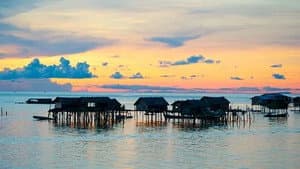
Off Borneo, Tun Sakaran Marine Park protects one of the world’s richest reef systems, formed by a volcano and home to hundreds of coral and fish species. Protection has forced coastal communities, like the stilt‑dwelling Sama Dilaut, to seek new livelihoods; fishing is banned on some reefs. Only with protection can fish recover and repopulate legal zones. Some families now run seaweed farms; farmers may settle on green isles if they avoid deforestation. Island groves are guarded by local beliefs in forest spirits, whose warnings farmers heed to preserve nature.

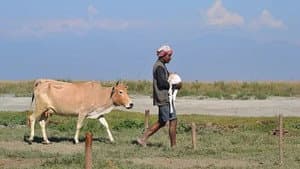
Kaziranga National Park in Assam, a UNESCO site, shelters royal tigers, Asian elephants and the world’s largest wild water‑buffalo population. Human settlements, a busy southern highway, rice fields and tea plantations fragment habitat; blocked elephant routes cause raids on crops and villages. Poaching endangers the Indian one‑horned rhino. Protector Raju Kutum cares for orphaned elephant calves at a rescue center and educates locals. The Brahmaputra forms Kaziranga’s north; sandbar cattle farmers rely on valuable offspring sired by swimming water buffalo, yet tigers that cross the river often kill their livestock.

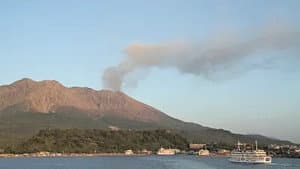
Each autumn Shinto priest Hirose climbs Unzen on Kyushu to bring down the deity for the festival and appease the volcano. Unzen - once deadly - now lies within a national park, feared and admired. Photographer Takehito Miyatake drives ten hours monthly to capture Sakurajima’s constant ash eruptions. Farmers exploit fertile volcanic slopes for rice; noodle makers and hot springs create local delicacies. Fisherman Michihiro Harada harvests mudskippers in the ash‑rich Ariake Sea. Mudskippers, crabs and monkeys have adapted to life in the volcanoes’ shadow.

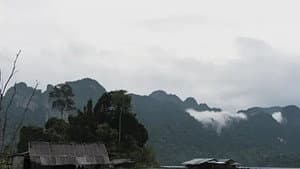
Khao Sok’s ancient rainforests in southern Thailand shelter diverse wildlife. Jo, chief biologist for the region, surveys bat species - capturing them is dangerous and bites can cause serious infection. New species turn up regularly; Jo hopes to find a new bat. A reservoir fragments elephant habitat, and Jo seeks ways to reconnect populations. Limestone karsts extend to the southwest coast and into the Gulf, where cave‑dwelling white‑nest swiftlets produce prized edible nests harvested at great risk. Jo and his team patrol Khao Sok to count elephants; the park’s beauty belies the harsh effort required to live with nature.

The forests of Fanjingshan National Nature Reserve in Guizhou are intact, protected by director Yang Yequin, who will soon leave his research role. Successor Nui Kefeng installs surveillance cameras to study the remaining about 700 Guizhou golden monkeys - researchers expect a surprise. About 1,000 km northeast, Tianzhu Mountain in Anhui hosts the 400‑year‑old Jidi An nunnery, currently building a new hall for its large golden Buddha. At Fanjing’s foot, a blue pond is famed as a rejuvenating spring; nearby papermaker Yang Heping still practices his craft. Life on Tianzhu has steadied; the abbess prepares to travel to Mount Fanjing despite her fear of heights, drawn by the summit’s promised view.
2018

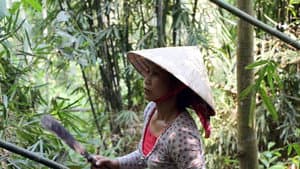
The jungles of northern Vietnam are virtually impenetrable, and some areas have never been entered by a human being. These remote rainforests near the Laotian border have become the refuge of Vietnam's few remaining wild Asiatic black bears. Tuan, a biologist and specialist in bears and monkeys at Pu Mat National Park, embarks on an expedition to the park's pristine valleys and mountains to explore how the bears living there can be better protected.

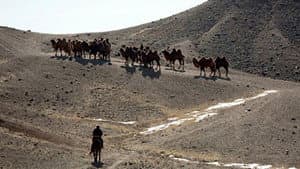
The Great Gobi National Park in southwestern Mongolia is one of the last refuges for wild camels. Camels ensure the survival of the Navandoorji family – which is why father and son embark on the arduous journey into the Gobi Desert to find a lost camel foal. The nomad Jangaa breeds camels but can't find a successor. Therefore, he has specialized in camel polo. Surendjav's daily life is quite different – she harvests salt in the desert. Farmer Erdene wrests every drop of water from her so he can even harvest onions. The Gobi Desert is harsh and inhospitable. And yet, no one can escape its magic. The film tells captivating stories of people whose lives are inextricably linked to this awe-inspiring natural world.

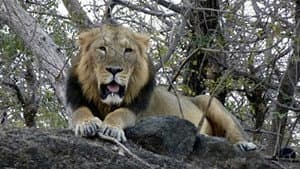
In the far west of India live big cats that one would least expect to find in Asia: lions. Asiatic lions were nearly extinct 100 years ago, but today their population is growing again in Gir National Park in the state of Gujarat. They live freely and without fences in an area also inhabited by humans: the Maldhari people live in small settlements of mud huts and raise buffalo, which they let graze on the Gir plains during the day. Lions repeatedly attack the Maldhari's most valuable possessions, but the indigenous people remain calm.

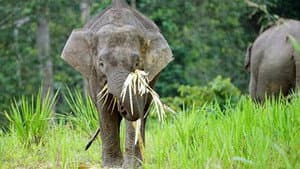
The Kinabatangan River flows through the Malaysian state of Sabah in northern Borneo. For 560 kilometers, it winds its way through jungles and mangrove forests. Orangutans, elephants, crocodiles, and proboscis monkeys live there. But this biodiversity is threatened: More and more rainforest is being cleared for palm oil plantations. In search of food, wild animals are increasingly crossing into populated areas. The local people are fighting to preserve the rainforest and its unique wildlife.

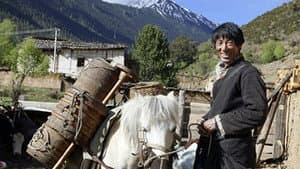
A portrait of the Baima Snow Mountains Nature Reserve in the foothills of the Himalayas in China's Yunnan Province, bordering Tibet. Politically, the area belongs to China, culturally to Tibet. The region is one of the last refuges of the very rare black snub-nosed monkey. They are protected by rangers who constantly monitor the population. Mushroom hunters search for the so-called "Gold of the Himalayas," the tiny caterpillar fungus called Cordyceps. It is said to have anti-cancer properties and strong aphrodisiac effects. A kilogram of Cordyceps fetches about $20,000 on the world market. At the Tibetan Dongzhulin Monastery, monks learn the art of debating and are committed to animal conservation by searching the nature reserve for animal traps set by poachers. Yaks, which graze in the high mountains during the summer, are the most important source of livelihood for the inhabitants of the Baima Nature Reserve.