Loading...
Loading...


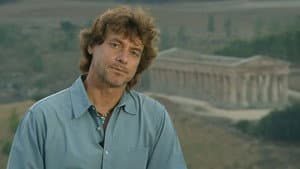
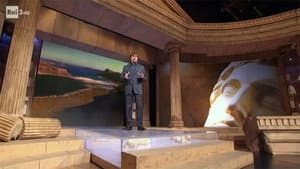
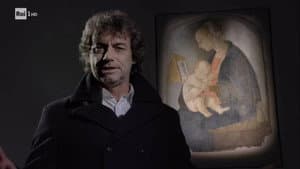
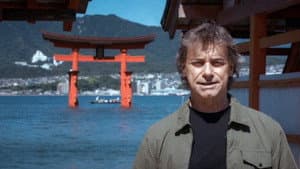
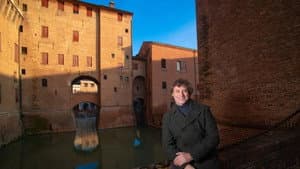
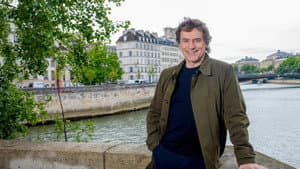
Alberto Angela leads the dissemination program dedicated to history, art and culture. A historical, archaeological, informative story, with the presence of some protagonists of the Italian cultural or artistic scene.
2003

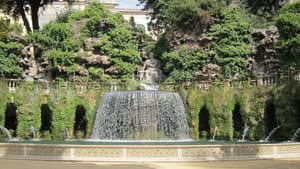
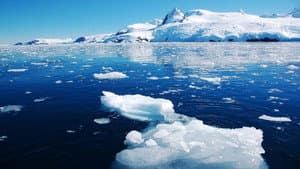
The protagonist of this episode is water: through a story that will take us from the origins of life on Earth to biology, from engineering to molecules and art. With the help of graphics we will be able to simulate a journey inside a drop of water to discover its composition and microorganisms. We will then follow the long paths taken by water, through extraordinary images of glaciers, caves, oceans, atolls, icebergs, discovering how rivers are born, how raindrops are formed. We will also discover the effects that water produces in our body and how much we need for our survival. Alberto Angela will go to Villa d'Este in Tivoli to show us the works of artists and architects who over the past centuries have created an immense complex of water features and fountains on an entire hill; and again at Niagara Falls, where we will be able to admire one of the most magnificent spectacles that exist in nature.

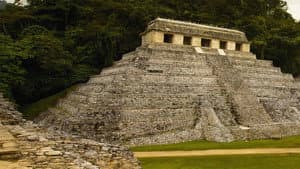
In this episode, Ulisse will make an exciting journey among the very first civilizations that appeared in Central America, long before the arrival of Columbus, the Olmecs, the Maya, the Aztecs. The famous heads carved in rock have come down to us from the Olmec people and what amazes and still remains an unsolved mystery is how the Olmecs managed to create these amazing sculptures and, above all, to transport the colossal blocks of rock that they used; we will follow the experiment of an English team that attempted to transport a boulder weighing between 10 and 20 tons and create, using only archaic techniques, a copy of a gigantic head.


In this episode we will explore one of the most important but also one of the most enigmatic chapters of history: the fall of the Roman Empire. Why did Roman civilization in Europe become extinct after a thousand years of splendor, giving way to the Middle Ages? Was it just because of the barbarians or were there other reasons? It all happened within a very few generations and yet it influenced centuries of European history, up to the present day.

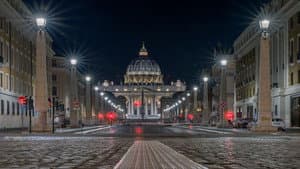
In this episode, Ulisse will explore places of extraordinary beauty, where absolute masterpieces created by the greatest artists of the past are kept: the Vatican Museums. With Alberto Angela we will have the opportunity to admire works of inestimable value collected by the Popes or directly commissioned by them; we will visit the splendid environments where popes, cardinals and ambassadors have followed one another for centuries and where we could have met artists such as Raphael, Michelangelo, Leonardo da Vinci. It will also be an opportunity to talk about the lives of these artists and the historical events linked to the creation of their works.

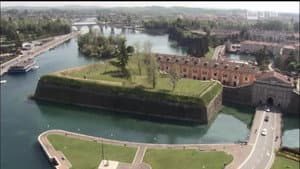
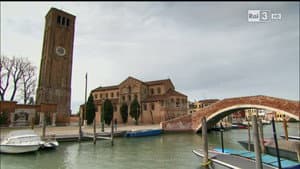
Ulisse will dedicate this episode to Venice and in particular to a period of history in which the city was the first economic and military power in Europe, capable of reigning over the Mediterranean, of dominating maritime trade, especially with the East, and even to fight against the expansion of the powerful Ottoman Empire. Venice has its roots in the Middle Ages, in fact it was between 1200 and 1300 that it experienced its first great development, thanks also to the spirit of initiative of merchants, bankers, navigators and men of ingenuity. We will go to the Arsenale, that is, the place where the strength of Venice originated and where ships were designed and built; through exceptional graphic effects and filmed reconstructions we will discover the manufacturing techniques of the galleys, the activity of the workers inside the Arsenal, life on board.
2004

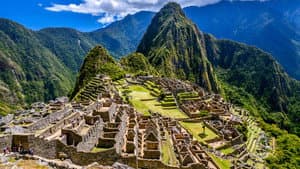
Ulisse will make a long journey through the extraordinary scenery of Peru, to discover one of the most important civilizations of the past: the Incas. Alberto Angela will travel to the heart of the Andes, to let us discover some of the most beautiful archaeological sites on the planet and to tell us about the habits, customs and rites of the Incas. We will get to know Machu Pichu and, through graphic reconstructions, we will see how it must have looked 5 centuries ago. It was a city full of life with temples, palaces, sanctuaries, homes. We will talk about deities and human sacrifices, healing methods, writing systems and, thanks also to filmed reconstructions, we will discover some aspects of daily life. Alberto Angela will also travel to Cuzco, where the most important temple of the Incas stood and where the Spanish built the church and convent of Santo Domingo.
Ulisse will retrace some of the most extraordinary moments in the history of Homo Sapiens. We will discover how he was able to survive in extremely difficult conditions and how, despite adversity, he was able to give birth to what was perhaps the greatest revolution in human history: agriculture. Alberto Angela will show us objects and finds that have marked the long odyssey of Homo Sapiens and, through these, he will tell us how he hunted, how he tanned skins and how he sewed them. We will discover which animals populated the planet, such as the saber-toothed tiger and the flat-headed bear. We will follow the evolution that occurred in human history with the birth of agriculture and animal breeding.

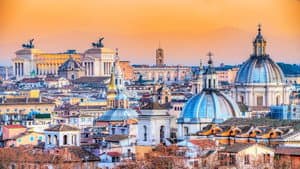
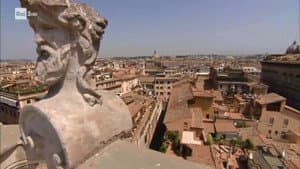
Piazza di Spagna, Trinità dei Monti steps. Without a doubt this is one of the most beautiful places on the planet, millions of visitors come every year from all over the world to admire this but also many other masterpieces scattered throughout the eternal city, masterpieces of art, architecture and sacred art. But how were Piazza Navona, the Trevi Fountain, the mouth of truth born? What stories are behind it? We will try to find out in this episode, in fact we will take a journey to discover the wonders and secrets of Renaissance and Baroque Rome, when the eternal city for a few centuries was the capital of man's genius and creativity, but we will do it in a special way . We will return to those centuries, back in time, and follow some very particular travellers.

Ulisse will dedicate this episode to the First World War, making us relive one of the greatest tragedies of all time which cost the lives of millions of men. It was a different war from those that had preceded it. Together with conventional weapons and traditional warfare techniques, new technologies took to the field, increasingly powerful and increasingly ruthless: the machine gun, the first tanks, submarines up to perhaps the most frightening weapon of all, gases and chemical warfare. Alberto Angela will go to the trenches of the Carso and to the tunnels of Monte Sabotino where thousands of soldiers died between 1915 and 1918 and, directly from the places where the fighting was fought, he will tell us the motivations and the most salient episodes of this war; where the soldiers came from and how they were recruited, their life in the trenches, their anxieties, survival strategies, the weapons used and fighting techniques.

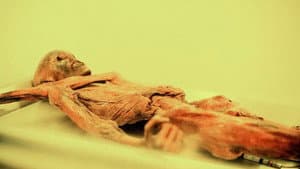
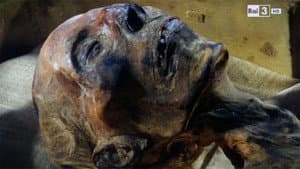
Why do people get mummified? In general, behind all mummies there is a long history. It is man's challenge at the time, the attempt to preserve the body at all costs, even after death. A challenge that has no age and that starts from very distant times. We will take a journey into this challenge. We will talk about mummies, of course, about civilizations from different eras, but not only that: we will try to discover everything that man has implemented over the millennia to save his image, even today. In short, we will take a journey in what can be called the search for immortality.

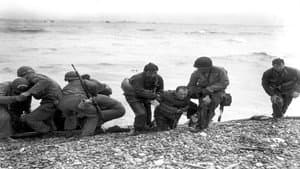
Ulisse will dedicate this episode to an event that changed our history: the Normandy landing, reconstructing that memorable day of 6 June 1944, which represented the great turning point of the Second World War. Alberto Angela will travel to the same places where the landing took place, the French coast of Normandy, to give us the opportunity to relive that extraordinary day and to tell us how the operation was born and the enormous effort made to put it into practice feet that colossal war machine. We will see what happened through images of the time, shot by war operators, through the testimonies of soldiers who participated in the landing and also thanks to a film that the BBC made specifically to mark the 60th anniversary of the landing.

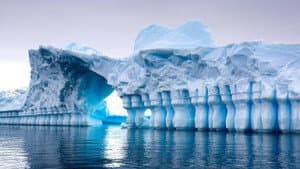
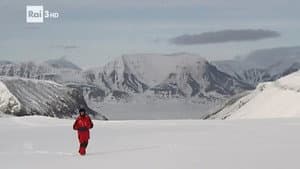
In this episode we go to one of the most remote places on the planet, near the Svalbard Islands, where the pack ice begins that leads directly to the North Pole. On our planet there are many inhospitable regions where man has always preferred to avoid because they are hostile, but on these frozen expanses, even for thousands and thousands of years, no human being has ever dared to venture because they are decidedly unlivable.

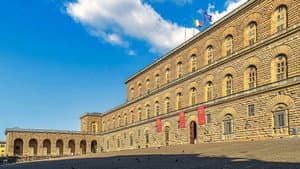
This evening we will talk about a beautiful city that the world envies us: Florence. It is precisely in its streets and buildings that in the 1400s that extraordinary phenomenon took shape, destined to bring about an essential turning point in art and culture: the Renaissance. And it is a story intertwined in an almost intimate way with that of a large family: the Medici. In particular with Cosimo and Lorenzo known as the Magnificent. It was they who transformed Florence, who gave it this economic miracle and this explosion of creativity.
2007
Rome. A capital of two, three million inhabitants with all its palaces, its churches, its monuments, but what is underneath all this? What can you discover by going under churches, palaces but also under very famous places such as Piazza Navona, Piazza di Spagna or even the Trevi fountain? Well, there lies a forgotten world made up of archaeological sites, ancient tombs, surprising sites. It will be a real journey to discover the secrets of Rome.
Lakehurst, New Jersey, United States. Exactly 70 years ago an event occurred that was destined to profoundly affect public opinion around the world for generations. It was seven in the evening on May 6, 1937 and photographers, operators, journalists, even onlookers, were waiting for the arrival of the largest flying machine ever built by man, an immense airship, as long as an ocean liner. It came from Europe, had flown over the entire Atlantic Ocean and was about to land.
Krakatoa, Indonesia 1883 and Mount Saint Helens, United States 1980. Two of the scariest eruptions in history, gigantic, destructive. Both caused by volcanoes that had remained inactive and silent for a long time and then suddenly exploded as if they were immense deposits of dynamite. And this is what happened with Vesuvius, when it erupted in 79 AD, devastating Pompeii and Herculaneum.
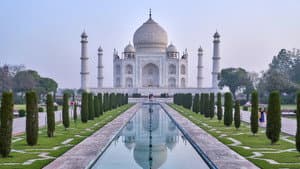
In this episode our journey will explore a world that is never spoken of and which in reality constitutes the border between life and death. For it, man has created extraordinary works, such as very precious tombs, but also gigantic monuments such as the pyramids or the beautiful Taj Mahal, in India. Or he buried some priceless treasures. It is something that spans millennia and that ultimately unites very different cultures and civilisations, something that often leaves subsequent generations with true masterpieces of human genius, in memory of the greatness of an era, of a man, or of an entire civilisation. : they are the large tombs.
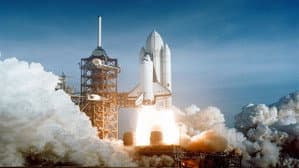
Cape Canaveral, Florida. Right here on July 16, 1969, at 9:32 in the morning, the Saturn 5 rocket took off, bringing men to the Moon for the first time.
The Kingdom of the Two Sicilies, a chapter in the history of pre-unification Italy in many ways surprising and little known. In fact, among all the Italian Kingdoms, that of the Two Sicilies was by far the largest, richest and most populated. Almost 10 million people, that is to say one in three inhabitants of our peninsula, lived under the aegis of the House of Bourbon. And Naples was the heart of this kingdom: it was one of the largest cities in Europe, second only to Paris, the fifth in the world, a destination for scholars and travelers of the time. In this episode we will discover why the Bourbon kings, as loved and respected sovereigns, were then fiercely fought by their people and why their kingdom, rich in economic records, technological achievements and cultural treasures, has gone down in history as a closed and retrograde world , responsible for the evils that still afflict our south.
The Bank of Italy. One of the most prestigious, important and serious institutions in our nation. This institution, so fundamental to the functioning of our country, has within it one of the most protected and inaccessible places. A place that truly holds something that represents the wealth of Italy: our gold reserve.
2014
In this episode, Alberto Angela proposes a singular journey among the hidden surprises of Rome. "The fourth day" is what tourists always miss. Travel agencies reserve a short time for visiting the city, just three days. In this way many wonders of the capital, suggestive and fascinating like the famous ones, remain hidden. Alberto Angela "reveals" the fourth day, so to speak, hunting for the masterpieces hidden for centuries in the eternal city. Password: what's beyond that facade?

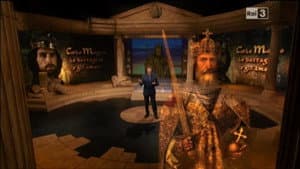
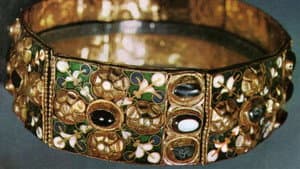
Alberto Angela invites us on an extraordinary journey in the footsteps of a protagonist of history, a man who many consider the father of modern Europe: Charlemagne. We are surprised by the many adventures of the famous ruler, discovering his conquests, his life and his countless loves. Through his events we also discover how daily life took place in the Middle Ages.
Alberto Angela will take you on a spectacular journey towards the great north: from Denmark to Norway, beyond the Arctic Circle. It is Scandinavia, where the climate and an environment much more extreme than the gentle temperatures of the Mediterranean have produced peculiar pages of history.
In this episode you will discover precautions that are within everyone's reach but which some populations or groups have always practiced with extraordinary results. The same behaviors that have recently attracted the attention of doctors and researchers who study the mechanisms of aging. We will talk about nutrition, we will try to understand which type of movement is best suited to keeping us fit over the long distance and much more. The journey will start from the islands of Okinawa, Japan; we will discover how well-being arrived on these islands just a few decades ago and those who are now elderly have led a spartan existence for a good part of their lives, often marked by periods of enormous difficulty. Yet, those very elderly people seem to have slowed down the effects of old age. In these islands people live for a long time, but above all the diseases typical of old age are rarer.
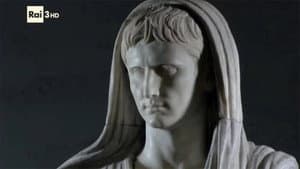
In this episode of "Ulisse, il piacere della scoperta", Alberto Angela tells us the story of Gaio Giulio Cesare Ottaviano, better known as Augusto, the man who changed history, transforming Rome from a Republic into an Empire.
The most impressive military landing in history: 160 thousand soldiers, 11 thousand planes and almost 7 thousand boats of all types: it is D-Day, the longest day. Thousands of young American, English and Canadian soldiers wrote one of the most important pages of the Second World War. As the pale light of dawn spread over the English Channel, the largest amphibious invasion force ever assembled up to that point landed on the coast of Normandy: it was June 6, 1944. “Ulisse” reached these ex-boys in their homes: in France, in England, in the United States but also in Germany, where Alberto Angela met, among others, the young German sentry who on the night of the operation, on the famous Pegasus Bridge, spotted the first Allied soldiers and shot into the air , the first flare.
What do we know about our dogs and cats? Do they understand us more than we understand them? Ulisse dedicated an episode to discovering our best friends.
Ulisse will go to explore the sea, that immensity of water that allowed life to be born and evolve on our planet. An event that will not simply be dedicated to the sea, but above all to the relationship between man and the sea, which began at the beginning of the adventure of Homo Sapiens, and has never been interrupted. So Alberto Angela will be in Genoa, the maritime city par excellence, between the Galata Museum of the Sea, the very rich Aquarium and much more, to retrace the stages of this very long and fascinating human adventure, in its historical and scientific implications. A journey that will develop in two directions: horizontally, exploring the surface of the sea, to learn about the forces that animate it within, the titanic energies capable of moving immense masses of water. And then vertically, into the blue vastness of the sea to get to know the infinite variety of species that populate the oceans, going further and further down, until reaching the bottom of the abyss.
2008
Dr. Christiaan Barnard was a South African cardiac surgeon famous for performing the first successful human heart transplant in 1967. This pioneering medical procedure revolutionized cardiac surgery and made him a prominent figure in medical history.
Alberto Angela visits the Egyptian Museum in Turin and talks to us about the ancient Egyptian civilization through the precious finds contained in the museum. Exploring the rooms you go through the entire history of ancient Egypt and you can see great treasures, mummies and ancient statues. The Egyptian Museum of Turin, after that of Cairo, is the most important museum in the world dedicated to this civilization.
The protagonist of the episode is a 324 meter giant that has dominated the panorama of Paris since 1889 and has now become the symbol of an entire nation: France.
The journey we will take in this episode will make us discover one of the most fascinating and farthest lands from Italy: Patagonia. We will cross half the American continent, practically all of Argentina, from the Tropic of Capricorn to the famous Tierra del Fuego, literally the end of the world.
The journey of this episode will take us through millennia of history to discover the greatest civilizations of the past and above all the masterpieces they have left us. We will do this by exploring one of the largest archeology museums in the world: the British Museum in London.
The episode will be very special: it will take us into the world of the invisible. In fact, what our eyes can see is only part of the world around us. Just think for example of the infinitely small, where among other things surprising, sometimes monstrous beings live, even on our skin. Or just think of the infinitely large: at night the stars appear to us only as small bright dots, yet up there in the universe there are fantastic, extraordinary landscapes that our generation is able to admire for the first time.
An unusual journey into the human body reveals an intricate world of organs, tissues, and cells. Through microscopic examination and an understanding of biological processes, we discover how the human body functions, with its intricate systems that sustain life.
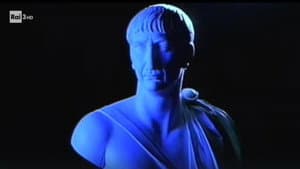
Alberto Angela takes us on a journey to the borders of the Roman Empire to narrate the moment in which the latter reached the peak of power and expansion with the conquest of Dacia. An exciting story, which has changed the destiny of millions of people over the centuries, pointing the compass towards a specific era: that of Emperor Traiano, of whom this year marks the anniversary of his death which occurred 1900 years ago.
2018

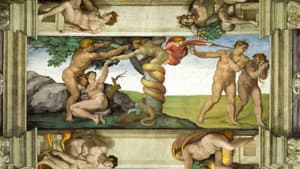
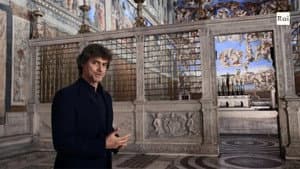
Alberto Angela accompanies viewers to discover the adventurous events of a place fundamental to history, art and Christianity. A living place, not just a splendid museum. Starting from the heart of the Vatican, and then moving to Florence and London, Alberto Angela will recall characters, stories, ideas of a historical period that has so far had no equal: the Renaissance. A true journey through history, to discover the lives of the protagonists who have linked their names to the Sistine Chapel: artists such as Michelangelo, Raffaello, Botticelli, Perugino and popes such as Sisto IV, Giulio II and Leone X. Together with Alberto Angela Gigi Proietti, who will give voice to the great protagonists of the past by recounting the work and genius of those who contributed to the birth of one of the most spectacular places in the world.

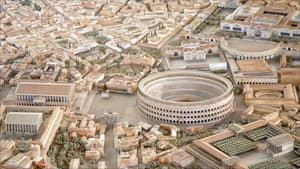
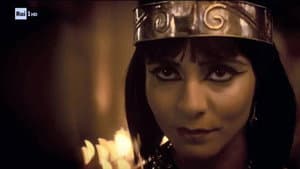
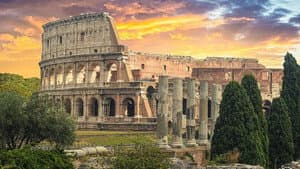
This second episode of the series will be dedicated to one of the most famous and fascinating female figures in history: Queen Cleopatra. Alberto Angela will guide viewers on a real journey through time to discover the world at the time of Cleopatra, describing the fundamental stages of her existence and those events that changed the destiny of history forever, contributing to the birth of the great Roman Empire . No woman of the ancient world exercised such a strong seduction on her contemporaries, as well as on posterity, as Cleopatra: the last ruler of the powerful Egyptian dominion. Starting from the Colosseum, symbol of Roman civilisation, crossing ancient Egypt and ancient Rome and stopping at the Egyptian Museum in Turin, Alberto Angela will reconstruct the life and history of the last queen of Egypt, a woman whose existence has marked the fundamental transition between the end of the Roman Republic and the birth of the Empire.

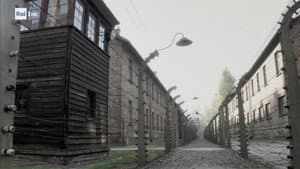
The episode of Ulisse: il piacere della scoperta, by Alberto Angela, is dedicated to the story of one of the most shameful events in the history of our country: the roundup of the Jews in the Rome ghetto which took place on 16 October 1943. It all began with the laws racial groups, which from one day to the next had deprived thousands of Italian citizens of many rights and freedoms simply because they were Jews. And it ended with the extermination camps from which very few had escaped after experiencing all sorts of horrors. Alberto Angela will tell the story of the events in the same places where the tragic events took place. The strong point will above all be the direct testimony of those who escaped death in the concentration camps, certain that listening to their voice will be a renewed opportunity for reflection, analysis and knowledge for viewers. Among the testimonies is that of Senator Liliana Segre.

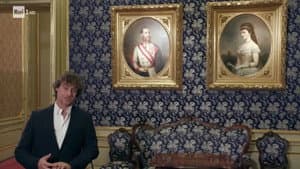
Alberto Angela presents a new episode of "Ulisse, il piacere della scoperta", the program dedicated to history, art and culture. This fourth episode of the series will be dedicated to Empress Elisabeth of Austria, better known as "Princess Sissi" thanks to her films played by the unforgettable Romy Schneider. Retracing the life of this fascinating and controversial historical figure, Alberto Angela will guide viewers on a journey through the sumptuous court palaces of the Habsburg dynasty. From her marriage to Emperor Franz Joseph in Vienna until her dramatic death in 1898 in Geneva at the hands of an Italian anarchist, Sissi was for many a symbol of female independence in a century of great social transformations. Her rebellious nature, in contrast with the rigid conventions of the court, foreshadowed the end of the old world decades in advance.
2001
The Cairo museum is one of the most extraordinary places in the history of humanity: it houses the treasures of the Pharaohs. Thousands of objects recovered from the tombs: jewels, statues, works of art, sarcophagi. A priceless heritage that tells the story of almost three thousand years of Egyptian civilization. It is at the Cairo museum that Alberto Angela will be found to guide us on this journey into ancient Egypt: not only discovering the most precious objects of the Pharaohs (and their own mummies), but taking us to the most impressive places discovered by archaeologists. Thanks to special permits, Ulysses' crew was able to enter the tomb of Queen Nefertari, forbidden to cameras, to film the almost intact frescoes of this queen, Ramesses II's beloved wife. At night, the crew also entered the Pyramid of Cheops, showing the charm of these places.

Ulisse tells the story of life on Earth. An exciting story, which scientists are slowly reconstructing. Alberto Angela will be in the famous Natural History Museum in New York, where millions of exhibits on evolution are collected: from meteorites to the first living forms, to mammals, passing naturally to dinosaurs. He will show the immense dinosaur skeletons displayed in the museum and the work of researchers both in the laboratories and in the field, particularly in Mongolia. The "Ulisse" team will also visit the Smithsonian Museum in Washington, where extremely rare finds and accurate reconstructions are preserved. Many films will allow you to retrace over 4 billion years of evolution: from the formation of the Earth to the appearance of Homo Sapiens sapiens.

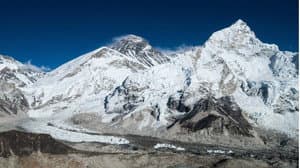
Ulisse dedicates this event to the highest peak in the world: Everest. A RAI crew went to the Himalayas, in the Everest region, to show the extraordinary landscapes of this "roof of the world", flying with a helicopter to the base camp, at almost 6 thousand metres, and going to the Sherpa villages , who are still the great protagonists of climbing today, helping mountaineers in their very risky undertakings. One fact is enough to understand the difficulties of climbing Everest: for every 6 climbers who try, one dies. The difficulty is caused above all by the disturbances caused by the high altitude: above 8 thousand meters you enter the so-called "death zone". Oxygen is reduced to a third, the mind becomes clouded, the body is subjected to superhuman efforts, strokes and pulmonary edema are constantly lurking. Not to mention bad weather, wind, frostbite and the inherent risks of climbing.
Fire has been a protagonist of human history; from the first prehistoric fireplaces, born about 400 thousand years ago, to the flames of space rockets, it has always accompanied man in his daily life and in his undertakings. The episode also illustrates, above all, the risks that fire entails: fires, burns, explosions. And he will explain what are the best ways to fight it. In the house, in the car, wherever the flames develop. Alberto Angela travels to various places where fire is the protagonist, also following the special fire departments in their interventions and demonstrations. We will see spectacular images of fires and men intent on putting them out. We will talk about the chemistry of fire, the mistakes to avoid, and how to behave in an emergency. Many people, for example, have died trapped in the car due to failure to provide assistance: the fear that the tank will explode keeps many people from providing help when the car catches fire.
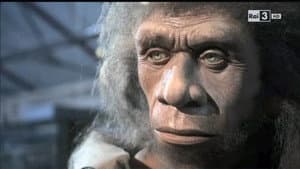
Ulisse offers his spectators a very particular journey: a journey through time, to closely observe the life of a group of Neanderthal men. Thanks to careful studies, a group of scientists and filmmakers have reconstructed the appearance and way of life of these prehistoric men who inhabited Europe for a very long period, between approximately 100 thousand and 30 thousand years ago. We will therefore have the opportunity to follow the group life, the hunting, the affections, the daily problems of a small tribe of Neanderthals, played by actors whose faces have been reconstructed following the most recent research. A day 35 thousand years ago, recalled in all its details, from food, to homes, to births, to diseases, up to the dramatic encounter with Homo Sapiens sapiens, who migrated to Europe from Africa in that period.
This episode of Ulisse is dedicated to the most extraordinary jewels in history, and everything behind them: technique, art, nature. The episode takes its cue from the largest diamond exhibition ever held: in fact, some of the most famous jewels from museums and private collections have been brought together at the Natural History Museum in Paris. Necklaces, brooches, solitaires, tiaras, worn by queens and kings of the past, when even men adorned themselves with jewels. The particular venue of the exhibition, a Natural History Museum, will allow us to talk about the origin of diamonds, which are formed beyond the 120 kilometers of the Earth's depth, at pressures of over 10 thousand atmospheres. We will see how diamonds are also formed in space: a meteorite studded with microscopic diamonds is on display at the exhibition. Ulysses will then show how diamonds are cut, going to one of the most prestigious laboratories, and how they are extracted from the earth today.
The earth floats on a sea of fire: the thin layer of the earth's crust, in fact, rests on an incandescent magma which every now and then finds chimneys to shoot out its fiery splashes: volcanoes. The entire planet is crossed by large fractures, along which volcanoes nestle. Ulisse, through a series of films and documents, will show the most extraordinary images of eruptions all over the world: from South America to Japan, from Africa to Canada, and of course Europe. Alberto Angela went, among other things, to Iceland, a large island that emerged from the sea, millions of years ago, following a gigantic eruption, and which is still today one of the most active volcanic areas: a third of all the lava material erupted in the last 500 years in the world is found in Iceland. A land where hot water springs now power the heating of homes and even greenhouses, where bananas are grown (and we are at the Polar Circle).

Would you like to live in Roman times? Ulisse gives you the opportunity, following hour by hour the typical day of the inhabitants of a Roman city: family life, work, business, love, entertainment, even elections. In fact, Ulysses reconstructs, with a "countdown", the last 30 hours of Pompeii and Herculaneum: while Vesuvius was charging for its catastrophic explosion, the people, unaware even of the fact that Vesuvius was a volcano, paid attention to the little things of every day. The program reconstructs this story with the help of accurate graphic processing and thanks to sequences played by actors, up to the explosion of Vesuvius and the violent death of the two cities, under millions of tons of lava material. Alberto Angela, who hosts the evening from Pompeii, recounts these 30 hours, also showing the "petrified" bodies of the inhabitants imprisoned in the lava while they were fleeing.
2014
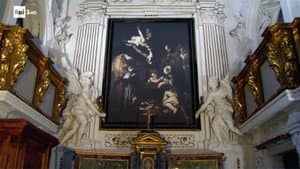
The first episode is a sort of thriller set among the wonders of our country and is entitled "The Great Wealth." The evening is dedicated to the countless art treasures, the beauty that constitutes Italy's true heritage, its richness. We will examine the risks this heritage faces—theft, counterfeiting—and the men who strive to protect it. This is a highly topical topic, as everyone has seen from following the news in recent weeks. We will essentially explore treasures, investigators, thieves, and forgers. All of Italy is one vast open-air museum. No other country can compare with us for the quality of our artistic heritage. This treasure is not limited to a single historical period, but, from prehistory to the present, testifies to the artistic taste and culture of various eras. Not everything can be displayed due to lack of space: we will therefore visit the large storage rooms of the Capitoline Museums in Rome, which are closed to the public.

Alberto Angela takes us on a unique journey to discover the most extreme environments on Earth, to understand how we manage to live in the coldest and hottest places on our planet. We are accustomed to spending our lives at an average temperature, yet there are places on the planet where living beings, including humans, have had to adapt to truly extreme temperatures. The highest temperature ever recorded in the world is 70.7 degrees Celsius, in the gigantic desert basin in the southern part of the central Iranian plateau. The lowest—89.2 degrees—was reached at the Vostok Antarctic research station. It's astonishing how living beings can adapt to the most extreme conditions and the most inhospitable places on the planet, and still survive there: from the scorching deserts of Iran, Libya, and the United States, to the Danakil plateau.
In the third episode of Ulysses, the Pleasure of Discovery (Saturday, October 18 on Rai3), Alberto Angela will recount the history and life of the richest courts of the Renaissance. A historical period considered the dawn of modernity, which reached its peak in the 16th century, representing a cultural revolution in daily life, art, ideas, and customs in our country. We will enter the places where the powerful men of the era lived: the courts of Mantua and Ferrara: elegant, sumptuous, sometimes immoral, but above all, wealthy, enough to finance a flourishing of the arts with painters, sculptors, and poets such as Michelangelo, Leonardo, Giulio Romano, Ariosto, and Tasso. These courts, while not particularly large, compare favorably to those of Milan, Florence, or Venice, which allow us to understand the dynamics of a court of the time: the alliances, marriage contracts, rivalries, and cruelties both within and outside the family.
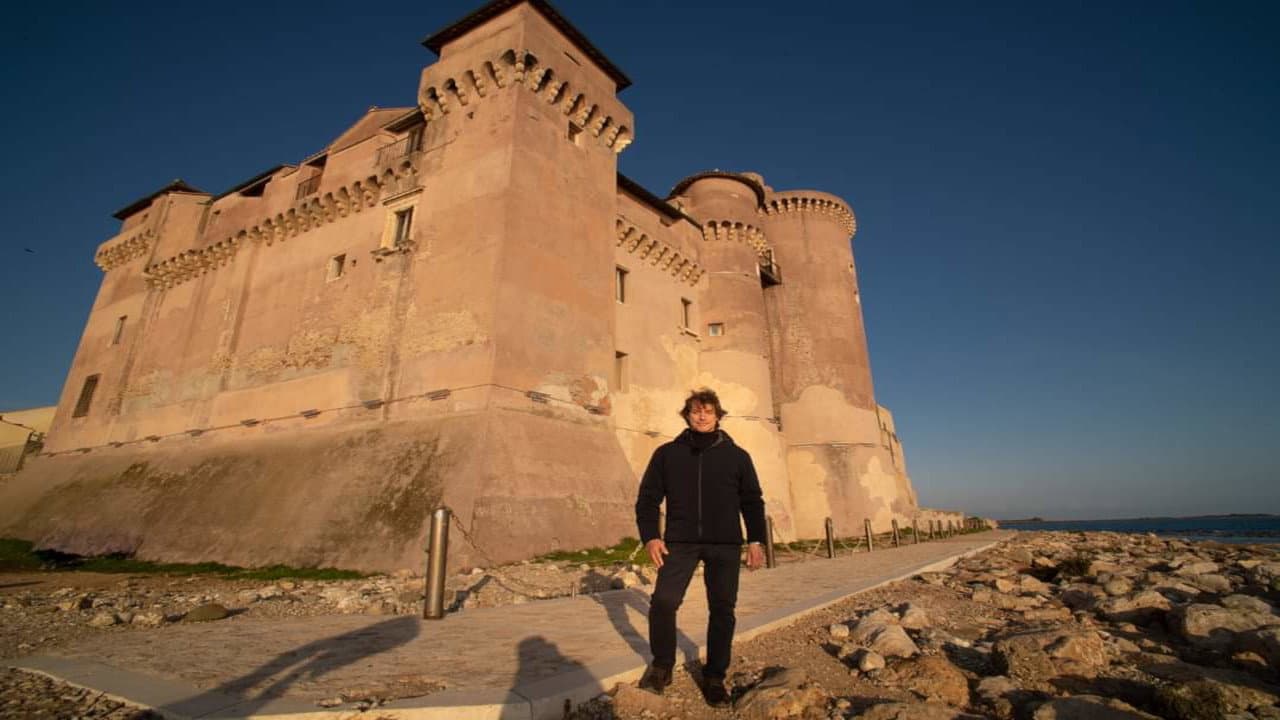
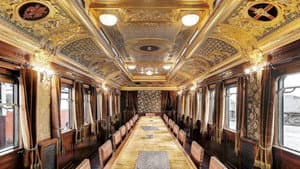
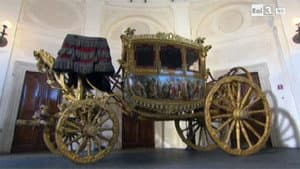
It is one of the creations of human ingenuity that has completely transformed the way we move, work, travel, see, and experience the places we live in. And ultimately, even our lives. A machine so powerful that it can transport things and people in previously unimaginable quantities. It is the train. In this episode of Ulysses, the pleasure of discovery, we will take a journey along the tracks with Alberto Angela to discover this marvelous means of transport. We will climb aboard a working steam locomotive and discover the royal carriage used by the House of Savoy at the beginning of the last century. From the first steam trains to futuristic magnetic levitation trains, we will recount the train's unstoppable progress and its impact on every corner of the world and on distant and diverse cultures. We will show you unusual and true behind-the-scenes aspects of the train in our lives today. From the subway we take to work in the morning to the projects for new futuristic railway lines.
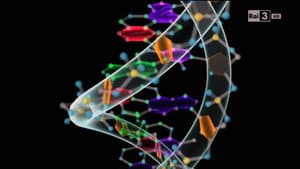
DNA: the most wondrous "invention" of Nature and evolution, the true mastermind that allows all living things to exist. But upon closer inspection, it's an episode dedicated to the triumph and secrets of Life. DNA is, in fact, the key that will open the doors to our past and allow us to discover much about our behaviors, how to protect ourselves with new treatments and medicines, and even how to unmask a murderer or reconstruct the appearance of deceased living beings. Alberto Angela explains why in some areas of the world, predominantly people with fair skin, or almond-shaped eyes, or slender bodies live, and why, despite all the differences between human beings, it makes no sense to talk about race. And then, diseases, epidemics like the plague, and the exception of individuals with the same DNA: identical twins.

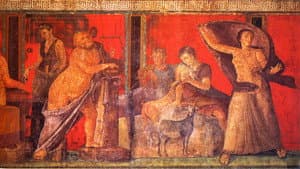
One of the most famous dramatic events in history: the eruption of Vesuvius in 79 AD that destroyed Pompeii and Herculaneum, wiping out these two cities of the Roman Empire. In this episode, Alberto Angela will recount the 24 hours preceding the eruption of Vesuvius through the stories of two families, one from Herculaneum and one from Pompeii, who lived on the slopes of Vesuvius, unaware of the impending catastrophe. The story will unfold in the most evocative locations of the two sites: the Villa of the Mysteries in Pompeii, where we will preview some of the marvelous, recently restored frescoes, and the arches of Herculaneum, where almost all of the city's inhabitants perished while trying to escape the volcano's fury towards the sea.
Why was it discovered only 250 years ago? Why are there animals so different from those on other continents? What is Ayers Rock, the enormous rock mass at the center of the continent, and why is it considered a sacred place by the Aboriginal people? Is it true that Giuseppe Garibaldi visited Australia? Just two and a half centuries ago, until James Cook's expedition, Australia's existence was unheard of; and even today, its interior—the so-called outback—behind the large coastal cities remains almost entirely uninhabited and largely unexplored. Ulysses holds many wonders and surprises for us on this journey to discover the lesser-known aspects of Australia. Alberto Angela and the Ulysses crews ventured into the magnificent Kakadu National Park, where time seems to have stood still and nature is still as it appeared two and a half centuries ago to the eyes of the first explorers.
In this episode, Ulysses will take us on a journey through the history of Greek civilization, the first great European civilization that, expanding across the Mediterranean, gave rise to what we now know as Magna Graecia in Italy. Greek cities spread across the Mediterranean, numbering nearly 700, and nearly a third of these are in Italy. Indeed, throughout the episode, we'll discover how Italy is a bit like a second Greece. Alberto Angela will tell us about Ancient Greece at the height of its splendor and lead us on a spectacular tour of some of the most important archaeological sites in our country: Paestum, Syracuse, Agrigento. Temples, theaters, and palaces that still tell us so much about the Greeks and ourselves today. We'll show you aspects of their daily lives, the female figure and romantic relationships, their social and political organization, their sporting competitions, and their wars.
For centuries, Rome has been a destination for millions of tourists every year. They are drawn by the archaeological remains of the empire, the artistic wonders that have accumulated over the centuries, but also—and above all—by its position as the center of Christianity. During the episode, Alberto Angela will take a journey through the many places, monuments, and buildings that have shaped the history of Christianity. The journey will touch on the main basilicas as well as more secluded, hidden corners of the city, where important testimonies to the history of the Church are found. The underlying theme of the episode is the story of how the capital of the empire became the capital of Christianity.

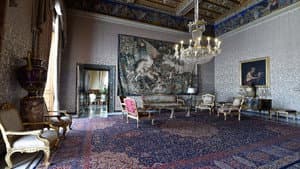
This episode of "Ulisse" will explore the current face of the Quirinale Palace: what is its history? Which kings have lived there? How does the President of the Republic live? How many people work there? It will be a behind-the-scenes journey into the heart of our institutions and the history of the Palace.

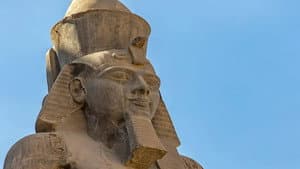
Pharaoh Ramesses II, who lived 3,200 years ago, is the greatest of the Egyptian pharaohs, considered somewhat of a Sun King of the time. Like Louis XIV, he reigned for a very long time, over 67 years. The era of Ramesses was the height of Egypt's splendor. Throughout the Nile Valley, his face is carved in stone everywhere. Among the many temples, colossal statues, and obelisks bearing his name, the most grandiose work is the temple of Abu Simbel, which underwent an unprecedented operation in the 1960s: it was sawn into many pieces and moved higher up to prevent it from being submerged by the Nile waters, following the construction of a dam. With Alberto Angela, we will follow the events of this undertaking, considered nearly impossible at the time. We will also see Ramesses' tomb. Every pharaoh took care to build the dwelling where he would live forever, surrounded by the objects most dear to him, by gold, gems, and furnishings.

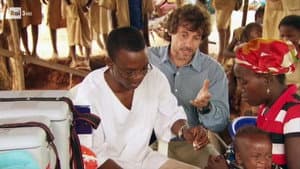
Invisible yet incredibly powerful, microorganisms have always been our companions. In this episode, Alberto Angela leads us on a journey to discover these infinitely small creatures, showing us how our lives, and sometimes even our deaths, depend on them. Ulysses's journey begins in Benin, where Alberto Angela introduces us to a very poor country that, like many other places on the planet, represents the "front line" in the fight against microbes and viruses: the place where the battle rages the fiercest, even though the war affects all of humanity.

What drives the choice of a person to marry? What are the chances of keeping a promise of fidelity? Or of cheating? And what allows a union to last? Beginning with a wedding reception, the episode of Ulysses will observe the unique relationship that develops between two people. It will also explore how sexuality is experienced at different ages, from childhood to old age, also following the intimate stories of the guests.

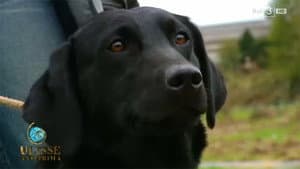
In this episode, Alberto Angela offers us a fascinating journey into the minds of animals. How many times, looking at your dog or cat, have you wondered: what they're thinking, and what they'd say if they could talk like us? Well, many researchers have asked the same question, particularly neuroscientists and animal behavior specialists; and not just for dogs and cats, but for many species. Today, we know that animal minds are similar to our own in many ways, and behaviors that once seemed mysterious to us, or that we misinterpreted, finally have an explanation. It will be almost like a conversation with other species: we won't just listen to their sounds, but, with the help of the latest scientific discoveries, we'll finally understand something of what they're saying to each other and what they're trying to tell us.

The Kingdom of the Two Sicilies, a chapter in pre-unification Italian history that is in many ways surprising and little-known. Of all the Italian kingdoms, the Kingdom of the Two Sicilies was by far the largest, richest, and most populous. Nearly 10 million people, or one in three of our peninsula's inhabitants, lived under the aegis of the House of Bourbon. And Naples was the heart of this kingdom: one of the largest cities in Europe, second only to Paris and the fifth largest in the world, a destination for scholars and travelers of the time. In this episode, we will discover why the Bourbon kings, once beloved and respected rulers, were then fiercely opposed by their people, and why their kingdom, rich in economic achievements, technological achievements, and cultural treasures, went down in history as a closed and backward world, responsible for the ills that still plague our southern Italy.
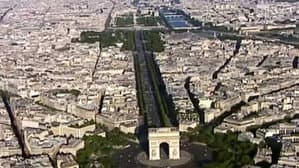
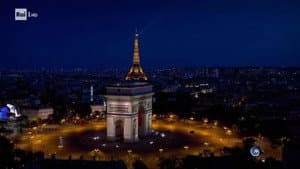
Paris, its secrets and wonders. The bridges of Paris and the Seine have been declared a UNESCO World Heritage Site. Alberto Angela, aboard a vintage boat, travels the Seine, using the river as a journey through time. Explore Paris in various stops: from the top of the Arc de Triomphe, to the Eiffel Tower, to the towers of the spectacular Notre Dame Cathedral. A must-see is the Eiffel Tower, described in detail by Alberto Angela, and the surprising transformations of Paris at the end of the 19th century: from the birth of the department stores to the many attractions of Montmartre, to the cafés of the Latin Quarter. And then the changes that took place in the 20th century: from Beaubourg to La Défense.

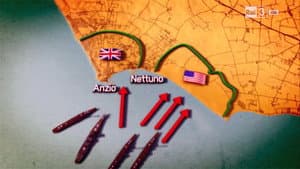
Alberto Angela recounts what has been called the "Italian Normandy"; the arrival of Allied troops on the beaches of Anzio, near Rome. On January 22, 1944, when 40,000 men landed on the coast of Lazio, a few hours' drive from Rome, the German army was caught by surprise. The road to Rome seemed clear. But the man in command of the army, General John Porter Lucas, was instead convinced he was heading for a crushing defeat. The objective of all was the city of Rome, the main prize of the Italian Campaign. Would Rome become the first European capital liberated from Nazism? How long would it take to crush the resistance of the German army? And what price would the population pay?

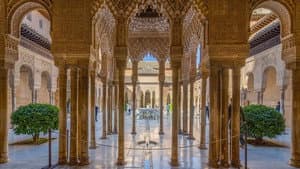
Alberto Angela leads viewers on a journey through Andalusia to discover a region shaped over the centuries by a succession of civilizations that, despite their differences, managed to coexist peacefully. Traveling from Seville to Cordoba, from Granada to Ronda, we see, for example, how Christian churches became mosques and then churches again, remaining structurally intact and even enriched in architectural and decorative terms. Names, words, and customs have remained unchanged despite the succession of diverse and seemingly opposing cultures. An era of peaceful coexistence that seems unparalleled in today's world. These are the key places described by Alberto Angela: in Seville, the Alcazar, the Cathedral, the Plaza de España, and the Casa de Pilatos; in Cordoba, the Mezquita; in Granada, the Alhambra and the Royal Chapel.
We can't remember the most intense period of our lives, the one of the most surprising discoveries, of unstoppable progress, of dizzying achievements. These are the first two years after birth, approximately 700 wonderful days that, even without our memory, we sometimes relive in part as adults, watching a tiny human being grow.
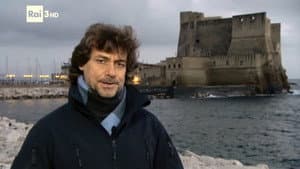
Alberto Angela takes us on an extraordinary journey to discover the myriad secrets of Naples, a city that never fails to surprise. From a ride on the world's most beautiful subway system to the old but highly efficient funiculars and the extraordinary University Museums, Angela takes us on a discovery of a city that never fails to surprise. Then there's the Sansevero Chapel, with its extraordinary statue of the Veiled Christ, commissioned by the famous Prince of Sansevero, and the splendid halls of the Royal Palace, revealing the city's glorious past. Naples, founded by the Greeks, later "welcomed" the Romans, the Byzantines, the Normans, the Swabians, the Angevins, the Aragonese, and the Bourbons, all of whom left beautiful traces of their passage, not only in the urban fabric but also in the language and traditions.

In the company of Alberto Angela, we journey into the heart of the tropical jungle, the green ring straddling the equator, between the Tropic of Cancer and the Tropic of Capricorn. It comprises 8% of our planet's land mass and is our lungs: the tropical forest is one of the planet's richest environments for life. It has been calculated that in just a few square kilometers of Central American forest, 125 mammal species, 400 bird species, 100 reptile species, 60 amphibian species, and nearly 40,000 insect species can be found. Among them are legendary animals such as tarantulas, which can grow up to 12 cm in length, the anaconda, which can reach 8 meters, and the boa constrictor, which grows to 2.5 meters. Then there are felines such as the jaguar in the Americas, and the leopard and tiger in Asia.

Writing paper, reading paper, paper money, wrapping paper, wallpaper, kitchen paper, even construction paper and toilet paper. But also letters, diaries, coasters, birth certificates, board games, business cards, photographs, and tea bags... An ancient material we've always used, and whose use shows no signs of slowing, but which over the centuries has evolved to become almost 100% recyclable and reusable. A series will reconstruct the environment of the first medieval European paper mills, established here in Italy, in Fabriano, when paper, originally from China, after traveling through the Arab world, arrived in the West. In the Tuscan industrial hub of Capannori, near Lucca, we'll discover that Italy is a world leader in paper production: a sort of economic powerhouse that produces a large portion of the handkerchiefs (and other items) produced worldwide.

The history of humanity can be seen as a succession of conquests: we never think about the conquest of color, yet it has changed our lives. "The Conquest of Color" is a journey of discovery into how our world has been enriched with millions of hues over the centuries, thanks to the emergence of ever more brilliant hues and colors. We'll begin in the Paleolithic, when humanity essentially had only three colors at its disposal: black, ochre, and white. We'll then explore how the deep Egyptian blue, the first synthetic color in history, and the elegant purple of the Phoenicians and Romans were later added. We'll see how the great glass masters learned to bathe cathedrals in colored light, and how the greatest artists of the past obtained their colors using precious stones, such as lapis lazuli, which was used to create the blue used by Michelangelo in the Sistine Chapel.
2005

This episode will be dedicated to the evolution of weapons from prehistory to the present day. From the stick to the bow, from the arrow to the rocket, from the sword to the rifle, from the Greek shield to smart rockets, weapons tell the story of the art of attack and defense. Alberto Angela will present spectacular pieces preserved at the Stibbert Museum in Florence and at the Historical Museum of the Artillery in Turin. Thanks to the collaboration of the Carabinieri, we will relive the sensations of a galloping cavalry charge.

This episode is very particular, very different from all the others. We will try to explore the world in its incredible diversity and observe what women and men scattered in the most disparate corners of the planet have done during their day.

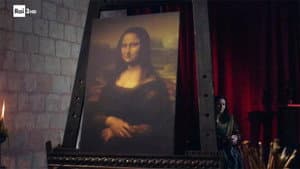
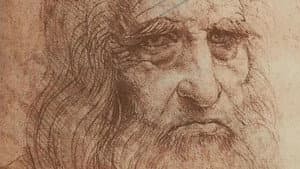
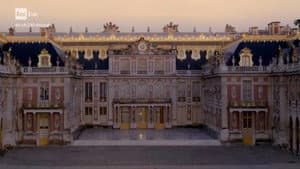
Alberto Angela will go to the Louvre Museum, where we will have the opportunity to admire the most important pieces of the collections, paintings, statues and archaeological finds of ancient civilisations. We will tell the extraordinary story of this palace which from an ancient fortress became, over the centuries, the symbol of the power of the kings of France. The episode of Ulisse will open with the brand new arrangement in the Grand Gallery of the best-known painting in the world: the Mona Lisa by Leonardo da Vinci.

Rome at the time of Nerone, before and after the famous fire. In this episode we will explore Rome before the fire, following two firefighters of the time: through their patrols, their personal stories and their interventions, we will reveal the environments and atmospheres of the life of the Romans of the time.

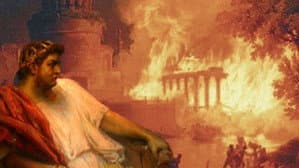
Rome at the time of Nerone, before and after the famous fire. In this episode we will talk about the fire, trying to understand why it broke out, the exact point from which it started and why it spread so quickly.

In the first episode we will try to understand how the decision to drop the bomb on Hiroshima was reached, retracing the steps from 1943, the year in which the best minds in physics, such as Oppenheimer and Fermi, gathered at Los Alamos to test the first bomb. The experiment was successful and, during a summit meeting between Truman, Churchill and Stalin, the idea of using this new bomb against Japan began to spread. We will follow with Alberto Angela all the phases of the complex operation, from the preparation to the transport of the atomic bomb to the Tinian base, from where the mission to Hiroshima departed; at the same time we will also follow the advance of the Americans in the Pacific which was the scene of ferocious fighting between sea and sky.

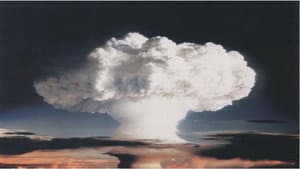
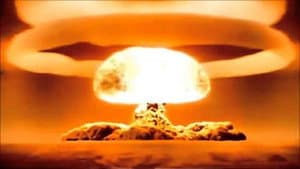
The story will continue in the second episode with the events immediately following the explosion. In that mushroom that rises there are the bodies of at least thirty thousand people. Within a radius of 2.5 km another fifty thousand will die in the space of a few seconds. Those who were even further away will be hit by a wave of heat that does not kill, but burns savagely. In the following days, months and years, thousands and thousands more people will die as a result of radiation. We will also find out what happened on the plane, which was hit head-on by the shock wave caused by the explosion. Through archive images we will follow the reactions of Japan and the whole world to the spread of the news and President Truman's speech to the nation on what happened and his motivations. Meanwhile, at the Tinian base, preparations continue for the new mission which will lead to the dropping of another bomb on Nagasaki on 9 August 1945.
In this episode of Ulisse we will literally travel through time. In fact, the entire course of our life is regulated by an infinite number of clocks, not only those that tell us what time it is, but also those that mark our entire working day, appointments, train departures and more. In fact, we live immersed in an ocean of other types of clocks, often invisible, but which follow us continuously: they are those clocks that regulate what exists within us and around us, from our cells to the cosmos.
2009
In this episode the lost capital of Pharaoh Ramesses II. The incredible story of the Siamese brothers who lived in the 19th century and were joined together: they had 21 children. Human cloning: will it be possible to stop it? Tricks to seduce men with beauty through the ages. The 43 wonders of Italy. But to start we will tell you about a man who sacrificed everything, putting not only his life at stake but also that of his collaborators, his wife and even his children, to try to stop a bloodthirsty ferocity, one of the worst dictators who ever existed. This man was a senior German officer and the operation was called Operation Valkyrie.
Journey into history: the island of Santorini in Greece. The surprising story of the tulip crash. What did Leonardo know about wine? And what are the origins of the drink dear to gods and men? To the rediscovery of the most sensual statues of the Italian artistic heritage. A treasure more precious than that of the English crown is preserved in Naples. How much care and maintenance is needed to maintain Rome's immense artistic heritage?
The reconstruction of the Battle of the Bulge. Journey among the spectacular anatomical waxes of the Specola museum. Where did the Berlin Wall go? How many remember it? We will see where the bricks of the Bastille prison ended up. In Paris we will show behind the scenes of the Gréven museum. We will follow the route of the Rome-Naples: a journey through time and history. Appointment with Leonardo and his anatomical drawings.
A very original and surprising film: rain of eggs, bathtubs full of beans, immense expanses of milk bottles and cups of coffee. Why all this? Journey into the immensity of the universe in search of planets outside the solar system. The point about the SETI project and the radio signals arriving from space. Behind the scenes of Valentina Tereskova's flight. In the depths of the sea, we will meet the aliens who populate our planet. In Peru we will discover a necropolis with hundreds of mummies still intact. Journey to the four corners of the planet to discover the most spectacular UNESCO sites.
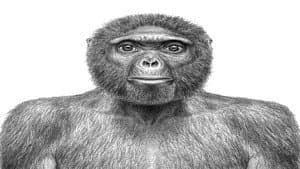
The sinking of the Gustloff, a German ship loaded with civilians fleeing the advance of the Soviet army. In Palermo we will discover the secrets of the tomb of Emperor Frederick II. Close encounter with the oldest hominid. Leonardo, his creativity and indistinguishable thirst for knowledge. We will go in search of Herod's lost tomb. In the sea of Anzio the discovery of an American plane shot down during the Second World War. Journey to the four corners of the planet, to discover the most spectacular UNESCO sites.
A journey into the Middle Ages, we tell the story of the construction of Gothic cathedrals. The last voyage of the Rex. The genius of Leonardo and the world of entertainment. Italian emigration, the terrible journey towards a better world. The Island of Hope, visit to the Ellis Island museum.
A story we will never see: the story of our planet if mankind disappeared. Journey into the prehistory of Rome: what would we have seen at the Olympic stadium a million years ago? A defeat worth a thousand victories: the arrival of Dorando Pietri at the London Olympics. First, second, thirty-seventh: in races the important thing is to participate. April 11, 1961: that day the Soviet Yuri Gagarin became the first man to fly in space. Leonardo Da Vinci and his insatiable thirst for knowledge: we will see what the pale flame of a candle suggested to the master. The story of a man, of a dreamer, who managed to realize his grandiose project: connecting the Mediterranean to the Red Sea.
The terrible story of suicide pilots in World War II. Journey into the world of lightning: a natural phenomenon that can be very dangerous. Appointment with Leonardo and the realism of caricatures. The First Flight from New York to Paris: Charles Lindberg's Great Adventure. A witness to Ulisse, Lou DuFresne, who was 7 years old at the time, tells of his triumphal arrival in Paris on the night of May 21, 1927.
We will investigate a massacre that occurred more than a thousand years ago: at the crime scene we will find clues that explain the end of the ancient Mayan civilization. 18 July 64 AD: that day, in imperial Rome, hell broke loose. Why did Rome burn? Who are the real culprits? Was Nerone, the most famous emperor in history, really a bloodthirsty madman? Appointment with the genius of Leonardo the painter: the curious arm of the Madonna of the Annunciation. Is it a proportion error? Journey into the world of water: we will follow the little big story of a drop of water. we will go to the province of Ravenna where a group of volunteers has brought to light dozens of planes from the Second World War.
The story of the discovery of Herculaneum occurred by chance in 1700. Are there still populations that have never had contact with Western civilization? The real event of the wolf-child growing up in the woods of southern France dates back to the end of the eighteenth century. The story of the soldiers of the Imperial Japanese Army hiding in the jungle so as not to surrender to the Americans. We will go to Peru in search of a disappeared civilization: the people of the pyramids. What is returning illiteracy?
Encounter with one of the most devastating forces of nature: the gigantic tsunami waves: what are they caused? And can they be predicted? The last days of Leonardo Da Vinci in France: ill, he rearranges his papers under the eyes of his masters. The recovery of the carcass of a B-29, the deadly American bomber. Germany 1945: the dramatic destruction of the city of Dresden. The testimony of survivors of the bombing of San Lorenzo in Rome during the Second World War. Who will be the next man on the moon? India and China seem to be on the home stretch.
What is your furthest memory? In this episode you can watch the film of your first year of life, from your first breath to your first step.
Today's episode will take us back over 65 years, to Italy during the Second World War. Through historical reconstructions, witnesses and films from the time, we start from what is considered one of the most important and discussed clashes of the Second World War: the battle of Cassino.
This episode will have a very particular theme: we will set out to discover the giants. Giants in nature, in prehistory, gigantic structures built by man, today as in antiquity.
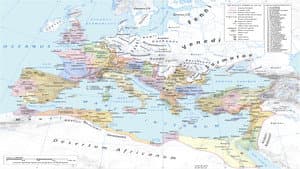
The journey of this episode will take us back in time two thousand years: we will in fact discover the Roman Empire. We will discover very different cities, people and places. It will be a journey that will take us along its borders, the famous limes, where we will even meet Rome's enemies.
The journey of this episode will take us to discover truly surprising places, stories and people, all united in a single common denominator: the search for freedom, or rather, often the escape towards freedom.
The story of an extraordinary atom, indispensable for life and continuously involved in chemical reactions and yet indestructible, widespread everywhere, especially in the atmosphere. it is the oxygen atom.
In this episode we take a very special journey: we travel to new worlds. Part explorer, part tourist, we look at the world upside down.
In this episode we will tell you a very little-known story but which will serve as a starting point to talk about what is still the most powerful man in the world today: the president of the United States.
Our body has a constant temperature of 37 degrees celsius, but what happens if we cool it down? And why does the cold preserve bodies? And exactly what is cold? This episode will try to answer these and other questions and there will be no shortage of surprises.
With this episode we will get to know closely events that proved crucial for humanity: the great battles. With their eisto they gave history its definitive course and decided the fate of a people or a nation, but above all of many families.
During the episode, with the help of a computer we will try to understand what happens in the brain, heart and other organs when we are in love. We will also explain what the so-called "love at first sight" is and what jealousy consists of, distinguishing between female jealousy and male jealousy.
2006
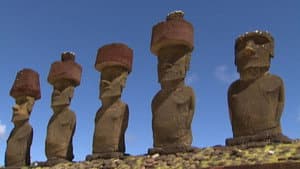
The first episode of Ulisse will take a great journey through the civilizations of the past and their enigmas, exploring one of the most extraordinary archaeological sites located in the heart of the Pacific Ocean: Easter Island. We will tell the story of this civilization, trying to find out where the first inhabitants arrived from, considering that the island is located almost 4000 km from any coast or inhabited island.

Ulisse will deal with another important theme: that of gravity. Above all, we will try to understand what are the consequences and effects of the force of gravity on the earth and how we are continually forced to challenge its laws and fight them. In the episode many curiosities that will show us the various ways to face and overcome the effects of the force of gravity in the various sports disciplines, in the construction of skyscrapers, in space. Alberto Angela will explain all this to us and will also climb the Tower of Pisa to retrace the experiment carried out by Galileo Galilei to study the phenomena of gravity.

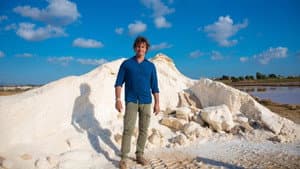
Ulisse will discover one of the most spectacular and grandiose scenarios on our planet: the Andes mountain range. This imposing mountain system winds along the entire west coast of South America, from the Caribbean coasts of Venezuela and Colombia, to the ice of Tierra del Fuego, at the extreme southern tip of Chile. We will explore this outsized landscape to discover what hides. It will be a journey between glaciers, naturalistic paradises, deserts, volcanoes, buried deposits and even lost civilizations, which have left us ghost cities, mummies and extraordinary treasures. Together with Alberto Angela we will visit the Quelat National Park, a true naturalistic oasis, with forests, lakes and waterfalls and the Atacama Salar, one of the driest and most arid places on the planet which contains many types of salts and minerals. We will again see the Chuquicamata copper mine in Chile, which is extremely important from an economic point of view.
Alberto Angela will tell us again the story of Charles Darwin, the famous English naturalist, who with his observations developed the theory of evolution, which is the basis of modern scientific knowledge. We will visit the house where he lived and, above all, we will follow him on his extraordinary journey aboard the brig Beagle: a journey that lasted 5 years in the intact environments of the South American continent among volcanoes, glaciers, wild islands and tropical forests, which led him to reflect on the reasons and on the origin of the thousands of plant and animal species.

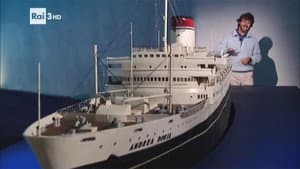
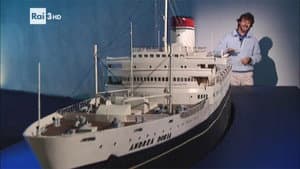
This episode retraces the dramatic shipwreck of the largest and most elegant of our transatlantic liners, the Andrea Doria. A story that sixty years later still arouses great emotion throughout Italy. The Andrea Doria was a jewel of our navy, a very luxury ship, considered unsinkable due to the technical innovations with which she had been built. And in these days an exhibition is also inaugurated at the Galata Museo del Mare in Genoa which tells the story of this beautiful and unfortunate ship.
Namibia: over seven thousand kilometers from Italy, towards the southernmost tip of Africa. This episode will certainly take us very far from home but also very far into the past. In fact this episode will be dedicated to the fight for the survival of man and therefore we will go in search of primitive groups and populations trying to discover their strategies, their survival techniques, in very different environments, sometimes truly impossible environments.
Another stage of the journey will concern the symbol par excellence of the Middle Ages: the Castle. How was it possible to conquer a castle and all the territory it controlled and its populations? In this regard, Ulysses will tell the true story of an assault on a castle that took place in France during the famous Hundred Years' War.
Ulisse will go to explore the sea, that immensity of water that allowed life to be born and evolve on our planet. An event that will not simply be dedicated to the sea, but above all to the relationship between man and the sea, which began at the beginning of the adventure of Homo Sapiens, and has never been interrupted. So Alberto Angela will be in Genoa, the maritime city par excellence, between the Galata Museum of the Sea, the very rich Aquarium and much more, to retrace the stages of this very long and fascinating human adventure, in its historical and scientific implications. A journey that will develop in two directions: horizontally, exploring the surface of the sea, to learn about the forces that animate it within, the titanic energies capable of moving immense masses of water. And then vertically, into the blue vastness of the sea to get to know the infinite variety of species that populate the oceans, going further and further down, until reaching the bottom of the abyss.
2022

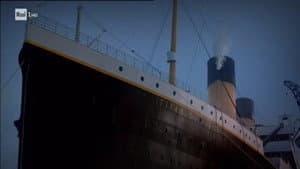
One hundred and ten years after its sinking, Alberto Angela will accompany us to the places that marked the events of this transatlantic liner, a technical jewel considered "unsinkable", shipwrecked on the night between 14 and 15 April 1912.

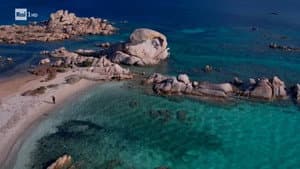
A journey into a unique land, in search of the colours, sounds, smells and signs that characterize it. The color of the sea and the stone. The sound of wind and voices. The smell of cistus and helichrysum. The signs of the many civilizations that have invaded it from time to time, without ever dominating it. An island that is almost a continent. From the beaches of Maddalena and Asinara to the mines of Sulcis, from the stones of the nuraghi to the Roman remains, from the basilica of Saccargia to the walls of Alghero, ours will be a tale punctuated by stories, traditions, legends that make this land a magical place and mysterious. We will meet its people, we will listen to its particular language and we will fill our eyes with the color of an incredible sea. The great English traveler Herbert Lawrence defined it thus: "Sardinia is something else... Ridges of hills like moorland... which are disappearing, perhaps, towards a small group of peaks.

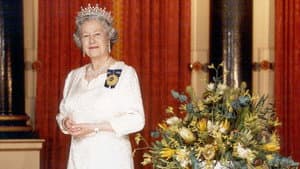
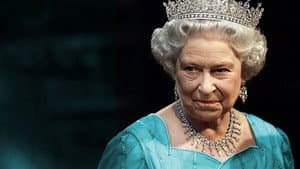
The story of the life of one of the most important figures of our time, Queen Elizabeth II, the monarch who reigned longest on the throne of England and the United Kingdom. Alberto Angela accompanies viewers on a journey through time that spans much of the 20th century and reaches the present day, recounting the slow transformation of the image of the monarchy by Elizabeth in the decades of her reign, through the main historical and family facts which have touched the royal house of Windsor until more recent times. With the most beautiful period images, many of which have been restored to their original splendor, viewers will relive the sumptuous royal ceremonies and discover lesser-known aspects of one of the world's oldest and most enduring monarchies. The episode's special guest is the English actress Helen Mirren, an Oscar winner for her portrayal of the queen in the acclaimed film "The Queen".

In this episode of Ulisse, with Alberto Angela, we will immerse ourselves in the atmosphere of the Parisian Belle Époque: years in which the push of science, art and fashion created a society made up of new comforts but which will discover itself to be more fragile than it appears . These were the years of the Impressionists, of Monet, Renoir, Degas, Cezanne, Van Gogh.

What happened to the ancient human species that inhabited Europe and part of Asia before the arrival of Homo Sapiens? Why, at a certain point in prehistory, are there no archaeological traces left of these men of extraordinary strength? And what happens when the two human species come face to face in the same territories? Alberto Angela, in this episode of Ulisse, guides us to the solution of this intricate enigma "at the crime scene" directly from the wonderful places inhabited by Neanderthals and then by Sapiens in Italy and Europe.
2011
In the first episode of Ulysses: The Pleasure of Discovery, Alberto Angela takes viewers on a magnificent journey through one of the most crucial periods in Roman history: the birth of the Empire. Through images from the film "The Destiny of Rome," we learn more about the protagonists of those years, from Brutus and Cassius to Antony and Cleopatra. It is a historical reconstruction—a film, if you will—with real actors, but with computer-generated locations. It is a new, different, and highly evocative solution, the work of French director Fabrice Hourlier. We chose it because it allows viewers to enter the grandiose settings of Ancient Rome and the Mediterranean world of the time, journeying through the great pages of history. It was 44 BC when Julius Caesar was assassinated.

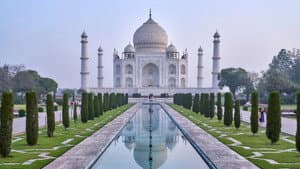
An extraordinary journey through the places, colors and sounds of India's wonders. Together with Alberto Angela, we visit mausoleums, temples and princely residences of Mughals and Maharajahs. We cross an immense country, with more than a billion inhabitants and at least 25 languages. India is the country of the most ancient religions, of strong smells, of penetrating glances, and of fabulous riches but also of poverty. A country with an ancient history that has left us sites, temples and monuments that are among the most spectacular on our planet. In Agra we visit the Taj Mahal, the funeral monument built by the Great Mogul for his beloved bride who died young. We discover that the construction of the symbol of India coincided with a period of extraordinary wealth and tolerance which saw the flourishing of arts and culture, an era comparable, in a certain sense, to our Renaissance. We move to Rajahastan, the land of the maharajas, where we visit the fabulous colorful cities.
What drives the choice of a person to marry? What are the chances of keeping a promise of fidelity? Or of cheating? And what allows a union to last? Starting from a wedding reception, the episode of Ulysses observes the unique relationship that develops between two people. It also explores how sexuality is experienced at different ages, from childhood to old age, following the intimate stories of the guests. Sex has always been a fantastic form of reproduction, because it allows for the creation of ever-new and unique individuals; all different from each other, and from their parents. But as the great physicist and Nobel Prize winner Richard Feynman said: "There's no denying that sex has a practical purpose, but that's not why people usually do it." Because, especially among humans, sex is a way to strengthen bonds between two people, and it's also pleasurable.
In this episode Ulisse takes a journey back in time to tell the story of a continent, America. Let's start from New York, the great metropolis of today, and discover its curious origins. We follow the paths of the pioneers to conquer the West and the crazy gold rush. We meet the first settlers, the famous pilgrim fathers who settled on the east coast in the 1600s. We go back through the centuries to the time of the Spanish conquistadors and Christopher Columbus' first encounter with the native Taino people. Let's discover the civilizations and peoples who populated the New World before 1492. Great, well-known cultures such as the Inca in Peru and, in Mexico and Central America, the Maya and Aztec. But we also discover that the cities of the Anasazi and those of the peoples of Mississippi had reached a notable level of development, with clay palaces of hundreds of rooms.
In this episode Ulisse takes viewers on an unusual journey around the earth. This exceptional journey starts from the sky and shows our planet from a unique perspective. We get on board the means of transport that is currently traveling faster than anyone else: think almost 28 thousand kilometers per hour: it is the International Space Station which takes only ninety minutes to orbit the earth. Every six months, a new crew leaves the earth for this sort of orbiting home; a scientific laboratory floating 350 kilometers above the Earth's surface. Let's see how the daily life of astronauts forced to live together in confined spaces for months unfolds. Alberto Angela shows us what the earth looks like seen from space: it looks like an uninhabited planet, without man. With the naked eye you can see the sea, you can see the land... But you cannot perceive the cities, the buildings, the buildings.
Ulisse guides us to discover the history of Greek civilization, the first great European civilization told at the time of its maximum splendor and which, expanding into the Mediterranean basin, gave rise in Italy to what we know today as Magna Graecia. The Greek cities, scattered across the Mediterranean, numbered almost 700. And of these, almost a third are located in Italy. In fact, and we will see it during the episode, Italy is a bit like a second Greece. Alberto Angela guides us on a spectacular visit to some of the most important archaeological sites in our territory: Paestum, Syracuse, Agrigento. Temples, theaters and palaces that still today tell us a lot about the Greeks and also about ourselves. We show you aspects of their daily life, the female figure and love relationships, social and political organization, sporting competitions, wars.
This episode is dedicated to a very particular theme. With Alberto Angela we take a truly unusual journey around our kitchen: we explore objects that we all have at home, but that ultimately we know very little about. Things that upon closer inspection show us the main stages of the evolution and history of the human species, sometimes the result of very ancient technologies, other times born from modern science. No place in our homes reveals something about our human being more than the kitchen. This anthropological expedition takes us to every corner of the world, and to every period of history. Human beings' need to eat has led to an incredible circulation of animal and plant species across the globe. Exchanges, commerce and migrations of the different populations were accompanied by the spread of their foods. Following the traces of these ancient food imports is very difficult.
Alberto Angela guides us on a fascinating journey into our brain: one hundred billion cells that determine the birth of our thoughts, and also of our passions, pain and joy, as well as naturally governing every movement of the body. We go to the Modena Polyclinic to follow the 'first steps' of a human brain, starting with those signals that infants exchange with their mothers and which are a real dialogue made up of facial expressions, like a smile that recalls another . Let's then try to understand what also happens in the brain of a bonobo, given that our DNA is almost identical to that of monkeys. We show you the curious experiments done with a baby bonobo and a 2-year-old child to discover the similarities. Let's try to understand what creativity is and what it means to be brilliant. What happens in the brain of a creative person?
In this episode we retrace the history of human flight with Alberto Angela. We tell the story of the daredevils who were the first to dare to challenge fate and take flight towards the sky, initially embarked on truly unlikely flying machines, and then on board increasingly daring vehicles, engaged in extremely dangerous undertakings. Through a documentary we will reconstruct the lives of the young pilots of the First World War, in particular the English fighting against the legendary Red Baron. We will understand who the first pioneers of flight were and what it meant to take off when every flight was a gamble with life at stake. As we will see, it took extraordinary courage, and then ambition, the desire for glory, and sometimes even the need to win money. All in the glittering atmosphere of the Belle Epoque.
In this episode we retrace the history of human flight with Alberto Angela. We tell the story of the daredevils who were the first to dare to challenge fate and take flight towards the sky, initially embarked on truly unlikely flying machines, and then on board increasingly daring vehicles, engaged in extremely dangerous undertakings. We would say without a shadow of a doubt, perhaps the best program we have seen on television recently. This evening there will be a great journey into the past to tell how Civilization was born. We will then tell how we went from mammoth hunters to pharaohs. And then again the history of the populations who lived twelve thousand years ago, at the end of prehistory, thanks to which agriculture was invented. Precisely in that period man made another great invention, that of the bow, a very useful weapon for hunting small prey: additional food for those first farmers and another source of energy.

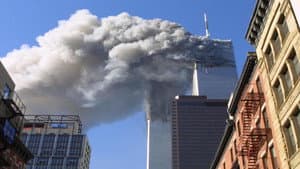
Ten years ago, on September 11, 2001, two airliners hijacked by terrorists crashed into the Twin Towers in New York, causing them to collapse to the ground and causing the death of 2,749 people. At 8.46 that morning the first plane hit the North Tower. 102 minutes later only rubble remains of the World Trade Center. Alberto Angela tells what happened inside the towers in those 102 minutes. There were many people working in the various offices, there were also tourists who, like every day, reached the observation point on the 110th floor. What were the reactions of those inside? Let's listen to some testimonies of those who were saved. Many managed to save themselves, others understood that they were trapped and that there was no way out. The dramatic images of that day, broadcast by television all over the world, have remained forever imprinted in our memories. Among the many images there is a shocking one, which has almost become the symbol of that tragedy.
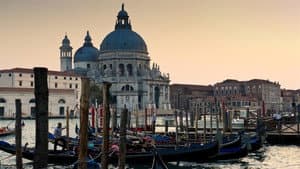
In this episode Alberto Angela invites you on a small but fascinating journey: the four kilometers of the Grand Canal to discover the many extraordinary buildings that overlook this waterway and make Venice a unique city in the world. Behind every door, under every dome, many stories are hidden. The journey begins from Piazza San Marco: on one side the Basilica, on the other the Doge's Palace, almost symbolizing the balance between religious and political power on which the greatness of the city was based. Another pillar is economic power: Venice has been at the center of maritime trade for centuries. This resulted in wealth, luxury but also the continuous risk of epidemics. By visiting some of the most illustrious palaces, we see how the patrician families lived, how they dressed, why they wore wigs, why they used fans and what meanings the moles that women and men glued to their faces had.
2021

In this episode Alberto Angela celebrates Rome's Christmas by accompanying viewers on a fascinating journey through the wonders of imperial Rome: the Rome of the Caesars. Starting from the Mausoleum of Augustus - just reopened to the public after a restoration lasting 14 years - we retrace the fundamental stages that characterized the birth and expansion of one of the greatest empires of all time and we discover how and why the city of Rome in that period reached its maximum splendor.

An exciting journey into 16th century England through the intricate events of King Henry VIII and his six wives, some repudiated, others beheaded. A story of tyranny, blood and betrayal that led to the separation of England from the Church of Rome. We will discover that an epidemic, not too different from the one we are experiencing, kept King Henry VIII and Anne Boleyn, his lover at the time, separated for a long period, and we will reveal the contents of some handwritten letters from the king to his beloved which are kept today in the Vatican Apostolic Library.

More than twenty years after the first episode of Ulisse, dedicated to the Etruscans, Alberto Angela takes up the thread of that story, accompanying us on the discovery of the places that saw the origins of our history and our civilization. The Etruscans were a refined population, a people of travelers and traders capable of expanding across Italian territory in an organized way and of whom today we can still admire absolute masterpieces as evidence of their greatness.

The fourth episode of this new series of episodes tells the life of Saint Francis and Saint Clare: two boys destined to inherit the honors of their social status but who will realize that that way of life does not satisfy them and will choose a new path: their .

What is the state of health of the Earth, this planet so small, so fragile and vulnerable? What damage have we caused to the environment with our behaviors? How many natural resources do we consume in daily life and above all do we still have time to remedy this? And how? These are some of the questions that we will try to answer with Alberto Angela in this special episode of Ulisse which sees the extraordinary participation of Piero Angela.
2010

The journey we invite you to take this evening is perhaps the most beautiful one. Let's go in search of our most ancient origins. The starting point for our journey is the discovery of a new important hominid that has been added to our family tree. If we had been in Ethiopia about four and a half million years ago, perhaps we might have come across an Ardipithecus ramidus. He is the most ancient ancestor of man; scientists have called him Ardi. She was probably a female and lived in the same region of East Africa where over a million years later another very famous creature of antiquity, Lucy, would roam. Until Ardi's arrival, Lucy's remains were considered the oldest hominid skeleton in our possession. Alberto Angela tells the long history of our species, which starting from very primitive beings led to modern man.

A story created not only with finds and exploration of the sites, but also with accurate reconstructions of the hominids who followed one another over the course of five million years: Austrolopithecines, Homo habilis, Homo erectus, Neanderthal, Cro-magnon, etc. The entire gallery of our distant ancestors is visualized thanks to fiction and computer processing. The scenes with actors were filmed in the African savannahs, in the same places where human evolution took place: under the guidance of experts, in particular prof. Yves Coppens of Paris, one of the most authoritative researchers in human paleontology, the appearance of these primitive hominids and also scenes of their life were reconstructed, just as it is possible today to reconstruct them based on all the studies done. For the Austrolopithecines, a complex technique was used, superimposing computer graphics on the basic movements performed by actors.

For the opening episode of the ten years of Ulisse we chose to visit a place rich in history in Rome. A Palace that all Italians know, but no one has ever really been able to visit: the Quirinale. It is an extraordinary palace. Its structure, its architecture, even its splendid gardens, faithfully reflect the history of Italy. Every era has left its mark on it. Ulisse obtained special permits from the Presidency of the Republic with the collaboration of Rai Quirinale. He had the invaluable advice of the staff of scholars, directed by Prof. Louis Godart, advisor to the President for the conservation of the artistic heritage and the collaboration of all the staff of the great institutional machine which is today the seat of the Presidency of the Italian Republic. Alberto Angela takes us on a journey to discover the various aspects of the Quirinale.

This episode is dedicated to the world of twins. We will investigate the unique relationship between them. We will discover that each twin is a person with their own distinct personality. We will show you a sensational film on twin pregnancies, from the first ultrasounds to the birth. We will listen to a series of real-life testimonies from pairs of twins of all ages and from all over the world. Alberto Angela tells us the extraordinary story of the Dionne twins, Canadian quintuplets born prematurely in 1934 in a small village in Ontario. They were identical and so small that each of them could be held in the palm of the hand. Until that day, around thirty cases of quintuplets had been recorded in America but no newborn had ever managed to survive beyond the fifth day. Even in Italy we have witnessed multiple births like that of the famous Giannini twins in the 1980s.

This episode takes us into a particular dimension of the world in which we live, that of large concentrations of life and living beings: animals, men, and even cells. Let's see when and why they aggregate, act, but, above all, move en masse. With spectacular images from the BBC we enter the formidable world of small insects, birds, fish up to the large mammals of the savannah. In nature, the winning strategy for escaping predators seems to be that of the group. And this was exactly the secret of the Roman legions. The barbarians were used to fighting individually, even though they moved en masse. In front, however, there were soldiers fighting in groups, well aligned, with the various units of the legions moving as if in a game of chess. We will explain to you the secrets of the Roman war machine. We follow the flocks of birds in their periodic migrations.

Ulysses dedicates this episode to diaries and memory. We follow the moving notes of the young Jewish Anne Frank's diary. These are the pages written by the girl while she was hiding with her family and acquaintances in Amsterdam. Published after her death in the Bergen-Belsen concentration camp in 1945, it has been translated into more than 55 languages, making it famous throughout the world. There will be no shortage of memories of ordinary people in this episode. Let's go and discover, in a small town in Tuscany, a museum dedicated to the collection of private diaries, full of memories and testimonies of real life. We will meet a gentleman who has summarized every day of his life in a diary since his sixteenth birthday. And now that he is over eighty years old, his collection of diaries is truly impressive, and one of a kind.
In this episode we tell you stories of men who put their lives at risk to save other people. Let's talk about the civil courage to carry out risky actions to save people in danger. Out of generosity. Because you feel the duty to intervene, even taking risks, because in that moment it is not possible to remain indifferent or turn the other way. We will see very different cases of this type of courage: some famous, others unknown. We tell you the story of Giorgio Perlasca. The incredible rescue of 5 thousand Jews during the Second World War, reconstructed by the protagonist in an unpublished interview and with the testimonies of the survivors. The courage of the four rescuers who died in an avalanche while trying to save two tourists. A recent case that has caused a lot of discussion. The reconstruction of the facts carried out by Ulisse.
In this episode we take a journey into the medieval world of Richard the Lionheart and his attempts to reconquer Jerusalem. We tell stories of valiant and ruthless knights, powerful orders of chivalry. Brave heroes who act in the name of great ideals of faith, honor and loyalty. But what were the real motivations that pushed them to those distant lands? Why did thousands of men, not just knights, cross the Mediterranean for two centuries to reach the Holy Land? The adventures of the crusaders against the infidels are intertwined with other previous myths and span the centuries: Parsifal, Merlin, Arthur and the Knights of the Round Table, Orlando Furioso, Robin Hood, up to Walter Scott with his Saxon noble Ivanhoe disinherited by his father who left with Richard for the third crusade. Discovering who the ferocious Saldino, sultan of Egypt and supreme commander of the Muslim forces, really was.
This episode is dedicated to our four-legged best friends: dogs and cats. We will see how their destiny intersected with the history of man starting from prehistory. Let's discover how and why the dog has transformed over the centuries and how its extraordinary qualities have made it the animal most faithful to man. We show you the work of guide dog trainers for the blind. Alberto Angela tells us the odyssey of Laika, the cosmonaut dog, the first living being to reach space. From archaeological findings in Egypt, it has been discovered that the cat was considered a deity and mummified after death as was done for nobles and Pharaohs. Superstitions and ancient beliefs have spared neither dogs nor cats. In fact, cats, especially black ones, have often been considered evil creatures in the West, and therefore persecuted. And they weren't the only ones: owls, owls and other nocturnal birds suffered the same fate.

Who built the first house? We will never know. One of the oldest known houses dates back 380 thousand years. It was a hut, built by homo erectus not far from the sea, in the area in the South of France now called the "Côte d'Azur". The history of humanity is also the history of the shells that man has built for himself to live better: from huts to imperial palaces, from igloos to skyscrapers. A story full of surprises and curiosities; from the first huts to today's megacities. Let's take a brief history of the habitations of our planet. We then follow the construction of one of the most beautiful castles in the world, that of Versailles in France, commissioned by Louis XIV, the Sun King. We will see how we lived in our homes until a few decades ago. Alberto Angela takes us 'behind the scenes' of one of the tallest skyscrapers in the world.
This episode is dedicated to the sea and its stories. We will present the largest and most majestic ships ever built. We will tell the adventures of men and sailors who challenged the unknown on the water. From the ships of the first Polynesian migrants to the fast Phoenician boats. We will reveal who pirates, corsairs and freebooters were, legendary protagonists of the oceans for almost three centuries. Alberto Angela tells us the little-known story of the Graffspee, a powerful German battleship in the South Seas of the world. Man overboard! One of the most common and dangerous accidents that can happen to sailors. How can we save ourselves? The emotional story of a survivor. We also analyze the causes of the most famous sea tragedy in history: the sinking of the Titanic. Thanks to the collaboration of the Italian Navy we participated in the rescue exercises of a submarine in difficulty.
In this episode we take a journey around the Sun. With the help of spectacular images we will discover the secrets of this star of ours; how it influences life and our existence, how the Solar System was formed. There would be no life on Earth without the Sun: we understand why. We see how tiny variations in the Earth's motion affect how the Sun warms us, causing drastic changes in the climate. We need light, also to maintain a good mood. We go to a small Austrian village willing to do anything to have a little sunshine. There are many Moons in the Solar System: let's see how ours was born, and what tricks we should adopt to live on it. Human beings have always been intrigued by the Sun. To the point of transforming it into a deity and worshiping it in Sun cults. Alberto Angela takes us to Peru to visit one of the most spectacular archaeological sites in the world which is part of the heritage. of humanity: Machu Picchu.
Most of the things that surround you, or that you use every day, have a history of inventors behind them. It is thanks to the creativity and intelligence of these men that today the telephone, the ballpoint pen, the electric light bulb, but also paper, steel, plastic, and of course the television exist. It is to these men that this episode is dedicated, many are known and some celebrated, such as Edison, Watt, Meucci and Marconi. We don't even know the names of others. In these two thousand years an endless number of inventions, small and large, have gradually changed the life of humanity, building the world we know today.

In this episode we are going to explore a very small area of the planet, no bigger than a square, but which has had a fundamental importance in the history of Man: the Forum of Rome. It was the heart of the most important civilization of antiquity, the one from which our culture derives, our way of speaking, thinking, writing and applying the laws. Never in prime time has an entire program been dedicated to the Roman Forum. This is what we are trying to do now, with the help, among other things, of spectacular virtual reconstructions that show us what the Roman Forum looked like at the moment of its maximum splendor. We reconstruct the events that are linked to the Forum and that have marked our history, from Cicero's speeches to the assassination of Caesar. In fact, emperors, senators and the greats of the past walked on those marbles, but we will discover that the Forum was also a place much loved and frequented by common people.
2019

Alberto Angela takes us on an exceptional journey: Jerusalem in the time of Jesus. Following the narrative thread of the story of Jesus, as it is presented by the Gospels and tradition, we discover Israel as it was in those years and getting to know the historical figures who forged. Starting from Herod the Great, at the end of whose reign Jesus was born, with the numerous architectural testimonies he left in the territory: from the fortress of Masada to the city of Caesarea Maritima, from the sumptuous tomb of Herodion to the Temple, up to his successor, Herod Antipas, to whose name the story of Salome is linked. The investigations into the death of John the Baptist and the events of the complicated trial of Jesus. We meet Pontius Pilate, a figure who has remained enigmatic due to the few historical testimonies available.

The journey will begin in France, in Amboise, on the banks of the Loire, in the places where Leonardo Da Vinci spent the last years of his life. With Alberto Angela, immersing yourself in the Renaissance atmosphere, you will discover the genesis of many Leonardo's works and you will follow in his footsteps, trying to unravel Leonardo's enigma: who really was that brilliant man who was an artist, scientist, engineer, painter, musician, sculptor and architect at the same time? From the manor that the King of France, Francis I, gave him, we will then move to Florence, where the young Leonardo went to study with an exceptional master: Andrea dei Verrocchio, one of the most representative artists of his time. And, in this pearl of the Renaissance, Alberto Angela from his most famous museum, the Uffizi, will lead the public on a visit to the Leonardo Room, where the first masterpieces of the Tuscan genius are exhibited.

Ulisse will tell, from the places of his history, the life of Marie Antoinette, Queen of France. Daughter of Maria Theresa of Austria, Marie Antoinette married, in her early teens, Louis XVI, Dauphin of France. Their life took place in the marvelous Palace of Versailles, just outside Paris, in the 18th century. From these famous places, Alberto Angela will try to make us relive the atmosphere that preceded the French Revolution, an event that overwhelmed the life of Marie Antoinette, her husband Louis XVI and many aristocrats who were part of that court. Marie Antoinette's life, like that of her husband, ended in Paris, under the blade of the guillotine on the Place de la Revolution, now Place de La Concorde.

This fourth episode is dedicated to the Sicily of the Leopard locations, which inspired Giuseppe Tomasi di Lampedusa's novel and Luchino Visconti's cinematic masterpiece.

Ben Hur, the blockbuster film of 1959, winner of 11 Oscars. Alberto Angela makes us relive the story of the famous charioteer and the city of Rome in the first century AD, accompanying spectators to the places that saw the events told by the film, starting from the central place of the chariot competitions: the Circus Maximus, a structure immense, of which today only the large esplanade is visible. Ben Hur is a fictional character, the result of the creativity of an American novelist. Alberto Angela, however, tells of an equally famous character who actually existed: the charioteer Scorpo, a much loved arena star, the greatest champion of the Flavian era, remembered several times by the poet Marziale.
Streaming availability information not available
2026

The new season of Ulysses opens with music. Alberto Angela crosses the Atlantic to tell us about another city deeply connected to sound and its stories: we arrive in the Big Apple with "Sulle note di New York." A sonic journey through the city where each stop is paired with a song or a major American artist.

Let's discover Japan. A journey to a country so far away yet one that holds a growing fascination for many Italians. The legendary samurai tradition, the manga and cartoon heroes that generations of young people have grown up with, the exquisite cuisine, the cutting-edge technology, the delicacy of cherry blossoms, the horror of kamikaze and seppuku, and the natural disasters we must guard against. A tale of the many facets of a complex, ancient civilization, where opposites collide and give rise to a culture unlike any other.

We tell you about Lucrezia Borgia, one of the most controversial women of the Renaissance. A murderer, a poisoner, an incestuous daughter and sister. Numerous accusations fuel her dark legend. Born to Cardinal Rodrigo, who later became Pope Alexander VI, and sister of Cesare Borgia. What truth is there in the many events that cast her in a negative light? This is the question Alberto Angela will attempt to answer by retracing the tormented story of a woman who was actually strong, enterprising, and in control of her own destiny, despite appearances.

You never stop discovering Paris. In this episode, we explore the city's lesser-known wonders. Just a few kilometers away from the most famous sites are marvels like the Château de Vaux le Vicomte, at the center of a captivating intrigue, or the Château de Chantilly, home to the largest art gallery in France after the Louvre, and the birthplace of the famous cream. Paris, a city where you don't need spring to be happy.
2020

The fantastic travels of Ulisse il piacere della scoperta resume with an episode dedicated to Rome. Viewers will be able to look at the capital from another perspective by finding Alberto Angela in the most fascinating and emblematic places of the city.

On the night between 6 and 7 April 1520, one of the most brilliant artists in the entire history of art, Raffaello Sanzio, died at the age of just 37. The second episode of "Ulisse" dedicated to the great painter starts from the day of his mysterious and premature death. Alberto Angela recounts the life and works of Raphael starting from the place where the artist, alone among the greats of the Renaissance, is buried: the Pantheon. An all-round journey to understand how a young man born in a provincial city, Urbino, managed to find his space in an era that saw the contemporary presence of two other great geniuses of the Renaissance, Leonardo and Michelangelo until he became, in a short time, a "divine artist", loved by popes and praised by princes and courtiers.

The story of the life of one of the most important figures of our time, Queen Elizabeth II, the monarch who reigned longest on the throne of England and the United Kingdom. Alberto Angela accompanies viewers on a journey through time that spans much of the 20th century and reaches the present day, recounting the slow transformation of the image of the monarchy by Elizabeth in the decades of her reign, through the main historical and family facts which have touched the royal house of Windsor until more recent times. With the most beautiful period images, many of which have been restored to their original splendor, viewers will relive the sumptuous royal ceremonies and discover lesser-known aspects of one of the world's oldest and most enduring monarchies. The episode's special guest is the English actress Helen Mirren, an Oscar winner for her portrayal of the queen in the acclaimed film "The Queen".

In this episode "Ulisse" takes us into the heart of a family of immigrants from Ireland, who landed in the United States, able to take hands the reins of a nation, the United States. It is the story of a man who fascinated the masses by conquering men, women and a lot of power; his fame still today causes discussion by seducing and inspiring great biographers: he is John Fitzgerald Kennedy.
2012
For many centuries, Rome has been a destination for millions of tourists every year. What attracts them are the archaeological remains of the empire, the artistic wonders that have overlapped over the centuries, but also (and above all) its being the center of Christianity. During the episode, Alberto Angela takes a journey to the many places, monuments and buildings that have made the history of Christianity. The journey touches the main Basilicas but also more secluded, hidden corners of the city, where there are important testimonies of the history of the Church.
2013
An extraordinary journey by Alberto Angela to the continent furthest from us and perhaps the least known: Australia. Why was it discovered just 250 years ago? Why are there animals so different from those on other continents? What is Ayers Rock, the enormous rock mass at the center of the continent, and why is it considered a sacred place by the Aborigines? Is it true that Giuseppe Garibaldi visited Australia? These are some of the many curiosities this episode addresses. Just two and a half centuries ago, until James Cook's expedition, Australia's existence was unheard of; and even today, its interior—the so-called outback—behind the large coastal cities remains almost entirely uninhabited and largely unexplored. Ulysses holds many wonders and surprises for us on this journey to discover the lesser-known aspects of Australia.
2023

The first episode of Ulisse takes us to Petra, the fascinating city of the Nabataeans, forgotten for centuries and rediscovered only at the beginning of the 19th century. It is the starting point for an itinerary to discover Jordan, a land of merchants, prophets and kings. Here, in a corner of the Jordan River, Jesus was baptized.

The history of Man can be seen as a succession of conquests: we never think about the history of colors and yet it has changed our lives. "The conquest of colours" is a journey to discover how our world has been enriched with millions of shades over the centuries, thanks to the appearance of increasingly bright hues and colours. We will start from the Paleolithic, when humanity could essentially only have three colours: black, ocher and white. And we will continue to discover how the deep Egyptian blue, the first synthetic color in history, and the elegant purple of the Phoenicians and Romans were then added. We will see how the great glass masters learned to flood the cathedrals with colored lights, and how the greatest artists of the past obtained their colors using precious stones, such as lapis lazuli from which the blue used for example by Michelangelo in the Sistine Chapel was obtained.
A few steps from Rome is the largest archaeological site on the planet (150 hectares) yet little known to the general public: Ostia antica with its ancient port. Tourists who, upon arriving in Rome, give up visiting the remains of the ancient town do not know that in Ostia it is possible to see how society was organized and how daily life took place in the times of the empire.
It was April 14, 1912, when the Titanic, the largest passenger ship ever built by man, collided with an iceberg and sank, during its maiden voyage, on the route between Southampton and New York, causing the death of over fifteen hundred people including passengers and crew members. Alberto and Piero Angela dedicate a special episode of Ulisse, il piacere della scoperta, to the centenary of the greatest naval tragedy that has ever occurred. Through sophisticated virtual reconstruction techniques, videos, interviews and archive documents, father and son will delve inside the ocean liner, to try to find the possible clues that caused this catastrophe, beyond the collision with the iceberg, since from its construction in the Belfast shipyards, the materials used, the risky choices for navigation, such as that of equipping the ship with a lower number of lifeboats than there are passengers.
The journey we will take this evening will allow us to discover one of the most fascinating and distant lands: Patagonia. But it will be just one of the stages of a scientific, anthropological, prehistoric journey, which will take us across half the South American continent from the Tropic of Capricorn up to the famous Tierra del Fuego, literally the end of the world. We will take you to an extraordinary place but to find it you have to leave the main road and enter Patagonia for more than 100 km. Here you discover a small wonder: it is an ancient Canyon, dug by the sinuous course of a river. You really have the feeling of entering another era, a prehistoric scenario. Indeed, this long canyon was inhabited by ancient civilizations that disappeared thousands of years ago. And they had sacred places, a group of caves and on their walls these populations left an incredible trace of their presence: hundreds of colorful handprints.

The protagonist of tonight's episode is a man who lived 3,200 years ago. He is Pharaoh Ramesses II, the greatest of the Egyptian pharaohs, considered somewhat of a Sun King of the time. Like Louis XIV, he reigned for a very long time, over 67 years. The era of Ramesses was the height of Egypt's splendor. Throughout the Nile Valley, his face is carved in stone everywhere. Among the many temples, colossal statues, and obelisks bearing his name, the most grandiose work is the temple of Abu Simbel, which underwent an unprecedented operation in the 1960s: it was sawn into many pieces and moved higher up to prevent the Nile waters, following the construction of a dam, from submerging it. With Alberto Angela, we will follow the events of this undertaking, deemed nearly impossible at the time. We will also see Ramesses' tomb.

The episode of Ulisse will take us to high altitude scenarios, among snow-capped peaks, glaciers, green valleys; discovering the Alps. The Alps are the natural border of our country and the highest mountain range on the European continent. With the three out of class, the Bianco, the Cervino and the Monte Rosa. In this episode, thanks to spectacular films, we will travel through places that we seem to know quite well and instead we will discover that they are a world full of curiosities and surprises. In fact, every step, peak and valley has a story to tell. In the 1930s all the highest peaks of the Alps had been conquered by heroic climbers; some routes that seemed impossible remained unclimbed: they were the North Faces, they are still the most dangerous today, because they present an extraordinary concentration of technical difficulties. The most famous of all is the North Face of the Eiger. We will tell the extraordinary and unfortunate story of the 1936 climb attempt.
This episode of Ulisse will set off on a journey in search of disappeared cities, capitals of ancient civilizations which after a grandiose development were abandoned and forgotten for centuries. We will see how history, but also nature, have continuously erased and rebuilt places that seemed eternal. And will the cities in which we live today still exist, as they are, in a thousand, ten thousand years? We will see how a city can disappear, suddenly, in the space of a few hours, when the forces of nature are unleashed. Alberto Angela in Santorini will tell how one of the most flourishing centers of antiquity was destroyed by a volcanic eruption. During the episode we will also discover hidden cities, secret cities, invisible cities, cities under cities. We will visit secret US Cold War bases and London's complex underground shelter system.
Invisible but very powerful, microorganisms have always been our life companions. Alberto Angela proposes a journey to discover infinitely small creatures, showing how our life, but sometimes also our death, depends on them. The journey of "Ulisse" begins in Benin, a very poor country which like many other places on the planet represents the "front line" of the fight against microbes and viruses. And international organizations operate here which have saved many children through vaccinations. But how and when did humanity begin to use vaccines? In "Ulysses", a documentary brings to life a "revolutionary" moment: the one in which Luis Pasteur tries the impossible to save the life of a child bitten by a dog suffering from rabies. An episode that will forever change not only the lives of the people involved but also our relationship with diseases. And, today, how can we protect ourselves from infections? What precautions to use?
How many times have you looked up at the moon in the sky, seeing it rise silently over the horizon, immense and beautiful. And how many questions have you asked yourself: what is that face, that smile? Why is the moon up there and how was it born? What influence does it have on our planet? What lies 'behind' it, on the other side that no one here on Earth sees? For millennia it has been largely unknown, and in some ways it continues to be misunderstood, but it has always fascinated us: it is the moon, the protagonist of a surprising episode, during which we recount the latest scientific discoveries, debunk ancient myths, and be enchanted by breathtaking images. Mankind has always dreamed of going up there to the moon.
Alberto Angela offers us a fascinating journey into the minds of animals. How intelligent are they, and to what extent can they "talk" to us? We see how elephants and birds can solve complex problems that a child cannot. We meet Caesar, the dog who has learned hundreds of human words, Rio, the sea lion who knows numbers and the alphabet, and Panbanisha, the chimpanzee capable of engaging in simple yet clear conversation with humans. While being able to "talk" to animals is extraordinary, it is even more fascinating to delve into their communication, understanding the messages they exchange—like the subtle body movements of horses or the vocalizations of prairie dogs. If we can understand communication between other species, it is because we and they have much more in common than we normally imagine.
Paris, its secrets and its wonders. The Bridges of Paris and the Seine have been declared a world heritage site by UNESCO. Alberto Angela, aboard a vintage boat, travels along the Seine, using the river as a journey through time. He explores Paris in various stages: from the top of the Arc de Triomphe, to the Eiffel Tower, to the towers of the spectacular Nôtre Dame Cathedral. The appointment with the Eiffel Tower is unmissable, as told by Alberto Angela in all its details, and the surprising transformations of Paris at the end of the nineteenth century: from the birth of the department stores to the many attractions of Montmartre, to the cafés of the Latin Quarter. And then the changes that occurred in the twentieth century: from Beaubourg to Défense.
Alberto Angela takes us to Nero's Rome. The common thread is a famous novel: Quo Vadis? One of the most widely read novels of the 20th century, it was written by Polish novelist Henryk Sienkiewicz, who won the Nobel Prize in 1905. Through a filmed reconstruction of the novel, we follow the adventures of its protagonists: Lycia, a princess taken prisoner by the Romans, and Vinicius, a Roman aristocrat. Through the adventures of these two young people, we delve into the secrets of daily life in Nero's Rome, discovering the streets, places, ordinary people, and key figures of Imperial Rome. Who really were Nero, Poppaea, and Tigellinus? Who was responsible for the great fire that devastated Rome in 64 AD? The figure of Nero that history has handed down to us is that of a fickle and bloodthirsty tyrant, paranoid to the point of madness. But is that really the case? It's a bit of a behind-the-scenes look at history.
In this spectacular episode, Ulysses, the Pleasure of Discovery recounts the clash between the Persian Empire and Greece that took place 2,500 years ago, a clash that stretched back in time and constituted a crucial moment in Western history. On one side, an empire that stretched from Egypt to India; on the other, the small city-states of Greece, perpetually at war with each other. In the conflict, two opposing visions of the state, two civilizations, two ways of life, clashed. And the way that war ended is at the root of who we are, of our ideas about politics, culture, and how to live together. These are historical events as compelling as the pages of a novel, recounted by Alberto Angela, with an original and spectacular approach, through computer-generated reconstructions.
In this episode, Alberto Angela takes us on a journey through a unique place: the Rift Valley, the rift that runs through East Africa from north to south, from Ethiopia to South Africa. Nowhere else on our planet can we breathe the scent of the world's origins like here. The Rift Valley is where the great adventure of the human species began. Here, as we see, humans walked on two feet for the first time, used tools and utensils, and took the evolutionary steps that would ultimately establish them. It was in this very region that the now-famous hominid skeleton, Lucy, was discovered. Alberto Angela recounts the exciting stages of its discovery. The Rift Valley created unique environments, including the savannah, as well as spectacular lakes, gigantic waterfalls, and boiling volcanoes.
In this episode, Ulysses discusses the extraordinary machine that is the human body, seen from a very particular perspective: that of those who push their bodies to the limits, and often beyond: athletes, men and women who represent, physically speaking, the pinnacle of our species. We delve behind the scenes of sport to learn its secrets firsthand. Why does one athlete run faster than another? What's the maximum height we can ever reach in a jump? What happens in our brains when we hit a ball? We try to answer these and many other questions during this episode, thanks to scientists, athletes, and special guests. And together with champions like Michael Phelps, Asafa Powell, Valentina Vezzali, Deborah Compagnoni, and many others, we tell many stories and reveal many interesting facts.
This week's episode of Ulysses is tinged with mystery. The theme of the episode revolves around a simple question: is it possible to use the forensic techniques we read about in the newspapers or see on hit crime series like CSI to investigate crimes of the past, with laboratory analysis of skeletons found at archaeological sites? Like true detectives, we attempt to shed light on some enigmatic events that occurred many centuries ago. The profession of investigator and historian are not so different. We recount the brutal murder of a Roman nobleman and the trial that followed. Leading us in this investigation will be the greatest lawyer of antiquity: Cicero, who left a detailed account of this dramatic case, which took place in Rome in 81 BC.
In this episode of Ulysses, Alberto Angela takes a journey through ancient civilizations and their enigmas, exploring one of the world's most extraordinary archaeological sites, in the heart of the Pacific Ocean: Easter Island. We follow the incredible history of this civilization from the first navigators arriving on the island to the erection of the Moai, the famous stone giants. We try to discover where the first inhabitants came from, considering that the island is located almost 4,000 km from any inhabited coast or island, retracing the feat of a famous Norwegian ethnologist and navigator, Thor Heyerdahl, who built a wooden raft and crossed the Pacific to prove that the first populations had come from the coasts of South America. Other scholars, based on analysis of objects and bones discovered in tombs, argue that the inhabitants arrived from the opposite direction, namely from Polynesia. Who, exactly, were the inhabitants of Easter Island?
Humans have always coexisted with volcanoes. Throughout history, mountains of fire have been revered, loved, hated, and always feared. Volcanoes have shaped our planet, influencing our history, sometimes dramatically, sometimes providing us with the resources to survive. In this episode of Ulysses, Alberto Angela's spectacular journey takes us to one of the most fascinating places on the planet: the Hawaiian Islands, themselves a symbol of the incredible creative force of mountains of fire. We'll go to the point where lava from Kilauea, one of the most famous and powerful volcanoes on the planet, enters the sea, and we'll venture underwater to understand what happens in the embrace between ocean and scorching lava. We'll travel through an underground tunnel where rivers of lava once flowed.
In this episode of Ulisse, Alberto Angela offers viewers a truly special journey to Europe's most prestigious palace, Versailles, during the reign of Louis XV. Sixty years of reign, during the eighteenth century, marked the palace's peak splendor before it all came to an end with Louis XVI and the French Revolution. What did it mean to be king during that period? How did people live at court? What were the daily habits? Alberto Angela will show us how people dressed, how they bathed, what they ate, what entertainment they had, and how they loved. And with him, we'll have the opportunity to visit hidden corners and magnificent rooms of the Palace of Versailles. Louis XV found himself king while still a child, at just five years old. His predecessor, the famous Sun King Louis XIV, was not his father or even his grandfather: he was actually his great-grandfather.

"Roma amor: as the ancient Romans loved" is a journey into a vanished world, much talked about but little known. Many curiosities await: how did people kiss 2,000 years ago in the alleys of ancient Rome? How did people make love 2,000 years ago in these homes? Did they bring roses to their girlfriends? What tricks did a woman use to seduce a man? And to cheat on her husband? How did people get married? Did they wear wedding rings? Is it true that divorce was easy? And what were the taboos under the covers? To reconstruct a complete and thorough picture, we drew on discoveries at archaeological sites, laboratory data, ancient texts and modern studies, and hundreds of museum artifacts, frescoes, and graffiti statues from Pompeii and Herculaneum. And the answers we find are often surprising. We will discover, for example, that—contrary to what we see in many films—morality was much more rigid than today, at least when it came to conduct on the streets.
With Alberto Angela, we explore our five senses: we try to understand how they work, what they can reveal to us and what is beyond their reach, and how they differ from those of some animals. Indeed, our senses give us a portrait of the world that would be profoundly different if, for example, we explored it with the senses of another species. Ultimately, the world we see is just one of many possible worlds. We discover why we perceive certain flavors, why some people like certain foods but can't stand others, and how all the senses contribute to our enjoyment of a good dish. The senses are like laboratories, guards that warn us of potential dangers: their role could be described as defense. Sometimes a simple sniff is enough to understand the danger. A bad smell.
Ulysses journeys through rites, celebrations, and ceremonies. In every society, ancient or modern, Western or far removed from us, people have developed rituals, sacred or profane, that mark and regulate the most significant moments of life, from birth to entry into the adult world, from marriage to funeral ceremonies. Anthropologists call them Rites of Passage. In all of our lives, there are indeed moments when everything changes, when in the eyes of all of us we acquire a new role. We come of age, we get married, we get promoted at work, we become parents, we become grandparents. These are moments of transition in which society and everyone around us sees us differently and treats us differently. How does one come of age, for example, in African ethnic groups, and through what rites? Many rites of initiation into adulthood require tests of courage, self-control, and endurance of pain.
In this episode, we journey back to a distant past to discover one of the most fascinating civilizations of the past: Egypt. And we'll do so without leaving Italy. Indeed, here in Italy lies one of the richest places on the planet in artifacts and information about this ancient civilization: the Egyptian Museum of Turin. The Egyptian Museum of Turin is, after the one in Cairo, the most important museum in the world dedicated to this civilization, and more: it was the first Egyptian museum in history. Here, scholars were able to examine a complete collection for the first time. Consequently, this is truly where Egyptology was born. Indeed, exploring the rooms takes you through the entire history of ancient Egypt. This evening, we'll show you the most beautiful treasures of Egyptian art, certainly, but of all humanity in general. The most striking aspect of Egyptian civilization is the preservation of bodies and mummies.

An extraordinary journey through the places, colors and sounds of India's wonders. Together with Alberto Angela, we visit mausoleums, temples and princely residences of Mughals and Maharajahs. We cross an immense country, with more than a billion inhabitants and at least 25 languages. India is the country of the most ancient religions, of strong smells, of penetrating glances, and of fabulous riches but also of poverty. A country with an ancient history that has left us sites, temples and monuments that are among the most spectacular on our planet. In Agra we visit the Taj Mahal, the funeral monument built by the Great Mogul for his beloved bride who died young. We discover that the construction of the symbol of India coincided with a period of extraordinary wealth and tolerance which saw the flourishing of arts and culture, an era comparable, in a certain sense, to our Renaissance. We move to Rajahastan, the land of the maharajas, where we visit the fabulous colorful cities.

The life of an extraordinary man, told through the frescoes of a great artist, the churches and squares of a stunning city, the places and testimonies of a unique and unrepeatable period in Italian history. Alberto Angela guides us in the footsteps of Francis of Assisi. We discover the traditional saint, admirably depicted in Giotto's fresco cycle in the Basilica of Assisi. But we also seek to reveal the more human side of Francis, a man with his passions, some of them fiery. We learn about his enemies and his friends, such as Saint Clare, also from Assisi, founder of the female equivalent of the Franciscan order. Well-known episodes in the life of Saint Francis, such as the conversion of the wolf of Gubbio, the kiss of the lepers, and the sermon to the birds, actually conceal symbolic messages, evident to medieval people, which, centuries later, we struggle to understand.
Have you ever thought that when we breathe a little bit of heaven enters each of us? But what exactly is the sky? Is it possible to be struck by lightning out of the blue? What exactly is a rainbow made of? We discover all this with a journey into the 100 kilometers of air above our heads; this is by definition the sky. In the episode we try to explain what a cloud is and why the sky is blue during the day and then suddenly becomes transparent at night and allows us to see the stars that cannot be seen during the day. Let's meet the creatures that live there. It's not just birds that populate the sky. In fact, some plants have learned to exploit the air when they drop their seeds, giving them real wings. In this case we could say that the plants, or rather a part of them, have learned to fly.

From the summit of Mount Etna to the sea depths of the Aegadian Islands: Alberto Angela explores Sicily's treasures. A journey through the island's myths and history, from Homeric legends to the various Greek, Roman, and Arab rulers who left behind splendid archaeological traces, such as the Valley of the Temples in Agrigento, the many Greek theaters, including the magnificent Segesta, and the mosaics of Piazza Armerina. Equally fundamental are the legacies still evident today in the daily life, cuisine, agriculture, and many traditions and dialects of the land. With Alberto Angela, we explore daily life in Roman times through the stories of the mosaics at the Villa del Casale in Piazza Armerina: one of the most impressive testimonies of Roman civilization.
A trip to Mesopotamia, the land between the Tigre and the Euphrates, corresponding more or less to present-day Iraq: this is what Alberto Angela offers us. The oldest civilization in history was born here, older than the Egyptian one. We are in the land of the Sumerians, the Akkadians, then the Assyrians and the Babylonians. There where the mythical city of Babylon stood, which featured constructions admired throughout the ancient world: the hanging gardens, the walls and above all the tower, the Tower of Babel. A city about which much has been said: the gardens were among the seven wonders of the ancient world. The Jews were deported there after the conquest of Jerusalem by the Babylonian king Nebuchadnezzar II. And it is during Babylonian slavery that the myth of the sprawling, dangerous city, the kingdom of every perversion, was born. For the Jews, Babylon is synonymous with persecution and slavery.
The wonders of the Sistine Chapel and the secrets of Michelangelo: this is the fascinating journey Alberto Angela offers us in Ulysses, the pleasure of discovery. It's been 450 years since Michelangelo's death and 500 since the Sistine ceiling was completed. From the splendid Sistine Chapel, Alberto Angela retraces the life and work of the great artist: we can admire some of his masterpieces and discover some of his secrets. Nearly 20,000 people enter the Sistine Chapel every day and are captivated by Michelangelo's genius. Let's see how a fresco is created today. It's still the same technique used by Michelangelo 500 years ago. Let's discover the singular figure of Julius II and the transformations of Rome during his papacy. From the splendid Basilica of San Pietro in Vincoli in Rome, Alberto Angela tells us the incredible story of the creation of the statue of Moses, which occupied Michelangelo for 37 years.
In this episode, Alberto Angela invites you on a short but fascinating journey: the barely four kilometers of the Grand Canal, to discover the many extraordinary buildings that overlook this waterway and make Venice a unique city. Behind every door, under every dome, countless stories are hidden. The journey begins in Piazza San Marco: on one side, the Basilica, on the other, the Doge's Palace, almost symbolizing the balance between religious and political power on which the city's greatness was based. Another pillar is economic power: Venice was at the center of maritime trade for centuries. This brought wealth and luxury, but also the constant risk of epidemics. Visiting some of the most illustrious palaces, we see how patrician families lived, how they dressed, why they wore wigs and used fans, and the meanings of the moles that women and men plastered on their faces.
We tell you a gripping story, one that changed the destinies of millions of people over the centuries. This evening, we journey to the borders of the Roman Empire to recount the moment when it reached the height of its power, its greatest expansion: the conquest of Dacia. We set our compass on a specific era: that of Emperor Trajan. We march alongside the Legions, engaged in the conquest of an ancient region corresponding to modern-day Romania. We discover the details of the legionaries' daily lives. We witness their ferocious battles, revealing their combat strategies and explaining how their fearsome weapons functioned, including the most lethal, comparable to our artillery.
A great journey inside the human body. There is nothing more familiar, yet more mysterious, than this perfect machine that can do things no machine invented by man could ever accomplish. Not only thanks to its refined senses, but even more so through its incredible ability to process thoughts, ideas, and emotions. We discover its mechanisms up close: the engine, the infrastructure, the roadways, and the circuits, passing through 10,000 blinks. 20,000 breaths. And 100,000 heartbeats. Through the truly unique images of the National Geographic documentary "The Incredible Human Machine," we travel inside the organism, exploring its main organs and observing them in action.
On the morning of December 7, 1941, Japanese planes destroyed the American fleet in Pearl Harbor. How did this attack come about? For what reasons? What weapons were used? What were the consequences? This is the subject of the episode of Ulysses, the pleasure of discovery, airing Saturday, November 30. Alberto Angela takes us to the scene of the event in Hawaii, recounting the unfolding of that day minute by minute. It was the early hours of a quiet Sunday: some Americans were still asleep, some were having breakfast, and some had gone to Mass. Precisely to surprise the American base, the Japanese launched the attack at that moment. The mission had been carefully prepared, both on-site by a spy and at military command in Japan, with detailed studies of the terrain.
In this episode we are in the places where Anna grew up and was happy before her life changed forever. Anna would have liked to study and become a famous writer, but fate chose differently. Her mocking and cruel end, a few days after the arrival of the Allies, will forever leave Anna to her story and the pages of her diary will become pages for eternity.

The story of one of the most famous, fascinating and discussed emperors of Rome: Nerone
2016

Endless forests, lakes, whales, bears, boundless and sparsely inhabited spaces. Canada has nature as its absolute protagonist.

The Rocky Mountains and the parks of Alberta, majestic and uncontaminated landscapes: the second part of Alberto Angela's trip to Canada starts from here. A five thousand kilometer long journey, to discover a country in which the differences between the various ethnic groups are an integral and fundamental part of the nation's identity. Starting from the search for the mythical Northwest Passage, in Drumheller, near Calgary, Alberto Angela takes us to an ancient mine, where Italian emigrants also went to work for decades and where large dinosaur skeletons were found and housed in a museum. everything to visit. In conclusion, the landing in Vancouver, on the Pacific: a city by the sea, famous for its livability, its skyline, the Science Museum and the anthropology museum.

A leap into the past of almost 2000 years that takes us along the borders of the Roman Empire and shows us how the borders were organized on the borders of a boundless empire.

Alberto Angela tells us the history and origin of the Metals of Kings: Gold, Silver and Copper. We begin this journey from the Royal Palace of Turin, the Royal Palace of Savoy: it is here that the treasures of the earth were transformed into the treasures of the Kings of Italy, shining and celebrating the magnificence of the Court.

Alberto Angela takes us on a journey to the Wild West: between the Mississippi River and the Pacific coast where law and right were unable to guarantee protection to the men of that era who had to rely only on their own strength.

"Ulisse, il piacere della scoperta" brings to life an extraordinary adventure. An adventure that we have all gone through, but which we cannot remember in part, or which we have spent with such enthusiasm that we cannot understand its significance: we are talking about the adventure of growing up, from birth to that shocking period that is adolescence.

In this episode of "Ulisse, il piacere della scoperta", Alberto Angela tells us the story of Gaio Giulio Cesare Ottaviano, better known as Augusto, the man who changed history, transforming Rome from a Republic into an Empire.

It is surprising how living beings are able to adapt to the most extreme situations and the most inhospitable places on the planet and even manage to live there: from the fiery deserts of Iran, Libya and the United States, up to the Danakil plateaus.

This episode retraces the dramatic shipwreck of the largest and most elegant of our transatlantic liners, the Andrea Doria. A story that sixty years later still arouses great emotion throughout Italy. The Andrea Doria was a jewel of our navy, a very luxury ship, considered unsinkable due to the technical innovations with which she had been built. And in these days an exhibition is also inaugurated at the Galata Museo del Mare in Genoa which tells the story of this beautiful and unfortunate ship.

Alberto Angela takes us on an extraordinary journey to discover the thousand secrets of Naples, a city that reserves constant surprises. Between a ride in the most beautiful subway in the world or in the old but very efficient funiculars, and one in the extraordinary University Museums, Angela takes us to discover a city that reserves constant surprises. Then the Sansevero Chapel, with the extraordinary statue of the Veiled Christ, commissioned by the famous prince of Sansevero and again in the splendid halls of the Royal Palace to speak of the glorious past of the city. Naples, founded by the Greeks, then "welcomed" the Romans, the Byzantines, the Normans, the Swabians, the Angevins, the Aragonese, and the Bourbons and they all left beautiful traces of their passage both in the urban fabric but also more so in the language and traditions.

Alberto Angela invites us on an extraordinary journey in the footsteps of a protagonist of history, a man who many consider the father of modern Europe: Charlemagne. We are surprised by the many adventures of the famous ruler, discovering his conquests, his life and his countless loves. Through his events we also discover how daily life took place in the Middle Ages.

Alberto Angela embarks on a great journey through past civilizations and their enigmas, exploring one of the most extraordinary archaeological sites in the world, in the heart of the Pacific Ocean: Easter Island.

The story of the Roman slave Spartacus: the indomitable fighter who decided to rebel against his destiny as a slave is at the center of this episode of "Ulisse: il piacere della scoperta". Alberto Angela recounts the rise of this warrior from Thrace who, endowed with immense physical strength and enlisted as a gladiator, organized a revolt against Rome destined to remain, due to his greatness and violence, in history. From the amphitheater of Santa Maria Capua Vetere, in the province of Caserta, a stadium capable of accommodating 40 thousand people, we delve into the history of the Roman arenas, places of tragedy and pain but which for centuries served as the backdrop to the most loved and appreciated shows of the whole Mediterranean: the gladiatorial games.

This episode of "Ulisse" makes us relive the glory and fall of one of the most sumptuous courts of the 19th century: that of the Romanovs. Alberto Angela, in the Royal Palace of Venaria Reale, in Piedmont, talks about this court that reigned over an immense territory without however managing to govern it, closed in its own splendor and impenetrable to the anger and hunger of its people, which would open the doors to the influence of a dubious and discussed character, and still not definitively deciphered: Rasputin. A name inextricably linked to the Romanovs: no one was ever so skilled at bewitching men and women of power without the help of a noble title and with a very limited education. Who was? A healer? A boaster? And what were the relations with the imperial family? Thanks to historical re-enactments and a documentary we tell the parable of a family and an Empire, until the dawn of the First World War.

This episode of "Ulisse" follows the thread of the story of one of the most important Italian novels of all time: "The Name of the Rose". Who were the scribe monks? Why were they so fundamental in the transmission of our country's culture? And why did some books never reach us? Alberto Angela, from Subiaco, where Saint Benedict founded the famous convent, retraces the plot of the book by Umberto Eco, a worldwide publishing success, and the film by Jean Jacques Annaud with Sean Connery as the protagonist. What was daily life like inside the Abbeys in the Late Middle Ages? What role did these buildings have, which at the time functioned like real companies? There is also talk of forbidden books and the inquisition, with a mystery to be solved in the background.

One of the most famous paintings in the world is at the center of this fourth episode: the Mona Lisa. Who really was the Mona Lisa? Alberto Angela, from the places where Leonardo lived and painted his masterpieces, takes us on a journey through the history of art and, in front of the painting in the Louvre, makes us understand why it is the most famous painting in the world, the most reproduced, and what is so unique and special about this woman who has enchanted courts around the world for 6 centuries.

This episode of "Ulisse: il piacere della scoperta" is dedicated to the tragic news of recent months: the earthquake that tore through Italy last autumn/winter. Thanks to the Carabinieri's Cultural Heritage Protection Unit, we are witnessing the recovery of important works of art and the safeguarding of our historical and artistic heritage wounded and scarred by these catastrophic events of recent months.

This episode of "Ulisse: il piacere della scoperta" guides us through the 5 most dramatic years in the history of the United States of America; the years of the Civil War, of the free North against the slave South. A conflict that will cause more deaths than all the others ever fought by the United States combined, including World Wars I and II.

Invisible but very powerful, microorganisms have always been our life companions. Alberto Angela proposes a journey to discover infinitely small creatures, showing how our life, but sometimes also our death, depends on them. The journey of "Ulisse" begins in Benin, a very poor country which like many other places on the planet represents the "front line" of the fight against microbes and viruses. And international organizations operate here which have saved many children through vaccinations. But how and when did humanity begin to use vaccines? In "Ulysses", a documentary brings to life a "revolutionary" moment: the one in which Luis Pasteur tries the impossible to save the life of a child bitten by a dog suffering from rabies. An episode that will forever change not only the lives of the people involved but also our relationship with diseases. And, today, how can we protect ourselves from infections? What precautions to use?

Alberto Angela takes us on a journey to the borders of the Roman Empire to narrate the moment in which the latter reached the peak of power and expansion with the conquest of Dacia. An exciting story, which has changed the destiny of millions of people over the centuries, pointing the compass towards a specific era: that of Emperor Traiano, of whom this year marks the anniversary of his death which occurred 1900 years ago.
2002

Ulisse recounts the "Splendor of Rome", when the empire reached its maximum power and territorial extension in the second century. The land borders ran for over 10 thousand km from Scotland to the borders of Iran, from the Sahara to the North Sea, the Caspian Sea and the Persian Gulf. The driving force of everything was Rome, located exactly at the center of the Empire, with almost 1.5 million inhabitants. It was the most populous city in all of Antiquity. It had 423 neighborhoods, 1400 fountains, 11 colossal baths, 40 triumphal arches, 100 temples, more than 4000 large statues, 28 libraries.
Ulisse's journey to the Roman Empire continues to discover its military strength, that is, the violent and implacable arm of its legions. Thanks to the best reconstructions of the experts, we will follow the armies on the march, we will understand how they fought, we will discover who his soldiers were and how far they went. We will see how Rome imposed itself through the skill of its generals and engineers, but also through its ability to export a model of civilization. In this regard, we will try to understand why the Romans managed to extend over such a large surface area and above all why their culture, so advanced and so successful, was adopted by all the populations of Europe and the Mediterranean.

Ulisse will dedicate his third appointment to the underground world, making a journey beneath the earth's crust. In fact, a small invisible and often fantastic universe exists beneath our feet. In these "twenty thousand leagues underground" Ulisse will explore the world of caves, observing speleologists in their explorations and visiting surprising sites such as the Wieliczka rock salt mine in Poland. Alberto Angela visited the depths of this mine which has been exploited for millennia and which today presents incredible settings: enormous caves, statues carved in salt, a church and even a concert hall with immense chandeliers all made with salt.

The protagonist of this episode is the air. You cannot see it, it has no smell or taste, but it is the most abundant element on the earth's surface and is crucial for our survival. In fact, air, by penetrating our lungs, provides our body with oxygen that allows us to move, speak and even think and profoundly influences plant and animal life. Alberto Angela will take us on a long journey inside the air, making us discover the most surprising aspects of this substance. On board a vintage sailing ship, Alberto Angela will explain to us how the use of wind has changed the history of humanity, from the great geographical discoveries to the latest technological evolutions of racing catamarans. We will discover the extreme limits of life without air: the possibility of remaining without breathing underwater for up to half an hour, as Umberto Pellizzari, the freediving record holder, will explain to us.

Alberto Angela went to the Kremlin and the palaces of St. Petersburg to tell us the story of the tsars who governed Russia between the eighteenth and twentieth centuries. It is an opportunity to visit the splendid Hermitage Palace, where works of art, jewels, thrones, crowns, weapons and sumptuous carriages are kept. We will admire one of the summer residences of Tzarskoje Selo, an immense palace located in a vast park with large trees, ponds, imposing statues, little bridges, where Tsarina Elizabeth loved to spend much of her time. This palace also hid another wonder, now lost: a room whose walls were entirely decorated with panels made of various types of amber and which suddenly disappeared during the last war. Through the documents, the places, the objects collected in the collections, Ulisse makes us discover the life of the last tsars from Peter the Great to Nicholas II: the loves, the pomp, the conquests, but also the plots, the killings and the brutal repression.

Work on this episode resumed after the attack and kidnapping suffered by Alberto Angela and the Ulisse crew by a group of armed men in the Niger desert. Only part of the footage was saved and the episode will begin from these images, that is, from the Sahara, the largest desert in the world. We will also see some shots of the last camp before the kidnapping. The program will take us to the most extraordinary deserts in the world: from Libya to Peru, from Namibia to the Egyptian desert. These lunar landscapes, devoid of life, actually hide many precious things: diamonds, finds from ancient civilizations, mummies, cave paintings, prehistoric tools. And also life forms that manage to survive in extreme conditions: in some cases even lions and elephants. Alberto Angela will visit the highest dunes and incredible rock formations of the Sahara, inhabited millennia ago by ancient populations, when instead of the desert there were rivers and lakes.

The protagonists of this episode of Ulisse are men who have changed the boundaries of nations, continents, and the known world, who have been able to broaden the mental and cultural horizons of their era. They are merchants, scientists, adventurers, conquerors and heroes. Alberto Angela from the headquarters of the most prestigious geographical institutes in the world - the Royal Geographical Society of London and the Geographical Society of Villa Celimontana in Rome - will tell us about the exploits of those who dared to challenge the seas and oceans to discover new worlds: from the Vikings to Christopher Columbus, from Amerigo Vespucci, to Captain Cook killed by natives during his 3rd round the world trip. We will also see how an entire people, the Polynesians, managed to colonize the largest ocean, the Pacific, without compasses or maps.

Ulisse offers his listeners a journey through time to tell the story of prehistoric man who populated Europe in a period ranging from approximately thirty-five thousand to twenty-five thousand years ago, from the Neanderthals to the glaciations. In the first episode, the program retraced the group life, hunting, affections, daily problems of a small tribe of Neanderthals up to the dramatic encounter with Homo Sapiens Sapiens, who migrated to Europe from Africa in that period. A fatal encounter for the Neanderthal, who became extinct within a short time, leaving his territories to this new living species: the species from which we all descend, and which was then to give rise to the great cultures of our history. The story tells a small group of men who lived in a period following the Neanderthals, about ten thousand years later, in the ice age.
Ulisse proposes a journey to the Middle Ages. Alberto Angela traveled to medieval villages, abbeys and castles to discover the daily life of a thousand years ago: work, battles, faith, sieges, masterpieces of art, torture, the terrible scourge of diseases... ."The Black Death". Through filmed reconstructions, created with the collaboration of a cultural association from Bevagna, we will discover life in the villages and artisan workshops, we will see the homes of the poor, the work of the farmers, the taverns, the love potions, the entertainment of the rich , magic and also the many medieval inventions: from textile machines to glasses, from the compass to underpants. Alberto Angela also shows how the weapons of the time worked, what remains of the Crusader castles today and how people lived inside a princely residence. And again, we will talk about Maritime Republics and a fabulous and distant empire.

With Alberto Angela we will retrace the long history of our species, which starting from very primitive beings led to modern man. It will be a story created not only with finds and exploration of the sites, but also with accurate reconstructions of the hominids who followed one another over the course of five million years: Austrolopithecines, Homo habilis, Homo erectus, Neanderthals, Cro-magnons, etc. For the first time the entire gallery of our most distant ancestors will be visualized thanks to fiction and computer processing. The scenes with actors were filmed in the African savannahs, in the same places where human evolution took place: under the guidance of experts, in particular Prof. Yves Coppens of Paris, one of the most authoritative researchers in human paleontology, they the appearance of these primitive hominids and also scenes of their life have been reconstructed, just as it is possible today to reconstruct them based on all the studies done.
2015

Alberto Angela will take us on a journey through time spanning over two thousand years, discovering Carthage, the queen of the Mediterranean, with its vast fleet, and Republican Rome, then still a young, rising power that, thanks to the strength of its legions, had recently succeeded in establishing its hegemony over much of the Italian peninsula. Through graphic reconstructions and reenactments, Alberto Angela will take us through the most dramatic moments of the centuries-old war, taking us to some of the most iconic sites of this crucial conflict: from the shores of Lake Trasimene, where Hannibal's army defeated the Roman legions led by Consul Flaminius, to the Tomb of the Scipios on the Via Appia Antica, one of the most evocative relics of Scipio Rome. But above all, our journey will be an opportunity to retrace the life and deeds of Hannibal, one of the greatest leaders of antiquity.

The two-part journey through Puglia by Ulisse – the pleasure of discovery – begins in Castel del Monte. Alberto Angela will travel the roads leading from Gargano to Salento, bringing to life the splendor of this land rich in history, culture, and art. The centuries and the peoples who have inhabited this region have left behind a wealth of beauty. The first leg of this journey departed from Castel del Monte, then passed by the Ostuni Museum and admired the sea of Gargano and the Tremiti Islands, as well as the Castellana Caves.
Alberto Angela hosts this second episode, once again dedicated to the splendor and history of Puglia. We begin in Salento, and specifically the city of Lecce: the host leads us through Baroque-era buildings, passing through streets, palaces, and churches, arriving at the main square where the remains of a Roman amphitheater are preserved. Next, we learn about papier-mâché making in an ancient workshop: a characteristic local art, invaluable for creating statues of saints carried in processions. "Ulisse, The Pleasure of Discovery" then offers the opportunity to visit the Basilica of Santa Caterina d'Alessandria in Galatina and learn the meaning of the taranta ritual. We then head to the sea, exploring the Zinzulusa caves and the waters of Gallipoli and Santa Maria di Leuca.

In this episode, "Ulysses" takes us into the fascinating world of nature. Led by Alberto Angela, we embark on a curious exploration of two distant yet parallel worlds.

This episode of "Ulysses: The Pleasure of Discovery" guides us through the five most dramatic years in the history of the United States of America; the years of the Civil War, the free North versus the slave-holding South. A conflict that would cause more deaths than all others ever fought by the United States combined, including World Wars I and II.

The story of the whaling ship Essex: departing from the East Coast of the United States, it was wrecked by a sperm whale. The survivors remained at sea for 88 days without food or water.

Just a stone's throw from Rome lies the largest archaeological site on the planet (150 hectares), yet little known to the general public: Ostia Antica and its ancient port. Tourists who, upon arriving in Rome, forgo visiting the remains of the ancient city are unaware that Ostia itself offers a glimpse into how society was organized and how daily life unfolded during the times of the Empire.

"Ulysses: The Pleasure of Discovery" recounts the story of St. Peter's Basilica, whose door is the first to be opened as part of the rite marking the beginning of the Holy Year. Alberto Angela retraces the history of this great church, going back two thousand years, bringing cameras to the place where it all began: the tomb of St. Peter.

For many centuries, Rome has been a destination for millions of tourists every year. What attracts them are the archaeological remains of the empire, the artistic wonders that have overlapped over the centuries, but also (and above all) its being the center of Christianity. During the episode, Alberto Angela takes a journey to the many places, monuments and buildings that have made the history of Christianity. The journey touches the main Basilicas but also more secluded, hidden corners of the city, where there are important testimonies of the history of the Church.

Ulisse takes us to high altitude scenarios, among snow-capped peaks, glaciers, green valleys; discovering the Alps, the natural border of our country and the highest mountain range on the European continent. With the three champions, Bianco, Cervino and Monte Rosa. Thanks to spectacular films, we travel through places that we seem to know quite well only to discover, instead, that they are a world full of curiosities and surprises. In fact, every step, peak, valley has a story to tell.

Alberto Angela takes us on a grandiose journey into one of the most crucial periods in the history of Rome: the birth of the Empire. Through the images of the film "Il Destino di Roma", we get to know the protagonists of those years more closely. From Bruto and Cassio to Antonio and Cleopatra. It is a historical reconstruction, if you want a film, with real actors, but with places reconstructed on the computer.

The cameras of "Ulisse" guide us in the footsteps of Francis of Assisi. Let's discover the traditional saint, admirably depicted in Giotto's cycle in the basilica of Assisi. But we also try to reveal the more human side of Francesco, a man with the same passions as him, even heated ones. We know his enemies and his friends, such as Santa Chiara, also from Assisi, founder of the female equivalent of the Franciscan order.

In this episode Alberto Angela takes us to discover one of the most famous and important characters of the ancient world: Alessandro Magno. Our journey begins in Pompei: inside the house of the Faun there is one of the most famous mosaics in history: that of the "Battle of Issus" which illustrates the clash between the army of Alexander the Great and the Persian army of Darius. Venerated by his soldiers for his courage and generosity, but also capable of excesses and uncontrollable outbursts of anger, this young ruler originally from Macedonia, a small kingdom in northern Greece, represented the ideal model for centuries of the great leader, fueling legends and tales from the Mediterranean to India.

One hundred and fifty years ago the annexation of Veneto to the Kingdom of Italy took place. To commemorate the anniversary, Ulisse will travel to this region, one of the richest in history, culture and art in our country. One of the most productive in Europe. The journey will be divided into two episodes: in the first of the two episodes, Alberto Angela will start from Lake Garda, the westernmost tip of the region, until reaching the Brenta Riviera with its stupendous villas. The journey will pass through splendid cities: Roman Verona, Palladio's Vicenza and Galileo's places in Padua.

One hundred and fifty years ago the annexation of Veneto to the Kingdom of Italy took place. To commemorate the anniversary, "Ulisse" takes a journey to this region, one of the richest in history, culture and art in our country. One of the most productive in Europe.

Today there are over 7 billion people living on earth. There are in fact 7 billion Homo Sapiens, the dominant species on the planet, so much so that we are used to thinking of Earth as our world. Our house. But it wasn't always like this. "Ulisse" takes us back in time hundreds of thousands of years, when the Sapiens were not alone.

It is the force of nature par excellence, the source of ancient human wonder: it is fire. Lighting a fire means igniting life, opening up new possibilities and giving birth to new objects. We tell you what are the "children of fire" that we hold in our hands every day: glasses, terracotta objects, rails, tracks, firearms and all those objects that we owe to the industrial revolution.

We have always been used to thinking of the deserts of our planet as places with an infinite horizon but without life. We set off with Alberto Angela for an extraordinary journey around our planet, a journey between horizons that seem infinite, under a blinding sun, listening to the wind, in the company of the sound of silence. We explore enchanted landscapes where nothing and no one can stand still. It turns out that in the desert everything moves, the sand, the animals, the plants. And especially men.

In this episode, Alberto Angela proposes a singular journey among the hidden surprises of Rome. "The fourth day" is what tourists always miss. Travel agencies reserve a short time for visiting the city, just three days. In this way many wonders of the capital, suggestive and fascinating like the famous ones, remain hidden. Alberto Angela "reveals" the fourth day, so to speak, hunting for the masterpieces hidden for centuries in the eternal city. Password: what's beyond that facade?

DNA: the most surprising "invention" of nature and evolution, the true director that allows everything that lives to exist. In fact, DNA is the key that opens the doors to our past and allows us to discover a lot about everyone's behavior, on how to protect ourselves with new treatments and medicines, and even on how to unmask a murderer, or manage to reconstruct the appearance of disappeared living beings. Alberto Angela explains why in some areas of the world there are mainly people with light complexions, or almond-shaped eyes, or long-limbed bodies and why, despite all the differences between human beings, it makes no sense to talk about races. And then, diseases, epidemics such as the plague and the exception of individuals with the same DNA: homozygous twins. We also go to ancient cemeteries in search of the deadly microbe responsible for the Black Death to understand if this or other epidemics could return to exterminate humanity.

With Alberto Angela we take a journey into a disappeared world that is talked about a lot but little is known: love in the times of the ancient Romans. There are many curiosities to satisfy: how did people kiss 2000 years ago in the alleys of ancient Rome? How did we love 2000 years ago in these houses? Did you bring roses to your girlfriend? What tricks did a woman use to seduce a man? And to cheat on her husband? How did you get married? Were wedding rings used? Is it true that it was easy to get divorced? And then what were the taboos under the covers?
2025

Alberto Angela talks about Vincent van Gogh: a journey through the places and emotions that inspired his masterpieces. From the vibrant brush strokes to the unique light of his canvases, an intimate portrait of the genius who revolutionized art with his tormented humanity.

In this episode Alberto Angela walks through the English capital on streets that will become a real musical pentagram. We discover London through its songs aboard a bus, the legendary double decker, and we stop at the most iconic places in the city, including Abbey Road Studios, the Royal Albert Hall and the very famous Wembley Stadium where one of the most famous concerts in the history of music was held: Live Aid.

In this episode with Alberto Angela we travel through the history of one of the most fascinating cities in the world: first a Greek colony with the name of Byzantium, then with the name of Constantinople, for more than a thousand years the capital of the Eastern Roman Empire and for another five hundred of the Ottoman Empire and finally a megalopolis of modern Turkey with the name of Istanbul.

On the occasion of the eightieth anniversary of the dropping of the atomic bombs on Hiroshima and Nagasaki, which took place in August 1945, Alberto Angela retraces the fundamental stages of this event that marked the history of humanity.
2017
From the Castrum of the ancient Romans to the castles of the 17th century. From the first forms of defense and fortification such as the famous walls of Jericho, Troy and Mycenae to the sumptuous Castles of Sissi and Ludwig in Bavaria. Few know that Italy has over 20,000 sites including fortifications, defensive walls and castles. Ulisse, the pleasure of discovery accompanies you on a unique journey to discover this artistic, architectural and historical heritage, told through the stories, legendary or true, of the rich inhabitants who lived there over the various centuries both in Italy and in Europe. King Arthur, Paolo and Francesca, the Baroness of Carini, Mary Stuart, the Borgias, Sissi and Ludwig and many others.
The most impressive military landing recorded in history: 160 thousand soldiers, 11 thousand planes and almost 7 thousand boats of all types. It's D-Day, the longest day. Thousands of young American, English and Canadian soldiers wrote one of the most important pages of the Second World War. While the pale light of dawn spread over the Channel, the largest amphibious invasion force ever assembled up to that moment lands on the coasts of Normandy: it is June 6, 1944. Alberto Angela from the places of the landing on the coasts of Normandy will reconstruct the crucial moments of the D-Day through exclusive testimonies of the last survivors.
The most impressive military landing recorded in history: 160 thousand soldiers, 11 thousand planes and almost 7 thousand boats of all types. It's D-Day, the longest day. Thousands of young American, English and Canadian soldiers wrote one of the most important pages of the Second World War. While the pale light of dawn spread over the Channel, the largest amphibious invasion force ever assembled up to that moment lands on the coasts of Normandy: it is June 6, 1944. Alberto Angela, from the places of the landing on the coasts of Normandy, will reconstruct the moments crucial through exclusive testimonies of the last survivors. Ulisse reached these ex-boyfriends in their homes: in France, in England, in the United States but also in Germany, where Alberto Angela met, among others, the young German sentry who on the night of the operation, on the famous Pegasus Bridge, spotted the first allied soldiers and fired the first flare into the air.

Alberto Angela takes us on a very special journey to discover the most famous monument of ancient Rome: the Colosseum. For almost two thousand years its mighty mass has stood out in the panorama of Rome, and even today this exceptional construction leaves millions of visitors amazed (over 6 million in 2016) from all over the world. For the preview with Ulisse we look out from the magnificent attic of the Amphitheater with its breathtaking view which will also be open to the public from early November. How was the Colosseo built and why? This is what we discover together with Alberto Angela who tells us the stories of the three great emperors who were decisive for the construction of this wonder of antiquity. Three names that still echo today in history books: Nerone, Vespasiano and Tito.

In a truly extraordinary journey, with Alberto Angela, "Ulisse" passes from one island to another: starting from the Isola Maggiore of Lake Trasimeno, the program tells the thousand stories of which the many islands on earth are the protagonists. born suddenly, disappeared slowly, changed over time due to natural events.
"I only followed orders", is the typical excuse advanced by Nazi criminals. And Hermann Göring and Adolf Eichmann, two figures of the Nazi regime responsible for crimes against humanity, also justified themselves with this sentence. Alberto Angela, with the help of two dramas, reconstructs the personalities and history of the two Nazi hierarchs also through the story of the trials in which they were accused and which finally brought justice to millions of victims.

A journey between the Renaissance, the 1600s, the 1700s and the entire 19th century. In this episode of Ulisse we will explore places such as Palazzo Farnese, Palazzo Barberini, Villa Medici, passing through Villa Torlonia, Villa Farnesina and finally the Casina del bel Breath in Villa Doria Pamphili. In each of these places you will find the wonders hidden in Raphael's frescoes, Bernini's staircases and Borromini's works. In fact, it is precisely through the explanation of these works that Alberto Angela will reveal to us the power games of papal Rome. Each noble family tried to extend its dominion over Rome through the election of one of its members to the office of pontiff. In fact, each pope then started works and commissions that brought masterpieces of all sorts to the capital.

A long journey back almost two centuries, a period in which the sea was still an unexplored world and was believed to be inhabited by extraordinary creatures and populated with myths and legends. Alberto Angela will accompany spectators to discover one of the masterpieces of world literature: Moby Dick. The novel written by Herman Melville in 1851 is one of the most famous and read books in the world. Little known, however, is the fact that, to write Moby Dick, Melville was inspired by a true story: the sinking of the US whaler Essex in the Pacific, due to the attack of an enormous sperm whale.
50 years after the event that marked the history of medicine, the program dedicates an episode to one of the most shocking medical achievements of the last century: that of allowing a person to live by removing their diseased heart and putting the heart of another in its place. Something that no one in the past could have even imagined and which was achieved in December 1967 by an unknown South African surgeon who later went down in history: his name was Christiaan Barnard. The program will tell his story, and above all the behind the scenes of the first heart transplant ever performed on a human being. We will follow the operation step by step thanks to a fascinating filmed reconstruction of Wall to Wall directed by Patrick Reams. we will also see original film documents, shot in Cape Town, with the protagonists of this great adventure: doctors and patients of the time.

We cannot remember the most intense period of our lives, that of the most surprising discoveries, of unstoppable progress, of dizzying goals. These are the first two years after birth, about 700 wonderful days that, even without remembering them, we sometimes partially relive as adults, observing a small human being growing up.
Alberto Angela takes us on a grandiose journey into one of the most crucial periods in the history of Rome: the birth of the Empire. Through the images of the film "Il Destino di Roma", we get to know the protagonists of those years more closely. From Bruto and Cassio to Antonio and Cleopatra. It is a historical reconstruction, if you want a film, with real actors, but with places reconstructed on the computer.
Paris, its secrets and its wonders. The Bridges of Paris and the Seine have been declared a world heritage site by UNESCO. Alberto Angela, aboard a vintage boat, travels along the Seine, using the river as a journey through time. He explores Paris in various stages: from the top of the Arc de Triomphe, to the Eiffel Tower, to the towers of the spectacular Nôtre Dame Cathedral. The appointment with the Eiffel Tower is unmissable, as told by Alberto Angela in all its details, and the surprising transformations of Paris at the end of the nineteenth century: from the birth of the department stores to the many attractions of Montmartre, to the cafés of the Latin Quarter. And then the changes that occurred in the twentieth century: from Beaubourg to Défense.

Renzo, Lucia and Alberto Angela: "Ulisse, il piacere della scoperta" travels through the pages of I promessi sposi, Alessandro Manzoni's masterpiece. It is not a school reading, but the fresco of an entire era: the seventeenth century. Alberto Angela demonstrates how the author used very accurate documentation concerning first of all the habits and customs of the time and the great historical events: the famine, the plague, the Thirty Years' War, the spinning mills, the duels. All these aspects are also explored in depth with the help of the Rai drama directed by Salvatore Nocita in 1989. Even more surprising is the correspondence of some characters in the novel with real-life figures: Don Rodrigo and the Unnamed are not only the fruit of Manzoni's imagination, but they are present - albeit with other names - in the "black" chronicles of the seventeenth century.

In this episode of "Ulisse, il piacere della scoperta", Alberto Angela takes us on a journey to the limits of what the human body can do. Let's try to understand if there are, and where they are, the limits of our organism. We meet extraordinary people, capable of incredible feats, and the researchers who study to understand how they do it. But we also meet those who experience the challenge of overcoming a limitation of the body every day, and we discover some of the technological solutions being worked on to allow the body to recover lost functions. This journey, however, has a peculiarity: Alberto Angela takes us by the hand towards the goals that human beings can achieve today, also keeping an eye on what our species has always dreamed of doing and which it thought was only possible for superior creatures, like gods and heroes of antiquity.

We follow Alberto Angela into the depths of the abyss. The world of the deep sea is still little known and full of surprises. We know the surface of the Moon in more detail than the depths of our seas. In this episode we discover the stories and adventures of the pioneers who led humanity to discover the oceans and their underwater world. "Challenge to the abyss" takes us on board one of the most advanced submarines of the Italian Navy, the Todaro, to discover what happens on board a modern submarine and how its crew lives.

"I know I have a fragile and delicate woman's body, but I have the stomach and heart of a king, of a king of England." These are the words of Elizabeth I, the virgin queen, protagonist of this episode of "Ulisse - Il piacere della scoperta". With the help of a drama, Alberto Angela reconstructs the life of Queen Elizabeth I Tudor from her difficult childhood to the last days of her long reign. A life lived like a Shakespearean tragedy, made up of deception, revenge in the name of religion, bloody deaths.

Alberto Angela dedicates the first of the two episodes to the beauties of Rome. But this time we will talk about a "hidden" eternal city that centuries and centuries of construction have buried. Rome under Rome. The hidden secrets of the city. They will be told through little-known locations, never-discovered treasures, secret doors and unexplored dungeons. One for all, the Baths of Trajan in the park of Colle Oppio, where the largest Roman wall mosaic ever discovered was found: 300 square meters discovered, but a part is still buried and to be brought to light. The Basilica of Porta Maggiore, discovered by chance during work on the railway viaduct leading to Termini Station. In the Appio Latino neighborhood, under a manhole, is a hypogeum hidden with magnificent frescoes, where Christian and pagan symbols mix? This too was discovered by chance, while laying the foundations of a building. Alberto Angela will make us relive the activity that he carried out in these spaces.

Second appointment with the two-episode journey of "Ulisse: il piacere della scoperta" with Alberto Angela among the secrets of underground Rome. A city that never ceases to amaze us, which reveals new aspects among more recent neighborhoods with new buildings, the accumulation of debris, the raising of the walking surface which have made buildings which once constituted authentic wonders disappear underground and which sometimes they randomly re-emerge in all their splendor. This is the case of the Basilica of Porta Maggiore, discovered by chance during work on the railway viaduct leading to Termini Station. Or the hypogeum with magnificent frescoes, where Christian and pagan symbols mix, hidden under a manhole in the Appio Latino neighborhood. Or, again, of the astonishing maze of tunnels and service areas that hides underground of the grandiose Baths of Caracalla, and the small lake with pure water that was formed under ancient ruins on the Celian Hill.

An extraordinary journey by Alberto Angela to the continent furthest from us and perhaps the least known: Australia. Why was it discovered just 250 years ago? Why are there animals very different from other continents? What is Ayers Rock, the enormous rock block located in the center of the continent, and why is it considered a sacred place by Aboriginal people? Is it true that Giuseppe Garibaldi was in Australia? These are some of the many curiosities that the episode answers. Just two and a half centuries ago, until James Cook's expedition, Australia was not even suspected of existence; and even today its interior - the so-called outback - behind the large coastal cities remains almost completely uninhabited and largely unexplored. There are many wonders and surprises that Ulysses reserves for us on this journey to discover the lesser-known aspects of Australia.