Loading...
Loading...

Child of Our Time is a documentary commissioned by the BBC, co-produced with the Open University and presented by Robert Winston. It follows the lives of 25 children, born at the beginning of the 21st century, as they grow from infancy, through childhood, and on to becoming young adults.

2000

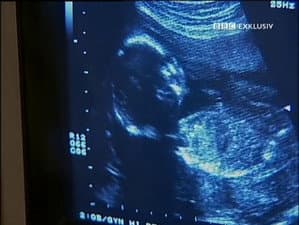
The first of a series following an ambitious project to track the development of a group of carefully selected babies from the womb to adulthood over 20 years to explore the interaction between nature and nurture in the development of the individual. Tonight Lord Robert Winston meets ten of the families from the group.
2004

The children are now 3 years old. Winston finds out if popular adults are marked out at this early stage in life and if life's loners are already apparent.

Communication is at the heart of being human and learning to communicate effectively takes a lifetime to perfect. In this episode, Professor Robert Winston explores how we develop the art of speech and body language to make ourselves understood and to understand others.

Self-esteem is a key element of happiness and success and makes us feel good about ourselves. During our lifetimes, self-esteem can fluctuate, because it is not something we are born with, it is something we acquire.
Streaming availability information not available

2001

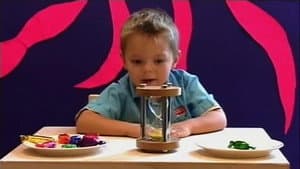
The one-year-old children are now ready to have their personalities tested. Can any of us change our personalities or are we doomed to be just like our parents?
Experiments demonstrate how it is possible to find and change the placing on the gender scale.
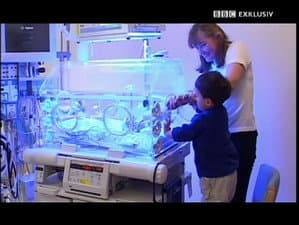
The topic of this episode is intelligence. Is it possible for parents to increase or decrease their child's intelligence, or is intelligence simply fixed in our genes? The baby's brain increases by 3 times in the first year, so factors such as nutrition, whether a baby is premature or not, and environmental stimulation are critical.
2007
Professor Robert Winston explores the psychology of success.
Professor Robert Winston explores the benefits and dangers of conformity.
Professor Robert Winston explores the importance of creative thinking.

2002

The children are now in their terrible twos. This episode is focused on memory, and how much we remember from our childhood. It turns out that we do remember more than we realize of our experiences even at this very young age. Trauma such as witnessing the breakup of ones parents, or being unwanted, can have long-lasting effects on a child.

In this episode, Professor Winston looks at the battle for independence. It is very important for children to develop their independence, and they start on this path by standing up to their parents. Some of the first words uttered by a child are usually those that help it to communicate their needs; some children manipulate their parents through temper tantrums. It's important for the parent to be firm with their children, but it's not easy.

What makes a child a potential star athlete, or a lifetime couch potato? Most of not all 2 year olds seem to have perpetual motion engines, but already at this stage, there are active children who can't stop moving, and those who are much slower moving.
2005

James Cachia lives in an impoverished area of South-East London. As his mother tries to protect the family from a threatening ex-boyfriend, nursery provides a valuable refuge. But is the turmoil at home affecting his chances? William Roberts, on the other hand, has all the advantages money can buy. But that doesn't mean that life is easy at the moment, William is locked in a battle of wills with his mother.

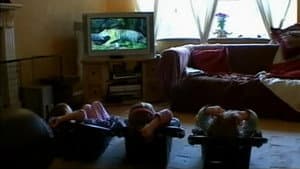
Professor Robert Winston turns to play and entertainment, analysing the viewing habits of triplets Alice, Mabel and Phoebe who not only live in a house where the TV is always on, but also go to sleep in front of it. Meanwhile, Ethan adores violent computer games, but how are they affecting his development?

Mums and dads approach things in different ways, giving children a variety of experience. So when parents separate, how are their children affected - and what kind of relationship can you have being a "part-time" dad? These and other questions are tackled by Professor Robert Winston.

As the children turn five, the programme follows their first term at school.
2017
In this episode Professor Robert Winston and Professor Tanya Byron discover how our teenagers' changing brains means that what they choose to do at 16 can shape their lives forever. With surprising new research in human biology and neuroscience, we reveal how the most baffling aspects of teenage life can be explained and illuminated by the latest understanding of the changing teenage brain.
Since our teens were born the world has transformed, from changing families to economic uncertainties and competition, all in the glare of the social media spotlight. In this episode Professor Robert Winston and Professor Tanya Byron follow our teens through their GCSE year to discover how they are being shaped by these unique times.
2006

Robert Winston returns for a new series, beginning by assessing the youngsters' ability to be happy. He discovers which areas of the brain develop self-confidence and contentment - and finds illuminating patterns when comparing the children's results with their parents'. Further tests identify the optimists and pessimists within the group, as well as revealing how resilient they are.

Professor Robert Winston examines how children's development is affected by the bonds with their siblings, a relationship thought to be even more important than that between parent and offspring. He asks why some brothers and sisters get on well and others loathe one another, and tests the youngsters' temperaments to learn how they respond to differential treatment.

Professor Robert Winston finds out how the six-year-olds are distinguishing between right and wrong, discovering the ways in which upbringing affects values in later life.

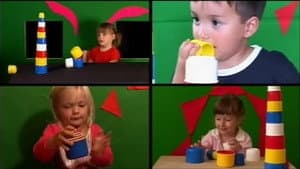
Professor Robert Winston presents an interactive show in which the children's ability to pick up new skills is tested through a series of elaborate games and puzzles. He also meets people who use all their senses to learn, including a former world memory champion and a man with synaesthesia.
2010
How does your personality shape your life? Can it dictate whether you are in the right job, make or break your relationship, influence your health and even how long you'll live? In this two part special to celebrate the tenth anniversary of Child of our Time, the children and their families explore their personalities, while presenters Robert Winston and Sophie Raworth reveal the results of the BBC's online Big Personality Test, the biggest ever investigation into the personality of the nation. In this first programme, we catch up on some of the Child of our Time Children, and find out their combination of personality traits. Has James Cachia's chaotic life contributed to him being a fun loving extrovert, and why does Charlotte Langeveld score so high on agreeableness? What does it mean to be high in openness and neuroticism, and can you be too conscientious? For a free Open University booklet Personality and Your Life call 0845 366 8019 or log onto www.bbc.co.uk/childofourtime
How does your personality shape your life? Can it dictate whether you are in the right job, make or break your relationship, influence your health and even how long you'll live? In this two part special to celebrate the tenth anniversary of Child of our Time, the children and their families explore their personalities, while presenters Robert Winston and Sophie Raworth reveal the results of the BBC's online Big Personality Test, the biggest ever investigation into the personality of the nation. In this second programme, we find out how understanding your personality can help you make important decisions in life and boost your chance of happiness. We visit a top city law firm and discover the link between personality and earnings, and go to a publisher of glossy magazines to find out how your personality can determine what kind of career you end up in. And we catch up on more of the Child of our Time Children - how are their personality traits influencing their lives? For a free Open University booklet Personality and Your Life call 0845 366 8019 or log onto www.bbc.co.uk/childofourtime
2013
In this programme we follow several of our children preparing to become teenagers and see how their parents and grandparents will cope! Having followed our children from tiny babies through to pre-teen tearaways, viewers will now get to hear them articulate their feelings about life more eloquently. We discover how they have coped with bullying, with having a famous mum or with learning to live with money worries. The children's bodies and brains are changing, and their interviews are illustrated with not only their lives today but our rich archive, giving us a unique view into the past.
All our families take part in both programmes but this one predominantly features Charlotte, who is now part of a large extended family; Jamie, coping with his parents' separation and divorce; triplets Phoebe, Alice and Mabel; Nathan from Scotland, who is beginning to push boundaries with his parents; Ethan from Northern Ireland; East Anglian Calvin; Rebecca from London; Tyrese from Birmingham; Charlie, whose mum was our youngest Child of Our Time parent; and Eve, who sadly lost her mum to cancer in 2008. We'll also find out from the parents what their expectations might be for their kids as well as explore the future of the family as a whole. How predictive has our 12-year study been - have we identified the key moments that made them who they are today - and how insightful will this archive be in terms of where the children want to go next? The programme gives a fascinating insight into the next generation; as they make the transition from children into young adults.
2008

New series of Professor Robert Winston's project documenting the lives of 25 British children until the age of 20. Now eight, the kids are struggling to make sense of gender roles. In the home they see their parents striving for equality. But increasingly they are looking to the outside world for their role models. So in a culture dominated by sex, celebrity and consumerism, what are they learning? And is the divide of the sexes growing?

Professor Robert Winston presents a documentary series following the lives of 25 British children until the age of 20. Children face more stress than ever before. Seven-year-olds sit exams, bullying is on the increase, and some children experience the devastating effects of terminal illness in the family. Does stress in childhood prepare youngsters for an uncertain life ahead, or is it too much, too young?

Professor Robert Winston presents a documentary series following the lives of 25 British children until the age of 20. For this edition, all the kids have been filmed continuously for 48 hours, putting their day-to-day lives under the microscope. Every laugh, every tear and every movement has been recorded, counted and analysed to build up a real picture of a day in the life of the average British child.