Loading...
Loading...


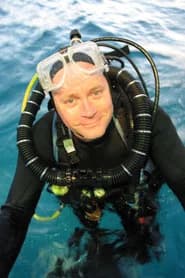
Jonathan Bird's Blue World is an educational television program about the underwater world. The show is hosted by underwater cinematographer Jonathan Bird. This series airs on PBS stations in the US. The program is designed for family viewing, and each segment finds Bird trying to unravel a mystery, witness an animal behavior or explore an underwater environment. The first season consisted of 5 half-hour programs filmed in standard definition, and the second season contained 7 half-hour programs shot in high-definition. The third season won four New England Emmy Awards. The second season also won four New England Emmy Awards. The pilot episode from season 1 won a CINE Golden Eagle Award. The program is magazine format with each television episode consisting of 2-3 segments. These segments appear individually on the Blue World website as webisodes.
“Hi, I'm Jonathan Bird! And welcome to my world!”

2009
Jonathan Bird's Blue World visits the New England Aquarium as a volunteer aquarist for a day to learn what it takes to care for thousands of fish in dozens of exhibits, up to the massive 200,000 gallon Giant Ocean Tank (GOT). What he finds is an eye opener—it's not all fun and games. Maintaining an aquarium is serious work. But it does have its benefits, as Jonathan discovers while diving in the GOT and feeding the sharks. This segment won a New England Emmy Award!
Even experienced divers rarely get to see the Mandarinfish, a colorful reef fish that is so shy, it only comes out of hiding for a half-hour a day. Jonathan travels to the south Pacific to film spawning Mandarinfish and witnesses an incredible secret ritual.
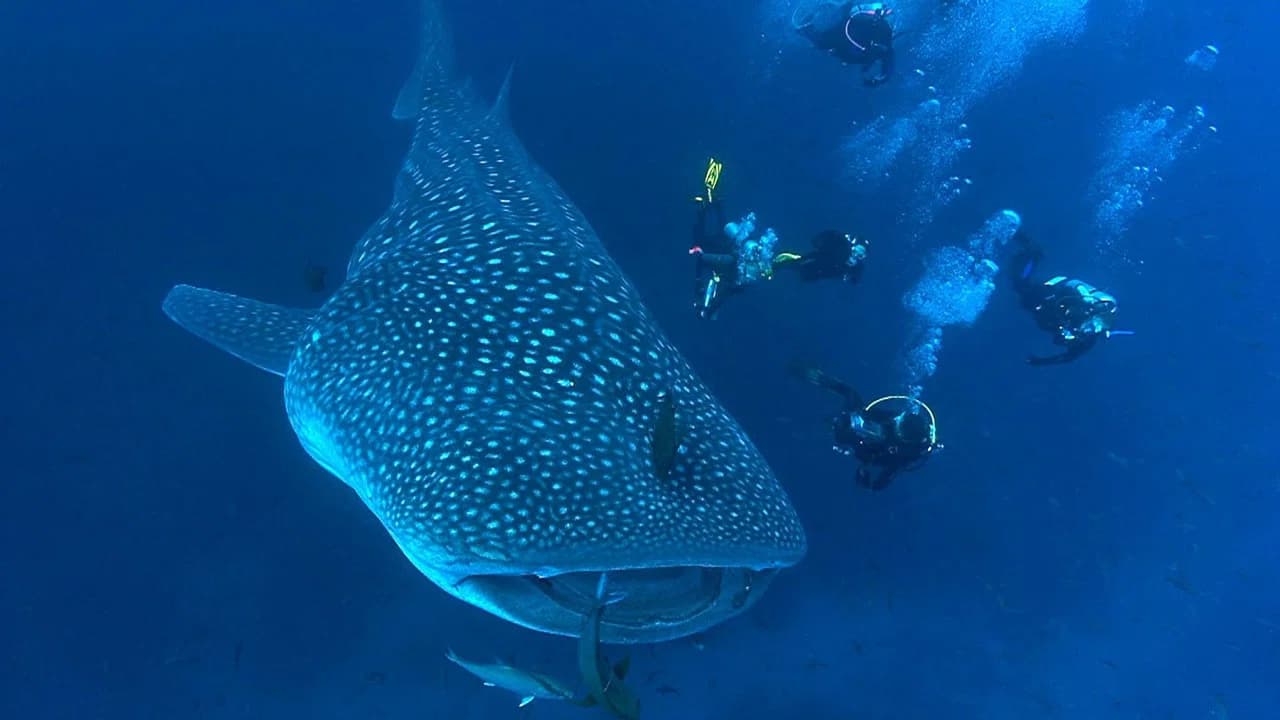
Jonathan travels to Holbox, Mexico in search of the massive whale shark—the world's largest fish. Reaching 50 feet long, these animals grow larger than a school bus, but they are completely harmless since they eat only plankton and small fish. Jonathan gets up close and personal to a mouth the size of a small car in his investigation to discover why so many whale sharks visit Holbox every summer.
Jonathan travels to the island of Yap in Micronesia to learn about and dive with the resident population of Reef Manta Rays! They have been photo identified and named.
Every summer, thousands of baby tropical fish are taken from the Caribbean up the east coast of the USA by the Gulf stream. Some make it all the way to New England, where they will die in the fall when water temperatures drop. Jonathan joins the New England Aquarium Dive Club on a rescue mission to save these baby fish before winter.
On an expedition to the Bahamas, Jonathan encounters dozens of Lemon sharks while trying to film a Tiger shark. But finally a Tiger shark arrives and you won't believe the incredible encounter Jonathan has with this enormous, hungry animal.
In Malaysia there is an island known for more sea turtles than virtually anywhere on Earth. Jonathan visits this amazing ecosystem to learn about the life cycle of sea turtles. He is surprised to discover an amazingly complex and competitive environment.
Where the tropical ocean meets the sea, a peculiar kind of plant thrives in shallow, salty water. These mangrove plants are incredibly important for shoreline protection and baby fish habitats. Jonathan investigates life in mangroves by visiting both Caribbean and Pacific mangroves.
They have big, sharp teeth, long eel-like bodies, and they look like they could bite your fingers right off—but Jonathan can pet them. They're Wolffish, and Jonathan visits both Atlantic and Pacific species. You won't believe the amazing encounters he has with these friendly but mean-looking fish.
While most fish are completely harmless to people, there are some species that are mildly to extremely venomous and can actually kill humans. Jonathan travels the world to meet some of the most venomous fish in the sea.
Jonathan travels to Canada in search of the Greenland shark, a huge, lethargic shark that lives in arctic waters. It takes days of effort, but finally, in dark, cold, murky water, Jonathan finally meets this elusive animal, and its nothing like he expected.
At first glance, starfish, more properly called sea stars, aren't doing much of anything. But Jonathan's investigations reveal a slow-motion predator that hunts and attacks its prey. Traveling the world, Jonathan investigates sea stars from the tropics to the Antarctic and uses time-lapse photography to reveal an amazing complexity to the world of the sea star.
Thanks to the Disney/Pixar movie Finding Nemo, virtually everyone has heard of the clownfish. Jonathan travels the Pacific to investigate the behavior of real clownfish. Even though they don’t actually talk in real life, they are beautiful and fascinating fish to observe.
Do shark feeding frenzies really exist? Will sharks turn into a bunch of cannibals if they start competing for food? Jonathan wants to find out, and travels to Micronesia for an experiment. You won’t believe the fantastic result!
In the north Atlantic, the American Lobster is the undisputed king of crustaceans. It's also a tremendously important commercial catch. While all the other fisheries are collapsing, why are lobsters resisting the trend? Jonathan goes out with a Maine lobsterman to learn why, and he dives down below to find the biggest lobsters he has ever seen. This segment won a New England Emmy Award!
Sharks and many other large ocean animals have sucker-equipped fish called remoras sticking to them. What are the remoras doing? Do they harm the shark? Jonathan goes on a mission to investigate remoras and their role in the food web. He even sticks one on himself.
Jonathan visits the world-famous "Stingray City" in Grand Cayman with world-renown marine artist Dr. Guy Harvey to learn about Dr. Harvey's research on Stingrays and how they cope with massive numbers of tourists.
In this season 2 finale, Jonathan treks all the way to Antarctica to investigate life south of the polar circle. Along the way he dives in the majestic kelp forests of Patagonia, where crabs rule the sea floor. Once he arrives in Antarctica, his adventures continue. He swims with penguins, dives under an iceberg, meets a massive jellyfish 3 feet across, and has an incredible encounter with a Leopard seal, the apex predator of Antarctica. This program won a New England Emmy Award!

2008
Jonathan joins Charlie Donilon on his shark charter boat in Rhode Island, Massachusetts, and learns about how shark tagging has shed light on the biology of and behavior of Blue sharks. Tagging has shown that these incredible swimmers actually migrate completely across the Atlantic ocean. Jonathan tries his hand at tagging a shark and then swims with Blue sharks. We also learn that Blue sharks are not nearly as vicious as they have been reputed to be, and the divers are actually able to pet the sharks!
Jonathan Bird’s Blue World: Cavern Exploration is a story about aquifers and the flow of water from within the Earth to the surface. In this adventure, Jonathan explores Ginnie Springs, a place in Florida where warm, fresh water flows from underground to the surface, creating a surface river. The head of the spring is a popular place for swimming and diving. Jonathan explores the spring underground to see the kind of life in the waters of the spring as well as to investigate the source of the water. This segment features a type of diving called overhead environment diving which can be hazardous. A separate feature on overhead environment diving accompanies this segment, explaining the risks and safety procedures
The Sperm whale holds many records. It is the deepest-diving whale on Earth, the largest toothed whale on Earth and has the largest brain on the planet too. On top of that, it has a reputation for being a vicious beast, thanks in part to Herman Melville's Moby Dick. But the real Sperm whale is a lot different than people think. It has a highly-evolved social life, operates at depths where nobody can see them most of the time, and uses sonar which is so sophisticated that it makes the Navy's electronics look like toys. Sperm whales are very hard to find and even harder to film. On the island of Dominica in the Caribbean, Jonathan repeatedly attempts to get close to the elusive whales, until finally he succeeds and has an incredible experience eye to eye with a giant who investigates him with powerful sonar clicks.
In the warm and blue waters off Hawaii, Oceanic White Tip sharks often follow behind pods of Pilot whales. For the longest time, biologists have had no idea what is going on. Are they eating the whales? Are they stealing food from the whales? In an expedition to follow the sharks and observe them, Jonathan finally figured out what is going on, and you won't believe the disgusting truth!
Perhaps best known for its role as the antagonist in the film Jaws, the Great White shark is probably the world's most feared animal, and easily the most fearsome of the sharks. Jonathan travels to Mexico to meet a Great White up close and personal. Nothing can prepare him for the sheer size and strength of a fully grown Great White shark! He learns how white sharks are being studied and how they react to both people and sea lions.
The Thresher shark may very well be the strangest looking shark in the world, with a tail almost as long as its body. This shark is very rare, almost never seen by divers....until now. Using advanced diving technology, Jonathan visits a remote reef in the Philippines where Thresher sharks show up every morning to be cleaned by small fish.
In this exciting segment from the first season of Jonathan Bird's Blue World, Jonathan and his team set up an experiment to attempt to learn why Sand Tiger sharks hang out around certain shipwrecks off the coast of North Carolina. They dive during the day and at night to discover the secrets of these mysterious shark aggregations.
Jonathan travels to Florida to learn about the West Indian Manatee and the threats it faces from boat strikes, and habitat loss as well as efforts to protect and save the manatee.
In the Bahamas, a group of wild Spotted Dolphins play "keep away" with a bandana--a game they invented with seaweed and people started playing with them. Jonathan travels to the Bahamas with dolphin expert Wayne Scott Smith to meet these playful animals and try playing the Bandana Game with them.
What happens when a Beluga whale, normally found far north in the arctic, suddenly shows up in a Bay in Nova Scotia? What happens when she starts swimming with people and approaching boats full of tourists? This segment shows how one incredible friendly whale transformed a town, and captured the hearts of children and adults alike.
Once the pride of the German Navy, this 700 foot long heavy cruiser was used by the U.S. as a test target for not one but two atom bombs at Bikini atoll. Today, at the bottom of the ocean, the radiation levels of the Prinz Eugen are low enough for safe exploration. Jonathan joins historian Mark Miller on a trip to explore this mysterious shipwreck. What they find about the condition of this wreck is surprising.
Of all the animals in the oceans, the hammerhead shark may be one of the strangest looking. The exact purpose of the wide, flat head is a mystery, but several theories abound. We travel to the shark-infested waters of the Galapagos in Ecuador and to a research station in Hawaii to learn about the unusual habits of these sinister-looking sharks. Jonathan swims in schools of hundreds of hammerheads, and yet the sharks ignore him. What are the sharks up to?
During World War Two, a fierce battle between American and Japanese forces on Kwajalein atoll left a trail of debris on the deep lagoon floor. This lagoon now has one of the largest collections of well-preserved aircraft in the world. As part of the first ever film crew allowed onto this secret military base, Jonathan explores a B-25, F4-U Corsair and Dauntless dive bomber still sitting on the bottom of the ocean near Roi-Namur, as if ready to take off.
Giant clams are no myth. In New England, people love clam chowder, but in the Pacific, some of the clams are as big as a suitcase! On an expedition to Micronesia, Jonathan goes in search of Giant Clams. These clams are so big that people used to think they caught people--and it almost looks like they could. It turns out that the problem is too many people eating the clams.
In 1998, Jonathan made a remarkable discovery about Basking sharks, the second largest fish on Earth. While diving with Basking sharks in the frigid waters of the Bay of Fundy, Jonathan saw parasitic lampreys on the backs of the sharks. This had never before been documented, so he returned the next year with a shark biologist and a lamprey biologist to attempt to recover living lampreys from the backs of Basking sharks. They didn't think Jonathan could do it. Wait until you see what happens!

2011
Jonathan visits the Georgia Aquarium in Atlanta—the largest aquarium in the world—where they keep not one but four whale sharks in captivity, as well as two manta rays. Whale sharks are the largest fish on Earth and Jonathan learns how these animals are maintained in captivity while he dives with them in a 6 million gallon fish tank!
Jonathan travels to Andros, an island in the Bahamas, to investigate underwater caves that start in blue holes. A blue hole looks like a pond, but leads into a vast underwater cave system. In the Bahamas, these caves often lead to the ocean. As Jonathan explores the ocean end of the caves, he learns how the two systems are connected.
The Goliath Grouper is one of the largest bony fish in the world, and this made it the target of intense fishing efforts for many years. After nearly becoming extinct, the fish was afforded legal protection enacted in 1990. Twenty years later, the protection is finally starting to pay off. Jonathan joins famous National Geographic photographer David Doubilet as he visits a shipwreck in Florida where Goliath Groupers gather to spawn every year, and meets dozens of these massive animals!
Jonathan visits the largest reef system in the world: the famous Great Barrier Reef of Australia. In addition to going diving, he visits the reef as non-divers often do—by submarine, helicopter and even in a bubble helmet! Along the way he meets some amazing animals such as a friendly sea turtle and a giant wrasse!
Jonathan explores how animals in the ocean use color, not just for camouflage but also to stand out!
In 2009, a lone pilot whale was stranded on a Curaçao beach. Fortunately, he was rescued by the staff of the Curaçao Sea Aquarium. They named him Sully and spent months nursing him back to health. After being successfully rehabilitated, Sully refused to go back to the wild and was adopted by Sea World San Diego. Jonathan learns what was wrong with Sully and what had to be done to save him.
Jonathan explores cleaning stations on the reef, where animals get cleaned of parasites and infection by other animals. Some examples shown are anemones and anemonefish (clownfish), wrasses, shrimp, manta rays, moray eels, Goliath groupers, sea turtles and barracuda. This episode was filmed in many locations such as Malaysia, the Philippines, Yap, Australia's Great Barrier Reef and the Caribbean.
In this intriguing segment, Jonathan goes diving with a group of playful sea lions in the Galapagos Islands. Impressed by the apparent inquisitiveness of the sea lions, Jonathan heads to the Mystic Aquarium in Connecticut where he learns how they train sea lions, and how smart they are. Jonathan finds out that the sea lions at Mystic know more than 100 commands, and he gets a lesson in sea lion training!
Every year, Humpback whales in the North Atlantic make a long migration down to the Caribbean to have their calves in warm, calm water. Many of these whales go to one particular area called the Silver Banks near the Dominican Republic. Jonathan spends a week in the Silver Banks filming whales underwater, and you won't believe how close he gets to the whales, and the exceptional behaviors he observes!
Jake is a 13 year-old fan of Jonathan Bird's Blue World. Jake wrote an essay for school about his dream to dive with Jonathan, and the Blue World team is making it come true. The segment begins when Jonathan and his film crew make a surprise visit to Jake's house. Their mission? To get him certified to dive so he can go on a dive adventure with Jonathan. The segment concludes with Jonathan and Jake exploring the underwater world of Grand Cayman Island together!
Jonathan visits the Curaçao Sea Aquarium to learn about their dolphin program from George Kieffer, the head dolphin trainer. After taking George's dolphin class, he joins him on a dive with Annie, one of the dolphins that is trained to swim with divers on the reef outside the resort. Why don't the dolphins swim away? That's what Jonathan finds out!
Many people don't realize that there are snakes that live in the ocean. And believe it or not, they're actually considerably more venomous than land snakes! Jonathan travels to Australia and the Philippines to find these marine reptiles, and learns why they are almost completely harmless to divers.
Jonathan explores different types of symbiosis in the ocean, including mutualism, commensalism and parasitism, and how animals use it for survival.
How does an animal like coral that lives attached to the bottom (and can't move around) create new colonies far away? Jonathan spends a week in Bonaire studying coral spawning. He learns how these animals release eggs into the water at the right time of the year to create new coral colonies. But they only do it at night, at certain times of the year. Jonathan's film expedition requires careful timing.
In the Yucatan jungle of Mexico, Jonathan explores Muyal-Ha sinkhole (cenote), which is over 100 feet deep and has a false bottom created by clouds of hydrogen sulfide. It’s an incredibly eerie place! A cenote is a deep "pond" created when the roof of a flooded cave collapses exposing the water below.
Jonathan explores how animals in the ocean defend themselves using venom, spines, teeth, speed, maneuverability, ink and even a squirt gun!
Jonathan explores the basic biology of sharks and what makes them different from bony fish including buoyancy, respiration, coloration, etc.
Deep underground, in caves, there is no light. Because there is no light, there is almost nothing for animals to eat. Yet life survives here. The top predator in these sunless ecosystems is a tiny blind cavefish, only a few inches long. These fish are extremely rare, only found in the dark recesses of caves. Jonathan joins Christine Loew, a veteran cave explorer, on a mission to film this elusive fish in Mexico's Riviera Maya.
Jonathan examines the biology of coral reefs and their importance to the marine ecosystem.
When most people think of a shark, they think of an animal like the Great White or a reef shark. But there are hundreds of small, bottom-dwelling sharks like the Wobbegong that blend in to the bottom to hunt as ambush predators, the Indonesian Walking shark that walks on its fins, or sharks like Nurse sharks that simply spend most of their time resting on the bottom. Jonathan travels from Australia to Indonesia looking at interesting sharks that don't look like sharks!
Jonathan heads down to Cancun in Mexico on an expedition to film one of the world's fastest fish—the sailfish! He gets in the water with a school of sailfish zooming around hunting sardines. In addition to having huge dorsal fins giving them their name, the sailfish also have long pointy bills like spears they use to catch their prey. Jonathan dodges the bills while filming the action!
In Bar Harbor, Maine, Jonathan spends a day diving with his friend Diver Ed on his boat the Starfish Enterprise. Diver Ed and his wife Captain Evil take people on a virtual dive called the Dive-In Theater with a video camera attached by a long cable to a TV monitor on his boat. Their ocean explorations are famous around New England, and when Jonathan joins the crew for a day, the guests are in for a good time!
Jonathan goes to a cleaning station to watch a Potato Grouper (also called a Potato Cod) get it's nose picked by a cleaner wrasse! Then he tries to get cleaned himself!
2015
Back in 2008 when we last worked with Tiger sharks, things were different. We were thrilled just to be in the water with Tiger sharks and no cage. But in the past few years, interactions with Tiger sharks have become much more engaging. Now the sharks are being hand fed and handled by divers. In this exciting segment, Jonathan learns how to flip a Tiger shark from experienced shark handlers Connor Cassidy and Rich D'Argento aboard the Dolphin Dream.
In this spectacular episode, Jonathan joins world-renown cave explorer Brian Kakuk to investigate the Crystal Cave of Abaco, Bahamas--considered the most highly-ornamented underwater cave in the world! The stunning crystal formations in this cave are simply stunning! It is considered one of the top cave diving destinations in the world.
Diving around a sandy, muddy, or rubbly sea floor is often called "muck" diving--even though there is rarely any actual muck. There are all kinds of unique and interesting animals that live in this habitat. Jonathan joins muck expert Jeff Nelson to visit a world-renown muck diving site under the Blue Heron Bridge in Riviera Beach, Florida to find all kinds of weird and outlandish animals like sea horses, octopuses (octopods!), Batfish, snake eels, sea hares, and stingrays. But his main interest is finding a jawfish with eggs. You won't believe how the male jawfish guards his eggs!
In this exciting Blue World adventure, Jonathan travels up to Iceland in search of a dive site called Silfra which supposedly has the clearest water in the world! But it's cold!
Books and magazines often say that Tiger sharks will eat anything. They have been referred to as the "Garbage cans of the ocean." Multiple references have been made to them eating license plates of all things. In this exciting episode, Jonathan goes out to the Bahamas to see if a Tiger shark will eat a GoPro camera. Then he tries to put a camera on a shark and turn the shark into the team's newest cameraman...I mean camerashark!
In this northern Florida diving adventure, Jonathan teams up with cave diver Wayne Kinard and explores Ichetucknee Spring, otherwise known as "Jug Hole" in Fort White, Florida This is Jonathan's first real cave dive in Florida, and he learns how these caves are different from the caves in the Yucatan and Bahamas. It's an epic cave diving adventure!
In the season 5 premiere episode, Jonathan travels to Abaco, Bahamas for an intensive sidemount cave diving class with world famous cave explorer/instructor Brian Kakuk.
In this spooky underwater adventure, Jonathan travels to Merida, in Mexico's Yucatan peninsula, to explore cenotes that were used by pre-Columbian Mayans for human sacrifices. Reaching the cenotes requires rappelling down into the Earth and lowering all the gear. The underwater exploration requires advanced cave diving techniques and the cinematography in this environment is extremely challenging, particularly the lighting. This beautifully-shot adventure will leave viewers on the edge of their seats!
In this exciting underwater adventure, Jonathan explores the seamounts of the Flower Garden Banks National Marine Sanctuary in the Gulf of Mexico, including Stetson Bank and the Flower Garden Banks. He encounters amazing coral reefs, barracudas, frogfish, parrotfish and witnesses a coral spawning event.
From 1958 to 1961, Sea Hunt, starring Lloyd Bridges as underwater action hero Mike Nelson, was one of the most popular television programs in the world. It created a generation of diving enthusiasts. Today, the history of Sea Hunt and the vintage scuba gear of the era are celebrated at Sea Hunt Forever, a festival that takes place at Silver Springs State Park, Florida, the original site of much of the underwater filming for the TV program. Jonathan joins the fun at Sea Hunt Forever where he witnesses underwater knife fights, spear guns and even an underwater torch!
Jonathan heads to North Carolina to explore the offshore shipwrecks of the "Graveyard of the Atlantic" which have become home to Sand Tiger sharks. The sharks are unwitting bodyguards to small fish seeking protection from predators and have developed a clever way to hide from the fish and to hover with perfect buoyancy control.
Jonathan visits the School for Field Studies in the Turks & Caicos Islands to learn how college students conduct field work in their pursuit of degrees in marine studies. He helps tag sharks, study conch and investigate marine protected areas!
In this shark-filled adventure, Jonathan travels to the Bahamas to meet Neal Harvey, a world-renown shark handler who will attempt to teach Jonathan how to put Caribbean Reef sharks into a relaxed state known as tonic immobility!
Astronauts are trained underwater at the Neutral Buoyancy Lab in Houston, TX.
In this epic adventure taking place on two coasts, Jonathan investigates the world's largest octopus, the Giant Pacific Octopus! He begins by meeting Sy, one of the octopuses at the New England Aquarium in Boston with cold water aquarist Bill Murphy. Then Jonathan and Bill travel to the Seattle Aquarium to two of their octopuses Lucy and Odie with Seattle Aquarium aquarist Kathryn Kegel. Bill and Jonathan join Kathryn and her team on some dives in Puget Sound to survey wild octopus populations. Along the way, Jonathan witnesses an incredible octopus fight and gets a small glimpse into the social lives of the Giant Pacific Octopus! Get ready for an incredible Blue World adventure!
In the Bahamas, Jonathan joins shark biologist Dr. Stephen Kajiura from Florida Atlantic University to perform an experiment which demonstrates how the electrosensory system of sharks works.
Jonathan explores the history of diving by heading down to New Jersey to meet up with the Garden State Underwater Recovery Unit to try diving in a vintage Mark V helmet! It's a completely new experience!
In the Gulf of Mexico, Jonathan visits several oil rigs to scuba dive on the structure and learn how these offshore platforms attract marine life as artificial reefs.

2014
At a remote atoll in the Maldives, Manta rays gather in large numbers for just a few weeks each year to feed on plankton that accumulates in a small lagoon. Will Jonathan manage to time his visit right and find the mantas?
In this exciting adventure, Jonathan travels to Manuk, a tiny, uninhabited volcanic island several hundred miles from the nearest populated island in Indonesia, on a mission to discover why the waters of this remote place are teeming with thousands of venomous sea snakes!
Jonathan travels to Mexico for an up close encounter with Bull sharks, infamous for the fact that they are known to be the most dangerous species of shark to humans. He gets to try a chain mail anti-shark suit, and meets a biologist who is studying the sharks to learn more about their population and habits.
At NASA's Neutral Buoyancy Lab in Houston, astronauts train for space walking underwater, in a giant pool about half the size of a football field. Jonathan gets a rare and fascinating look into this high-tech diving as he ventures underwater with astronauts.
Hawaiian Monk seals are a critically endangered group of warm water seals that are only found in the Hawaiian archipelago. Only about 1,200 of the animals remain. Jonathan sets course for the Forbidden Island of Ni'ihau to meet some of these reclusive animals, and gets a fascinating insight into the lonely world of the Monk seal.
Jonathan travels to Bonaire to meet an exceptional group of injured military veterans who are learning to scuba dive as a form of physical therapy.
Jonathan joins a group of volunteer divers as part of an international event called the Great Annual Fish Count to take a census of marine life across the globe. His mission: dive the chilly waters of Massachusetts with a pencil...and count fish!
In the Florida Keys, several ships have been sunk intentionally as artificial reefs to provide habitat for fish and entertainment for scuba divers. Jonathan visits three wrecks of different ages to see how these wrecks turn into reefs and what it means to the local marine life.
Jonathan travels to the island of Bonaire to take a course in freediving from Karol Meyer, a world-champion freediver. Soon he learns how to hold his breath and dive—with no scuba tank!
Jonathan travels to upstate New York to learn how biologists are working to save the sturgeon in the St. Lawrence river. During a dive he films an amazing spectacle that has never been recorded before--Lake Sturgeon spawning!
Jonathan visits an underwater farm in Key Largo where they grow coral! He joins the staff of Coral Restoration Foundation in helping to transplant and propagate staghorn coral which has become threatened in the keys.
At the Mystic Aquarium in Connecticut, Jonathan gets up close and personal with Beluga whales as he learns what its like to train and take care of these thousand pound marine mammals.
Tucked away in the forest on Andros Island in the Bahamas is a small circular pond. But this particular pond is actually a Blue Hole, over 400 feet deep. Jonathan explores the depths of this Blue Hole, first explored by legendary ocean explorer Jacques Cousteau, and finds some fascinating biological processes going on way down deep.
Off the Big Island of Hawaii, Jonathan cavorts with a pod of playful Spinner dolphins and learns how they hunt at night and sleep during the day by shutting off half their brains at a time!
Jonathan visits Aquarius Reef Base--the world's only undersea lab where scientists live in saturation for days or weeks at a time, studying the ocean. It's an amazing combination of science fiction and undersea adventure!
In this fascinating biology segment, Jonathan explores the world of skates and rays. From the plankton-eating Manta ray to the Electric Torpedo ray, these animals have a variety of surprising adaptations for survival in the ocean.
In a remote part of Andros Island in the Bahamas, a deep crack in the ground leads into a beautiful and stunning underwater cave system. Jonathan joins a veteran cave explorer to plumb the crystal clear water in the depths of Stargate Blue Hole.
A sponge might not look like much, but these simple animals with no brain or ability to move have lived on Earth for hundreds of millions of years. They can hunt prey and spawn, and Jonathan demonstrates how in this fascinating segment about the biology of sponges!
At the remote, lush, uninhabited Cocos Island, 300 miles off the coast of Costa Rica, Jonathan witnesses a nightly hunting ritual. Dozens of Whitetip Reef sharks join together into roving gangs to hunt fish in the reef. But sometimes the fish are pretty good at getting away.
Off the coast of southern California, Catalina Island is known as one the greatest places in the world to see Kelp Forests. Jonathan travels to Catalina Island to explore these fantastic undersea forests of plants and meets the animals that live there, including a Torpedo ray that attacks his camera!
The St. Lawrence river connects the Atlantic Ocean with the Great Lakes and as such has been a major shipping channel for hundreds of years. The bottom of the river is littered with the remains of ships that ran aground or were lost during storms. Jonathan explores some of the wrecks and gets a unique look into history.
In this fascinating new adventure, Jonathan joins a team of underwater archaeologists who are excavating the sunken wreck of Blackbeard's pirate ship the "Queen Anne's Revenge" off the coast of North Carolina near Beaufort. He assists underwater and then tours the lab where artifacts are conserved for display at the museum.
At night off the Kona coast, divers use lights to attract vast clouds of plankton, which in turn attract dozens of Manta rays to feed on the plankton. Jonathan travels to Hawaii to meet these Manta rays, including one particular animal named Lefty who has been coming to this site since 1979.
Jonathan travels to the St. Lawrence river in upstate New York and the island of St. Thomas in the Caribbean to investigate invasive species like zebra mussels and lionfish and how they affect the ecosystems into which they have been introduced.
In this exciting Blue World adventure, Jonathan Bird hitches a ride on a submarine down to 1,000 feet at Cocos Island, Costa Rica, where he finds strange fish and even sharks!
2017
Jonathan is muck diving in Dumaguete, Philippines again, but this time he is investigating the muck at night! He finds all kinds of cool animals, including a hunting octopus, a pair of Ambon scorpionfish, cuttlefish, bobtail squid and much more!
Jonathan heads to downeast Maine in scenic New England to visit the Pennamaquan River, where hundreds of thousands of Alewives are making their way upstream to spawn.
When the Blue World team aboard the Live-aboard dive boat Sea Escape encounters a Humpback Whale helplessly entangled in marine debris, they launch a daring rescue operation with the assistance of the Solmar V. This segment follows the adventure of freeing the whale from certain death entangled in fishing line, buoys and kelp!
Ten years after filming Great White Sharks at Guadalupe Island in Mexico for the first season of Jonathan Bird's Blue World, Jonathan and the team return to Guadalupe to see how it has changed. Are the sharks still there?
Jonathan and Cameraman Bill travel to the Daymaniat Islands in Oman in search of Zebra Sharks (also called Leopard sharks in some parts of the world). The diving in Oman is fabulous! They encounter huge schools of fish, cuttlefish, sea turtles and finally...the elusive Zebra shark. All while diving in 110° F heat!
Jonathan goes in search of one of the most elusive fish in the North Atlantic: the Goosefish (sometimes called a Monkfish). He travels to the wreck of the Patriot on Stellwagen Bank where he finally meets the weirdest fish in the sea--the American Anglerfish.
This amazing Behind-The-Scenes Blue World adventure takes viewers to Devil's Hole Cave (sometimes called Devil's Hole II) in Nevada to explore the aquifer that lies beneath Death Valley! The Blue World team is working on their first giant screen film for IMAX® Dome (OMNIMAX®) theaters, featuring the most incredible cave diving adventures around the world. This epic Blue World episode takes viewers behind the scenes of our shoot in Nevada.
Jonathan Bird goes to South Carolina with Cameraman Tim to meet Alan Devier, a world-renown shark tooth hunter and dive for fossilized Megalodon shark teeth in the murky depths of the Cooper River.
Jonathan and his family volunteer to help on a farm--an underwater farm!! On Bonaire, the Coral Restoration Foundation is growing coral to replenish damaged reefs, but it's a labor-intensive project that takes volunteer help. It turns out the kids are really good coral farmers!
In this epic adventure, Jonathan investigates the resurgence in the New England Gray Seal population that is happening after more than 40 years of protection under the Marine Mammal Protection Act. He joins a team of NOAA researchers on Muskeget Island near Nantucket who are studying the population growth with aerial surveys during the pupping season. He dives with seals at the Isles-of-Shoals in Maine and learns how the seals affect the other populations in the ocean such as fish and sharks. Not everyone is thrilled about the return of the seals, but they sure are adorable and curious!
Jonathan travels to Oslob, Cebu, Philippines to swim with wild Whale sharks that are actually fed every day for the tourists. We used to joke about "chumming" for an animal that eats mostly plankton, but in Oslob, they are actually doing it, and making thousands of people into shark lovers along the way.
In this exciting episode of Blue World, Jonathan, Todd and Bill travel all the way to Egypt to dive the Red Sea, visit the pyramids and ride some camels! Along the way they meet dolphins, sea turtles, sharks and dive some of the most colorful reefs in the world!
In this dark and spooky episode, Jonathan goes night diving in the Red Sea to find an octopus on the prowl, and a moray eel hunting fish, as well as many other strange and exotic nocturnal animals!
With both of the kids now certified to dive, Jonathan and Christine take their whole family on a dive trip to Buddy Dive Resort on Bonaire. They go shore diving, boat diving and night diving. The kids build valuable scuba skills and they check out some awesome marine life!
In this fun-filled manatee adventure, Jonathan teams up with 7 year old Elizabeth from "Elizabeth Swims" on a trip to meet Florida manatees. At Three Sisters Spring in Crystal River, Jonathan and Elizabeth come face to face with these huge gentle sea cows as they relax near warm water springs during cold weather.
In this exciting cave diving episode, Jonathan, Zach and Todd venture into Little River Spring in Florida on a cave diving search for the rare endemic Pallid Cave Crayfish. If you like Blue World cave diving episodes, you are going to love this one!
Jonathan investigates the mystery of why Great Hammerhead sharks often swim tilted to the side. Featuring the groundbreaking research of biologist Dr. Nicholas Payne with the help of legendary underwater cinematographer Andy Casagrande, this video explains the impressive way that hammerhead sharks tilt to save energy when they swim and the reason they have to keep swimming.
In an epic expedition down under, the Bird family goes on a search for the most exquisite seahorse in the world--the Leafy Seadragon! Just south of Adelaide in South Australia is a place where the "Leafies" can be found! But the water is cold and the wind is blowing!
This is the episode you have been waiting for! An epic collaboration video between the Brave Wilderness team and the Blue World team! Jonathan teams up with Coyote Peterson, Mark "Vins" and Mario to help filming the start of their new series Blue Wilderness! To kick things off, we all travel to the Bahamas to dive with Tiger sharks at "Tiger Beach" aboard my favorite dive boat, the Dolphin Dream. And you won't believe who shows up along with the Tiger sharks.
In this episode of Blue World, Jonathan and Cameraman Bill are night diving with sharks in the Bahamas! And just for added fun, we are taking the Brave Wilderness team with us! It's sharks after dark! And we witness a spectacular chase between a Lemon shark and a Southern Stingray.
On an exciting dive trip to the Bahamas with the Brave Wilderness team on the dive boat Dolphin Dream, the Blue World crew encounters a famous Great Hammerhead named Patches. And this shark is one friendly fish!
In this zany action-packed episode, Jonathan heads to the Bahamas with Cameraman Tim, Cameraman Bill and the Brave Wilderness team to play the Bandana Game with wild Spotted Dolphins!
In this amazing adventure, Jonathan teams up with world-renown IMAX filmmakers Howard and Michele Hall on a filming expedition to Busuanga, Palawan in the Philippines searching for the elusive and rare Dugong. Although Dugongs are closely related to manatees, they are much more difficult to find and exceptionally shy. The Blue World team has their work cut out for them on this trip, but the reward for patience is a truly incredible look into the lives of dugongs, and a shocking discovery!
Jonathan teams up with Wayne Kinard from Amigos Dive center to do a cave dive at Wes Skiles Peacock Springs State Park, making a traverse from the the "Peacock 1" entrance to Olsen Sink and back. (A traverse is where you enter the cave at one entrance and then you swim underground to another entrance.) Along the way Wayne shows off some of the interesting parts of the cave!
2019
It's the Season 7 premiere! Jonathan and the whole family head to Australia to dive with the world's largest cuttlefish spawning aggregation near Whyalla, South Australia. These are some huge cuttlefish!
Jonathan and Cameraman Zach explore Blue Grotto, one of the most popular dive training sites in Florida, as well as home to a hidden, secret cave dive! We get to meet Virgil the turtle, go in the diving bell and even meet an underwater superhero.
In January, 2018, the Blue World team tagged along for the USGS annual manatee assessment process with team leader Dr. Bob Bonde. And we went down to the USGS office to learn about the photo-ID system run by Cathy Beck.
Jonathan and Cameraman Tim explore a remote wreck in the Bahamas known only as the "Sugar Wreck" since it was carrying a load of molasses when it sank. But the wreck is only in 20 feet of water, so storms have taken a toll on the wreck over the years. What will it look like now?
Jonathan is muck diving in Dumaguete, Philippines again, but this time he is investigating the muck at night! He finds all kinds of cool animals, including a hunting octopus, a pair of Ambon scorpionfish, cuttlefish, bobtail squid and much more!
In this Bermuda dive adventure, Jonathan takes the whole family on a wreck dive with Blue Water Divers! The wreck of the Hermes is one of the most popular dives in Bermuda, and it will Elise and Liam's first wreck dive!
Jonathan travels down under to South Australia in search of a famous dive site: the Edithburgh Jetty. Night dives under this jetty on the Yorke Peninsula are renown for amazing encounters with a variety of spectacular and odd creatures, including the Pajama Squid. Jonathan is on a hunt to find a Pajama squid and encounters quite a few animals along the way, including more than one species of octopus, mating Bobtail squid, sea horses and much more!
Jonathan is nowhere to be found, so Cameraman Bill treks to Lake Winnipesaukee in the middle of winter to learn how to ice dive!
Jonathan travels to the Channel Islands in California on a search for a rare Angel shark, which lives in the sand.
Jonathan joins legendary underwater filmmakers Howard and Michele Hall on an expedition to the Philippines where they meet some friendly sea turtles feeding on sea grass.
Jonathan visits the remote islands of Palau in the Pacific where he dives the amazing reefs and drop-offs from the Rock Islands Aggressor! This is part 1 in a series of exciting Palau adventures!
In another episode of the epic Palau Adventure, Jonathan visits world famous Jellyfish Lake to see thousands of jellyfish and find out of they sting or not!
In the third Palau adventure, Jonathan and Julia explore a few of the wrecks for which Palau is famous, including an amazingly well-preserved airplane wreck!
In Puerto Galera, Philippines, Jonathan and the gang are on the hunt for one of the rarest celphalopds--the Mimic Octopus, so-named because of its ability to mimic other animals.
In part 2 of Jonathan's epic Palau Adventure, Jonathan dives in some high current sites like Peleliu Corner and the German Channel searching for large marine life!
Zach-of-all-Trades Peterson, Cameraman Zach, and Jonathan head out to Exuma, Bahamas on a mission to discover and dive a brand new ocean cave by searching for ocean blue holes that are off the beaten path. It's a real life scuba adventure!!
In the latest Blue World Adventure, Jonathan and Zach head to Cozumel to search for one of the most exotic and rare fish in the Caribbean!
In this cave diving adventure, Jonathan explores ocean caves (sometimes called Ocean Blue Holes) around the island of Grand Exuma in the Bahamas!
In the Exuma Islands of the Bahamas, Jonathan and Cameraman Zach explore an ocean cave that extends under an island! And they visit the famous Exuma swimming pigs while they are there!
Jonathan and Zach travel to Cozumel in search of the legendary Sleeping Shark Caves. Led by local diving expert JP Maturana of Scuba Life Cozumel, the team goes out on an epic diving adventure!
Jonathan visits shark biologist Dr. Stephen Kajiura at Florida Atlantic University and learns how he studies huge schools of Blacktip sharks that appear in the winter off the coast of Florida. Using airplanes, drones and of course boats, Dr. Kajiura has learned why these sharks come to Florida in huge numbers every year.
The Bird family (Jonathan, Christine, Elise and Liam) head to Grand Cayman along with Zach-of-all-Trades (Zach Peterson) for a family diving adventure on Grand Cayman Island, where they explore the reefs, walls, and cavern-like coral swim-throughs. They also meet animals such as sea turtles, conchs, garden eels, an eagle ray and a whole bunch of stingrays! It's an epic diving adventure!
Jonathan and Cameraman Todd travel down to Mexico to join cave explorer Christine Loew with an investigation of the mysterious "Cave Bells" of Zapote Cenote! It's another mystery of the Blue World to be explored!
In this epic final episode from the Blue World expedition to Palau, the team explores Palau's Chandelier Cave and films the mass spawning of the Bumphead Parrotfish.
Eight years after Jonathan dove the wreck of the Kittiwake on Grand Cayman with Jake, he returns with the whole family to see how the wreck has changed in the years since it was first sunk for divers!
Jonathan and the team visit the Florida Aquarium in Tampa to meet the Sand Tiger sharks as well as other cool animals in a dive in their largest exhibit, the Coral Reef Habitat!
Ten years after visiting Stingray City with famous marine artist Guy Harvey in 2009, Jonathan takes the whole family back to Grand Cayman for a follow up on Guy's research!
2022
It's the season 9 premiere! The Bird family explores an amazing shipwreck on the island of Porto Santo, the northernmost island in the Madeira archipelago of Portugal! It's one of the most beautiful shipwrecks we have ever seen!
The Bird Family meets a curious octopus in a dive off Madeira Island in Portugal! Can Liam get the little critter to be friends with him?
Jonathan and Todd are visiting the island of Caye Caulker in Belize with Sunrise Scuba in a search for the rare Antillean Manatee!
Jonathan and Todd team up with world-renown cave explorer Edd Sorenson to search for extremely rare blind cave salamanders in Twin Cave, located in Merritt's Mill Pond in Marianna, Florida.
The Bird family explores the Sesimbra region of Portugal where they discover a beautiful garden of kelp thriving with octopuses and other marine life!
The Blue World team explores the wreck of the Chester Poling, a cargo ship that sank just outside Gloucester harbor in Massachusetts.
The Bird family learns about how wine is being aged underwater in Portugal, and visits an incredible underwater wine cellar!
The Bird family explores the wreck of the River Gurara in the Sesimbra region of Portugal, searching for Conger eels!
Jonathan and Todd dive into Jackson Blue Spring in Marianna, Florida to explore a side passage called Parallel Line and see if they can fit through a really small restriction. It's another Blue World cave diving adventure!
Jonathan and Todd travel to Cave Adventurers Dive Shop in Marianna, Florida to train on the KISS Sidewinder rebreather with legendary cave diving instructors Edd Sorenson and Mehdi Zinetti. Will they pass the class?
The Bird family continues their diving adventures in Madeira with a trip to meet Elvis the famous Grouper!! Elvis is a large Dusky Grouper (Epinephelus marginatus) living in the Garajau Nature Preserve of Madeira.
Jonathan and Todd travel to Portugal to join famous European cave explorer Anton Zhuchkov and dive Alviela Cave in central Portugal! It's an epic adventure just getting to the water, but that's where the real fun begins!
The Bird family explores the wreck of the Madeirense off the coast of Porto Santo, an island in the archipelago of Madeira, Portugal.
With their new KISS Sidewinder rebreathers, Jonathan and Todd join up with @DIVETALK hosts Gus and Woody to tackle the Grand Traverse at Peacock Springs in Wes Skiles State Park, Florida. The Grand Traverse is a 4,800 foot dive in a cave from Peacock 1 all the way to Orange Grove, passing Olsen Sink and Challenge Sink along the way. It's a traverse adventure!
The Blue World team travels to Bonne Terre, Missouri to explore the famous Bonne Terre mine!
The Blue World team heads to the Galapagos to check out the largest Whale sharks they have ever seen, and witness something that has never been filmed before: a whale shark at a cleaning station. Or at least that's what it appears to be!
Jonathan and Todd join Mehdi Zinetti and Patrick Stoner of Cave Adventurers to explore Emerald Sink in search of a famous room called the Black Abyss. It really lives up to its name!
The Blue World team visits the Tennessee Aquarium to learn about their unique methods of repopulating the exhibits. Join Jonathan as he walks through every step of the process, from the collection of the eggs to the release of the adult fish.
Jonathan and Todd travel to arctic Norway to dive a famous cave in the Plura Valley. In search of the clearest water, they do the dive in winter, so they have to cut through the ice first! Fortunately they are diving with the world's foremost expert on Plura Cave--Finnish cave explorer Sami Paakkarinen!! What an adventure!
Jonathan and Todd take a motorcycle ride across the Portuguese countryside to dive one of the longest caves in Europe. And it happens to be hidden right behind an old toilet paper factory!
The Blue World team travels to Fernandina Island in the Galapagos to meet the world's only iguana that dives for its food: the Galapagos Marine Iguana!
2023
In the first part of a three part Azores Diving Adventure, the Bird family boards a live-aboard sailing/diving vessel called Water & Wind in Sao Miguel, Azores for a week-long exploration of the Azores. This is the premiere of Season 10 of Blue World! Thanks to Portugal Dive for arranging this amazing trip!
Diving deeper than recreational limits requires a special kind of gas blend known as trimix. In this episode, Jonathan takes a trimix class with renown technical diving instructor Doug Ebersole and gets to visit a famous cave called Eagle's Nest! (Technically, the class is CCR Normoxic Trimix).
In the second episode of the Blue World Azores Family Diving Trip, we explore the Formigas Islets as well as the Dollabarat seamount nearby. These remote spots are more than six hours by boat from the island of Sao Miguel. We reached these places aboard the Water & Wind Liveaboard, which is one of the only liveaboard dive boats in the Azores! Thanks to Portugal Dive for arranging this amazing trip!
Jonathan visits the Tennessee Aquarium to see one of the largest freshwater exhibits in the world, and learn how the aquarium is working to restore local freshwater fish populations. Along the way he also meets a giant Pacific Octopus named Beaver!
Jonathan and Todd join world-renown cave explorer Robbie Schmittner to explore Ro-Ha, a recently-discovered cenote that contains the largest submerged chamber that we have ever seen! (Robbie calls this room "Yab Yum"). It's a half-mile swim to get there, and even more adventure just to get to the cenote itself.
In the third and final episode of the Bird Family Azores Adventure on the liveaboard dive boat Water & Wind, they explore dive sties around Santa Maria island. There, they find tunnels containing millions of deep water shrimp, big schools of fish and a giant aggregation of Mobula rays, known locally as Devil Rays!
Jonathan and Todd join cave explorer Mike Young to assist with his ongoing exploration of Chun-Ha Cenote located right in the middle of the city of San Miguel on the island of Cozumel. It's Jonathan's first time laying line into virgin cave passages! After it's surveyed, the team can see where it goes on Google maps under buildings, streets and parks!
In this incredible episode, Jonathan joins Hollywood actress Joelle Carter on her journey to becoming a certified scuba diver. We begin in Hollywood at the aptly-named Hollywood Divers with instructor Hal Wells. Then we fly to Little Cayman Island where we finish the class at Little Cayman Beach Resort with instructors Brad Tulip-Mills and Brassy Dollinger. Along the way, we have adventures!
Jonathan and Todd join cave biologist Fernando Calderon Gutierrez to assist with his scientific research on the incredible amount of life in this cave which survives on something surprising.
Jonathan and Cameraman Todd travel to Playa Del Carmen, Mexico in search of an underwater crocodile encounter with Jorge Loria from Phantom Divers!
Jonathan and Todd join world renown cave explorer Robbie Schmittner to explore a new cave that he discovered. The entrance (which he named "Wishing Well") turns out to be a new entrance to a large known cave system, much of which is unexplored. We get to explore a brand new section of cave, lay some line in there, and Jonathan even gets to leave his name in the cave on a line arrow.
In the newest Blue World adventure, Jonathan and Todd join dive guide Sean Holland with Undersea Adventures in Kennewick, Washington to dive an abandoned cold war Titan 1 missile silo that has filled with water! It's spooky!!
Jonathan and Todd venture to Puget Sound in the Pacific Northwest on a quest to film the giant Pacific Octopus, but instead find a bunch of curious Sixgill sharks!
Jonathan and Todd explore the long and winding passageway of Skiles Passage in Twin Caves. This is one of the caves located on Merritt's Mill Pond in Marianna, Florida. They have to overcome being unfamiliar with the passage, some confusing cave lines, and a tight, silty restriction. This restriction is impossible to pass without sidemount gear and without silting out the cave. It's a cave diving adventure!
In this exciting episode, Jonathan and Christine Bird travel to the Northern Galapagos on the Galapagos Aggressor Liveaboard dive yacht searching for the famous schooling Eagle Rays of Wolf Island. Along the way they meet some sharks and sea turtles!
Jonathan and Todd team up with Gus and Woody from @DiveTalk to dive a famously tight section of cave in Madison Blue Springs known as "Rocky Horror." If you are claustrophobic, it's definitely going to be horrific! For us though, it was pretty awesome fun!
The Blue World dive team travels to Chuuk Atoll (sometimes known as Truk) in the Federated States of Micronesia to dive the shipwrecks and plane wrecks resulting from a World War II battle in 1944. The sheer number of wrecks make Chuuk the "wreck diving capital of the world." It's a wreck diving adventure, and the first in a series of five episodes coming from our Chuuk adventure.
Jonathan and Todd return to Playa del Carmen to investigate how the Bull sharks are doing ten years after our epic Bull shark adventure!
Jonathan and Christine visit the marine protected area of Jardines de la Reina (Gardens of the Queen) in Cuba on board the Jardines Aggressor diving yacht to see how the reefs of the Caribbean looked 30 years ago!
Jonathan and Todd team up with rock guitarist John Wesley and travel to Chuuk Atoll (sometimes known as Truk) in the Federated States of Micronesia to dive the shipwrecks resulting from a World War II battle in 1944. The sheer number of wrecks make Chuuk the "wreck diving capital of the world." It's a wreck diving adventure, and the second in a series of five episodes coming from our Chuuk expedition.
Jonathan and Todd venture to Roatan to join the 2025 DiveTalk Meetup where they make new friends and do some great dives on their DiveTalk Go rebreathers! Not only do they have some amazing reef dives, but the do a 200 foot trimix dive on the wreck of the Josie J.
The Blue World team continues exploring the wrecks of Chuuk (Truk) lagoon in this third installment of the Chuuk adventure series. Using rebreathers for some deep penetrations into the wrecks, we find all kinds of cool stuff including airplanes, a medical kit, and a machine shop with the famous "R2D2" compressor!
2020
When we hired Zach as our above water cameraman and editor, we told him that if he learns to dive, he is fired! But he wore us down and now he in finally getting certified to dive. His instructor is none other than Cameraman Zach (yes, we have two Zachs). So we documented the process as a great episode showing what it takes to learn how to scuba dive!
Jonathan and Zach travel to a shipwreck in Florida to film a gigantic (some would say Goliath!) grouper named Wilbur. When they arrive, they discover that Wilbur has fishing gear stuck in his mouth, so they attempt a rescue, and Wilbur becomes their new best friend!
The Blue World team heads to Vermont to dive the historical canal schooner wrecks O.J. Walker and General Butler in Lake Champlain. In addition to witnessing history up close, they get a rare glimpse of Smallmouth Bass hunting perch on the wrecks.
Jonathan investigates the world of seahorses, pipefish and sea dragons in this episode which features species from all over the world and explains the biology of the family of fish known as Syngnathidae.
In this new Blue World adventure, Jonathan takes Zach-Of-All-Trades on a dive in Eastport, Maine to meet Gene the World-Famous wolffish, and his next door neighbors, Bob and Jane the Wolffish. Along the way they also examine the variety of marine life that lives in Passamaquoddy Bay!
Jonathan and Cameraman Todd join cave explorer Christine Loew to investigate Aerolito Cave on the island of Cozumel in Mexico. This cave has more life than almost any cave in the world, including three species of cave-adapted sea stars that are found nowhere else on Earth!
In this spooky adventure, the Blue World team explores some deep wrecks in the depths of Lake Champlain in Vermont.
Jonathan visits the Downtown Aquarium in Denver, Colorado, where he explores all the exhibits and gets to scuba dive in two of the largest tanks. Will he get to meet the Sawfish?
Jonathan and Cameraman Todd take a transmitter into a cave so that Zach-of-all-trades and Cameraman Zach can follow them above to see where the cave goes. This interesting experiment demonstrates how the aquifer in Florida stretches for miles underneath farms, roads and even houses. It also demonstrates how the aquifer can be affected by things above it.
Jonathan and Zach scuba dive with wild Lemon sharks and Bull sharks three miles off the Florida coastline! Shark diving is awesome!
Jonathan and the team visit a rare shipwreck in Lake Champlain called a horse ferry. It was literally a ferry that was propelled by horses walking on a turnstile (sort of like a treadmill). This is the only known wreck of its type in the world. It's a wreck diving adventure! Special thanks to Waterfront Diving Center in Burlington, Vermont for their assistance with filming this episode! Scuba diving.
Jonathan and Cameraman Todd join legendary cave diver Edd Sorenson for a dive exploring Jackson Blue Spring in Marianna, Florida. This is the first magnitude head spring for Merritt's Mill Pond. It's another great Blue World cave diving adventure!
Jonathan, and his camera operators, dive a famous and extremely dangerous cave in Florida known as Friedman Sink.
Jonathan and Zach explore some dive sites off Riviera Beach, Florida with Pura Vida Divers. First is a dive site known as Governor's River Walk, containing three wrecks on one dive! The second is Juno Ledge, a great reef with lots of critters, including a Nurse shark. Who knew there is such great diving on the east coast of Florida?
Cameraman Zach and Annalise head to Hawaii to try "Blackwater" diving while Jonathan and Zach-of-all-trades Peterson head to Florida for the same thing. Blackwater diving is a kind of diving that takes place in water that is extremely deep, in the middle of the night. Creatures of the deep come to the surface. It's spooky and it's fun, and we try not to think about what sea monster might come up!
Jonathan, Todd and Zach dive Devil's Eye Spring at Ginnie Springs in Florida to demonstrate what high flow caves are like. And then they check out Devil's Ear, with weird swirling colors where the tannic Santa Fe River water meets the clear water from the spring.
Jonathan and the Blue World team travel to Roatan, Honduras in search of healthy reefs and sea turtles. Once they find the sea turtles, they witness some interesting feeding and social behavior, as well as learn how fish can mooch food from sea turtles!
Jonathan and Todd explore Shangri-La cave, the smallest cave on Merritt's Mill Pond in Marianna Florida. It's so small that they can barely fit. This is definitely not for the claustrophobic!
Jonathan teams up with Jeff Nelson, an expert critter spotter, to dive the Blue Heron Bridge, known for the best "muck diving" in the USA. Located in Riviera Beach, Florida, the Blue Heron Bridge is an easy shore dive filled with an amazing diversity of small marine animals--if you can find them! In this episode, Jonathan is searching for one of the rarest animals seen there--the Stargazer fish.
The Bird Family goes diving at The Salvages, small rocky islands off the coast of Gloucester, Massachusetts. They find crabs, fish, lobster and a bunch of curious seals. And there's one thing the seals really find fascinating...our fins!
Jonathan and Cameraman Todd are back in Marianna, Florida, exploring a tight cave called Gator Hole. Things get pretty silty, so let's hope they can find their way out...
The Bird Family goes on a February vacation to the Turks and Caicos Islands for some scuba diving, horseback riding and beach fun. On a dive with Big Blue Collective, they search for Jojo the famous wild dolphin!
Jonathan and Zach are diving from the Belize Aggressor while they look for a friendly nurse shark named Norman. During their search, they find tons of amazing creatures, including eels, flounders, turtles, seahorses, and even a curious Nassau grouper named Rupert.
Jonathan and Zach explore the famous Great Blue Hole in Belize, first explored by Jacques Cousteau!
Jonathan and Zach continue their journey in Belize with a night dive! They search for fascinating creatures that only come out when it's dark. What will they find?
Jonathan and Todd travel to Caye Caulker, Belize to explore a spooky ocean cave called Winter Wonderland with cave explorer Ilya Rosado and the team from Sunrise Scuba. Winter Wonderland gets its name from the fine silt on the formations that looks like snow. It's the most amazing ocean cave dive yet!
Jonathan and Todd explore Hole-in-the-Wall Cave, a large submerged cave at Merritt's Mill Pond in Florida. They find a massive drop, many large rooms, and even some cave crayfish! What else will they see in this incredible cave?