Loading...
Loading...


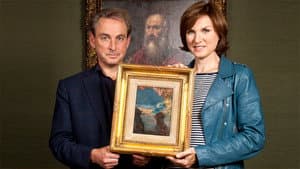
Journalist Fiona Bruce teams up with art expert Philip Mould to investigate the provenance or attribution of notable artworks.

2014

Writer Keith Tutt asks the team to investigate a painting he bought speculatively as a possible work by French post-impressionist Édouard Vuillard. Archival research uncovers a strong documentary trail, while the discovery of a companion picture helps reconstruct the work’s history and gives the owners a chance to secure formal recognition.

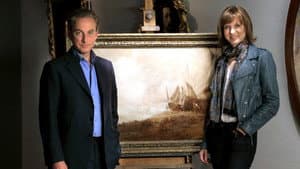
Two marine landscapes attributed to John Constable are examined. One, Yarmouth Jetty, has been heavily altered by later overpainting, while the other, A Sea Beach, Brighton, was once owned by the Museum of Fine Arts, Boston before being deaccessioned. The investigation asks whether technical evidence can recover the identity of works obscured by restoration and changing expert opinion.

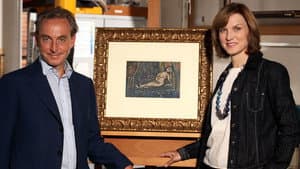
A Leeds property developer believes that Nude, 1909–10 may be an unknown work by Marc Chagall. Fiona and Philip trace its provenance and submit it to scientific testing, but the discovery of pigments unavailable at the claimed date raises the possibility of a sophisticated modern forgery. The case ultimately reaches the committee responsible for authenticating Chagall’s work.

The team selects two publicly owned paintings from the BBC’s Your Paintings project for investigation: Imaginary Landscape and a portrait of Joseph Gape. Research, conservation evidence and specialist analysis are used to determine whether both neglected works can be connected to Thomas Gainsborough and restored to his accepted body of work.

2011

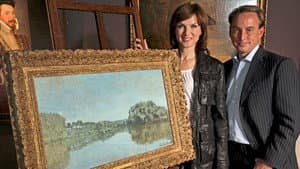
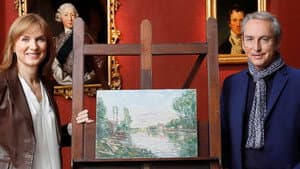
Fiona Bruce and Philip Mould investigate Bords de la Seine à Argenteuil, a riverside landscape believed by its owner to be an unrecognised work by Claude Monet. Scientific examination and provenance research build a compelling case, but the painting must still win acceptance from the authority responsible for Monet’s catalogue.

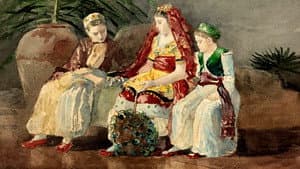
A watercolour discovered beside a rubbish tip is identified as Children Under a Palm Tree, a lost work by American artist Winslow Homer. As the picture heads toward auction with a substantial valuation, the investigation shifts from attribution to provenance and the difficult question of who legally owns it.

The team investigates The Procuress, a controversial painting at the Courtauld Institute associated with master forger Han van Meegeren. Technical analysis explores whether it was one of his final works and reveals how he deceived collectors and experts with paintings presented as newly discovered Old Masters.

Philip and researcher Bendor Grosvenor spot a poorly catalogued painting in a South African auction, apparently connected to Rembrandt. Their investigation uncovers a darker history involving Nazi looting, a Jewish art-dealing family and a work once regarded as a German national treasure. Scientific examination then seeks to establish the painting’s true authorship.

2012

Fiona Bruce and Philip Mould investigate Danseuse Bleue et Contrebasses, a small painting believed to be by Edgar Degas. Although its history appears to lead back to the artist’s studio, the work is absent from the accepted catalogue of Degas paintings. Provenance research and scientific testing are used to determine whether the owner possesses a modest imitation or a valuable lost work.

The team reopens the case of three landscapes—The Beacon Light, Off Margate and Margate Jetty—bequeathed to the National Museum of Wales as works by J. M. W. Turner. Dismissed as fakes during the 1950s, the paintings are subjected to fresh archival and technical investigation to establish whether a long-standing judgment deprived them of their true identity.

Philip Mould places one of his own discoveries under investigation: a heavily altered portrait that he believes conceals an unfinished work by Sir Anthony van Dyck. Restoration requires the irreversible removal of later additions, while Fiona insists upon independent authentication. As the underlying image emerges, both Philip’s judgment and the painting’s potential importance are put to the test.

2017

The team investigates a painting of Willy Lott’s Cottage that Philip Mould had previously bought and sold twice without securing its acceptance as a work by John Constable. A detailed chain of ownership, stylistic examination and comparison with Constable’s established work may finally determine whether the overlooked landscape is an alternative view related to The Hay Wain.

Fiona and Philip travel to Australia to investigate Rejected, a painting bought online for £7,500 and signed by Australian Impressionist Tom Roberts. Infrared examination reveals inscriptions on the reverse, while Roberts’s surviving sketchbooks and London addresses provide evidence that could connect the picture to his years at the Royal Academy.

Two possible works by Paul Gauguin receive very different investigations. A pencil study resembling a figure from When Will You Marry? is traced through Gauguin’s sketchbook and former owners, while a still life previously sold as genuine is scrutinized for questionable signatures, provenance and style.

2016

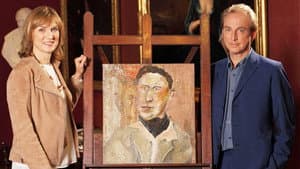
The team investigates a portrait believed to be an early work by Lucian Freud, despite the artist having denied painting it during his lifetime. Research leads back to Freud’s teenage years at the East Anglian School of Painting and Drawing, while technical analysis examines whether he may have worked over an abandoned canvas begun by someone else.

A painting bought for £500 is investigated as the possible lost royal commission Saint Amelia, Queen of Hungary by Paul Delaroche. Fiona and Philip trace it from the exiled French royal family to Britain and use archival and scientific evidence to distinguish the original work from the many contemporary copies made after it.

A family-owned watercolour is said to belong to Auguste Rodin’s celebrated series of Cambodian dancers. With little documented provenance and the shadow of prolific Rodin forger Ernest Durig hanging over the work, the team studies its materials, signature and fluid painting technique in search of a reliable attribution.

Three unrelated portraits are investigated as possible works by Philip Mercier, Adolph von Menzel and Willem de Kooning. The cases produce sharply different outcomes, ranging from a neglected bargain to a convincing forgery and a promising attribution complicated by unresolved ownership history.

2019

The team examines an eighteenth-century landscape that may be Thomas Gainsborough’s lost painting Wooded Landscape with Gipsies Round a Camp Fire. Old exhibition records, labels and auction numbers appear to support the attribution, while imaging reveals an earlier portrait hidden beneath the landscape. The case also threatens to overturn Philip’s previous identification of another painting as the missing Gainsborough.

A family portrait traditionally attributed to Maria Cosway catches Philip’s attention as a possible work by Sir Thomas Lawrence. Fiona traces the painting through generations of the sitter’s family, while its unusually well-preserved surface and brushwork are compared with accepted works by both artists. The investigation asks whether a long-established attribution has concealed a major Regency portrait.

A small still life bought for only £1 is investigated as a possible work by Italian artist Giorgio de Chirico. Scientific testing discovers ingredients associated with the artist’s unusual tempera recipes, and radiocarbon analysis supports an appropriate date for the wooden panel. Despite the promising technical evidence, the team struggles to establish a firm provenance connecting the painting directly to de Chirico.

The team investigates an eighteenth-century Venetian scene that has been attributed at different times to Francesco Guardi and Michele Marieschi. Conflicting labels, Royal Academy records and auction documents challenge the family story surrounding the painting, while research in Italy uncovers clues about its early history. The evidence must determine which Venetian master—if either—painted the work.

2015

The team investigates three paintings—Lady with Dogs, Darby and Joan and Crowd Scene—that were bought by Cheshire businessman Gerald Ames during the 1970s and attributed to L. S. Lowry. With no straightforward documentary history, Fiona and Philip use pigment analysis, archival film and comparisons with accepted works to determine whether the pictures are genuine or the products of one of Britain’s most frequently forged artists.

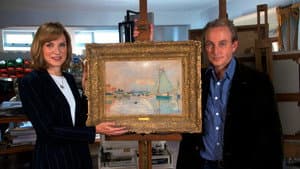
Artist Nicky Philipps asks the team to examine Boats on the Seine at Argenteuil, an unsigned painting held at her family’s former home, Picton Castle. Conflicting catalogues disagree over whether it is an authentic Pierre-Auguste Renoir, sending the investigation through gallery records, provenance research and scientific analysis in search of evidence capable of resolving the dispute.

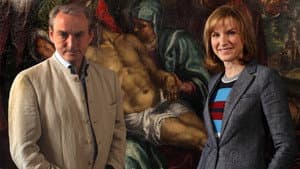
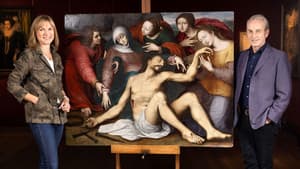
A monumental depiction of the Lamentation of Christ hangs largely overlooked in St John the Baptist Church in Tunstall, Lancashire. The team travels through Britain and Italy to identify its artist, reconstruct how it reached the church and determine whether the neglected painting is an important surviving work from the Venetian Renaissance.

Charles Henty asks Fiona and Philip to investigate two paintings discovered in a coal cellar: a winter landscape attributed to Alfred Munnings and a view of a French fountain believed to be by Winston Churchill. Provenance research, eyewitness testimony and specialist examination are used to decide whether either family picture can be accepted as the work of its celebrated supposed artist.

2024

American artist Jeffrey Kroll asks the team to investigate a small flower painting inherited from his father and signed “P. Mondrian.” Provenance research, handwriting analysis and scientific testing are used to determine whether the picture is an early figurative work by Piet Mondrian or an ingenious later imitation.

Art dealer David Taylor bought a painting of women working in a field for £2,090, suspecting that it might be by Canadian Impressionist Helen McNicoll. With almost all identifying labels removed, Fiona and Philip trace its exhibition history across Britain and Canada in an effort to reconnect the neglected work with its original title and artist.

The programme ventures beyond fine art to investigate two pieces of rock memorabilia: a silver guitar said to have belonged to Ronnie Wood and a piano linked to John Lennon. Manufacturing records, photographs, witness testimony and instrument specialists are used to determine whether either object can be securely connected to the musicians.

The team examines The Head of the Lake, a landscape signed by Jean-Baptiste-Camille Corot and purchased largely for its ornate frame. Historical exhibition labels, a period canvas-supplier stamp and technical analysis appear promising, but the investigation must also confront repeated earlier rejections and evidence recorded by one of Corot’s contemporaries.

2021

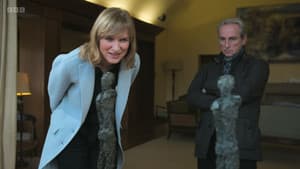
At a Norfolk country house, Fiona and Philip investigate an abstract metal sculpture that has spent years serving as a doorstop and garden water feature. Its owners believe it may be an early work by Henry Moore, but analysis of its materials and history leads the team toward another artist connected with the property.

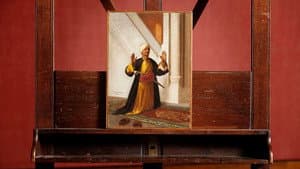
The team examines Arab at Prayer, an Orientalist painting dated 1858 and signed by Jean-Léon Gérôme. Although once accepted as genuine, it was later downgraded to “Circle of Gérôme.” Provenance research, technical analysis and a fresh expert assessment are used to determine whether the work can regain its original attribution.

2025

A carer named Barry asks the team to investigate a garden scene he bought for £140 at an antiques fair. An inscription on the reverse claims that Winston Churchill painted it at Herstmonceux Castle in June 1916, possibly depicting his wife Clementine. Fiona and Philip must identify the precise location, reconstruct the picture’s history and decide whether the stylistic evidence can support an attribution potentially worth hundreds of thousands of pounds.


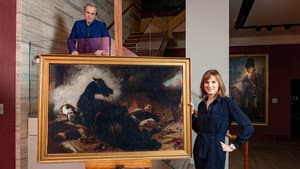
An oil painting of a dramatic battle scene may be Sir Edwin Landseer’s lost Time of War, believed to have been destroyed after the 1928 Thames flood. Fiona and Philip investigate whether the picture survived under another identity or is instead a later copy of the missing Victorian work.

A sheep farmer who paid £50 for a small religious painting believes it may be a preparatory study by Benjamin West for his monumental The Last Supper, commissioned for George III. Scientific examination, restoration and comparison with West’s known materials help determine whether the modest purchase is the missing second sketch for the royal composition.
Two separate owners believe their paintings may be unknown works by Pierre-Auguste Renoir: a landscape and a portrait of a young girl. Scientific examination produces a damaging discovery in one case, while the other presents more promising stylistic evidence but lacks the provenance required for formal acceptance. The investigation demonstrates the enormous gap between plausibility and authentication.

Art blogger Robjn Cantus bought two unattributed paintings from a council collection for only £35. One abstracted landscape was formerly assigned to Vera Cunningham, but its distinctive handling leads him to suspect the New Zealand-born modernist Frances Hodgkins. Research in Britain and New Zealand, together with technical and stylistic analysis, seeks to reconnect the inexpensive picture with a missing work by a major artist.

An American couple bought a damaged painting of a grieving woman at a Pittsburgh estate sale for $200. Its composition and inscriptions suggest that it could be a lost work by Angelica Kauffman, one of the founding members of the Royal Academy. Technical examination and historical research produce encouraging evidence, but the picture’s fragile condition and extensive deterioration complicate its assessment.

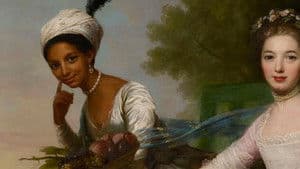
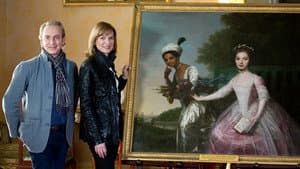
Fiona and Philip return to the two portraits of Black British women investigated in Series 7. New research and growing interest in Black social history have changed the significance of both paintings, including David Martin’s portrait of Dido Belle and Lady Elizabeth Murray and Emma Soyer’s Two Girls with a Book. The programme examines what happened to the works after their original attributions were established.

The team revisits The Bean Harvest, authenticated during Series 12 as a lost work by Canadian Impressionist Helen McNicoll. Newly discovered provenance fills an important gap in its ownership history, while owner David Taylor decides whether to accept a private offer or risk selling the painting at auction. The programme follows the eventual sale and reveals the identity and intentions of its new owner.

2018

A still life bought for £165,000 as a work by William Nicholson was later excluded from the latest catalogue raisonné. Fiona and Philip assemble provenance records, handwriting evidence, infrared imaging and pigment comparisons in an attempt to prove that the painting is genuine, despite resistance from the leading Nicholson authority.

Two sketchbooks preserved for decades in a French garden shed may contain youthful drawings by Henri de Toulouse-Lautrec. The team travels to the artist’s family home and uses handwriting, paper and technical analysis to challenge an earlier rejection by the authentication committee.

A small watercolour from the Gurlitt art hoard is examined as a possible work by Henry Moore and as potentially Nazi-looted art. Infrared analysis, archival records and the history of Hildebrand Gurlitt are used to establish both authorship and an unbroken chain of ownership.

The team investigates two rare historical portraits of Black British women. One depicts Dido Belle with Lady Elizabeth Murray, while the other shows two elegantly dressed girls with a book. Scientific and documentary research seeks to identify the artists behind both important works.

A damaged plaster sculpture resembling Alberto Giacometti’s early Gazing Head is subjected to provenance research and CT scanning. The initial investigation ends without a firm ruling, but later discovery of a signature leads the Giacometti Foundation to authenticate the sculpture; it subsequently sells for more than half a million pounds. The Giacometti episode was originally intended for Series 6 but was delayed while the foundation continued its examination. It was later rebroadcast with an update after authentication.

2023

Fiona and Philip investigate Small Warrior, a bronze sculpture bought for £90 at an Essex car-boot sale and believed to be by Dame Elisabeth Frink. Metallurgical analysis, foundry research and traces left by the casting process are used to determine whether it belongs to Frink’s limited 1956 edition or is a later reproduction.

A painting bought online for £2,700 as “in the manner of” Sir Joshua Reynolds is found beneath extensive later overpainting. Careful cleaning reveals a more ambitious composition, but the investigation must establish whether any part of the work was actually painted by Reynolds or whether it is an accomplished pastiche assembled in his style.
The team investigates two disputed French drawings: a market scene attributed to Camille Pissarro and a delicate tree study believed to be by Paul Cézanne. Technical examination, family provenance and research in France provide strong evidence, but each work faces a separate authentication authority and a very different final judgment.

A canvas given to the owner’s late husband by Arshile Gorky’s widow may conceal an important early painting beneath a layer of white household paint. Research in Britain and the United States identifies possible lost compositions, while conservation tests raise a difficult question: whether removing the white layer would reveal a masterpiece or destroy part of the artist’s own history.

2026

Fiona and Philip unravel the mystery of a suspected Fabergé flower, kept hidden in a shoebox in Liverpool but believed to have belonged to royalty – and worth a small fortune!

Two women lost in time: an enigmatic Indian woman and an 18th-century Scottish artist. Will this quest uncover a double attribution leading to a six-figure price tag?

The last gift left in the will of a former Kindertransport child is thought to be by Fauvist artist Derain. Will it raise a small fortune for charity or prove a dastardly forgery?

2022

Fiona and Philip investigate an abstract mural painted directly onto a bedroom wall in a former home of sculptor Fred Murray. A neighbour claimed that Ben Nicholson created it, but unusual stylistic features raise the possibility that Murray also contributed. The owners must decide whether to risk removing the fragile work before extending their house.

A delicate drawing of a mother and child, inherited through the Sitwell family, is examined as a possible work by Amedeo Modigliani. The paper, perforations, handwriting and dedication all appear consistent with the artist, while research links the sketch to a 1919 London exhibition organized with Modigliani’s dealer Léopold Zborowski.

An American couple asks the team to investigate a river landscape believed to depict Moret-sur-Loing by Alfred Sisley. Its technique impresses specialists and appears closely related to accepted works, but the official Sisley committee remains unconvinced, leaving an enormous difference between its potential value and its worth as merely “in the style of” the artist.

A large depiction of the Lamentation of Christ hanging in a Catholic church in Port Glasgow may be the work of a Northern Renaissance master. Technical analysis and research narrow the possibilities to artists associated with Michiel Coxie, before expert examination points toward a member of Coxie’s own family and workshop.