Loading...
Loading...


How exactly did water arrive on our planet, and how fast does a glacier move? "Terra X" presenter Uli Kunz gets to the bottom of the mysteries surrounding H2O.
2019
Water is the substance that has fascinated Uli Kunz all his life. The Terra X presenter is a marine biologist and research diver. He takes the viewer on a journey to the water worlds of the earth. He takes the audience on a journey to the hot springs, dams and waterfalls of Iceland. We explore the cave world of Switzerland and meet humpback whales in the South Pacific. Every year between July and September is whale season in the South Pacific. Humpback whales spend several months in the warm waters to mate and raise their young. The males in particular sometimes sing for hours. Whale researchers record the sounds and try to decode the language of the whales. All over the world, scientists are trying to decipher the secrets of the water: How much water is actually on Earth? How do trees transport the water to the very top of the crown? What role do clouds play in the eternal water cycle? And what do the songs of the whales mean?
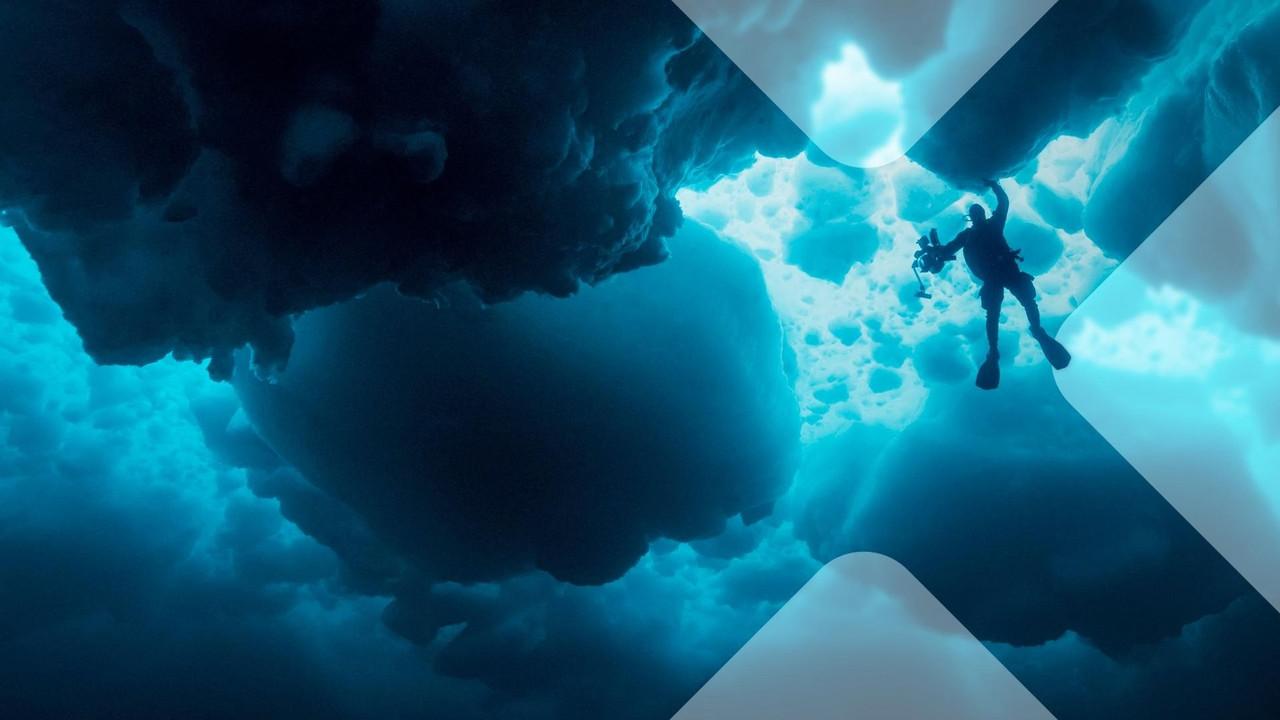
More than 70 percent of the earth is covered by water. But how did the water get to earth in the first place? NASA researchers are investigating whether meteorites once brought water to Earth. H2O makes our planet unique – and is the basis of all life. Even in a gold mine in South Africa, four kilometres deep in the earth’s rock, there is life and therefore traces of water. In the second episode of “The Fascination of Water”, marine biologist and research diver Uli Kunz travels to the Blue Holes of the Bahamas and explores the magical border between fresh and salt water. On Spitsbergen he accompanies glaciologists on a unique and dangerous expedition. They want to go 200 metres deep into the interior of a glacier and find out why the white giants are moving faster and faster towards the sea.
2022
The Baltic Sea, mysterious beauty in the heart of Europe. This unique habitat stretches from the chalk cliffs on Rügen in the south to the Arctic Circle in the north: an intermediate world of fresh and salt water in which only the most adaptable can survive. Together with the marine biologist Uli Kunz, we travel from the Gulf of Finland in the east to the Kattegat in the west, from the Greifswald Bodden in the south to the coasts in the far north of Scandinavia. We explore life above and under water and show the unknown sides of our well-known sea.
The North Sea – a wilderness right on our doorstep. Between the Wadden Sea and the high seas, fjords and cliffs is the home of more than 10,000 species of flora and fauna. This makes the North Sea one of the most biologically productive marine regions in the world – and also one of the most intensively used by man. Uli Kunz has been working here for over ten years as a marine biologist and research diver – and is constantly making new and surprising discoveries.
2023
With marine biologist Uli Kunz, we travel to the Arctic and explore the water worlds around the world’s largest island: we show how polar bears and different whale species cope in this extreme habitat. The ice shark lives in the eternal darkness of the deep sea – and lives up to 500 years, older than any other vertebrate. Uli Kunz visits scientists in a very special research camp: in the middle of the Greenland ice sheet, they have pitched their tents to study climate change and a small algae in detail. Uli Kunz guides us through this special habitat and explores the phenomena of the Arctic: How do the mythical auroras come about? How do plants and animals protect themselves from freezing? And what is it about the strange pillars that grow out of the seabed in the Ikka Fjord?
2024
Hardly anyone can escape the fascination of crashing masses of water. But waterfalls are much more than that: To this day, they continue to puzzle researchers: How exactly do waterfalls form? Which species have specialized in this particular ecosystem? And what do they mean for the animals and plants in the surrounding area? Marine biologist Uli Kunz takes us to the most impressive waterfalls on earth, the oldest, the largest, the most beautiful and the most mysterious. He explores the mighty Victoria Falls on the Zambezi River and answers questions that every visitor to the falls has probably already asked: Do fish actually fall down the waterfalls all the time, and if so, do they survive the fall?
The Chagos Archipelago in the middle of the Indian Ocean is part of the largest coral atoll in the world. The biodiversity underwater is enormous. Together with a team of researchers, marine biologist and Terra-X presenter Uli Kunz explores nature above and below the water. Far from any continent, scientists are looking for answers to crucial questions: How healthy are coral reefs where there is hardly any human influence? Which species are found: in the water and on land? And what are the consequences of climate change even in such a remote island paradise? The research in the Chagos Archipelago has great significance for other regions of the world as well. Because almost everywhere, corals are under heat stress. More than half of the reefs are severely endangered – and researchers are trying to help the corals. Marine biologists from Saudi Arabia and Germany are working together on new therapies for corals in the Red Sea.
Deltas are among the most diverse habitats on earth. Marine biologist Uli Kunz guides us through these fascinating intermediate worlds of land and water and gets to the bottom of phenomena: How do animals and plants manage to exist in both fresh and salt water? Why is the species richness in deltas so enormous? And what forces shape deltas? In Mozambique, Uli Kunz dives for bull sharks – the only shark species that can live in both salty and fresh water. In Tasmania, Australia, he explores one of the most unusual bodies of water on earth: in Bathurst Harbour, deep-sea creatures live in water less than ten meters deep. And on the Amazon, he finds out what primordial sea creatures are doing in the middle of the rainforest and how predatory cats have learned to fish in the sea.
2025
Fascinating water worlds do not only exist on the surface of the earth, water has also created breathtaking landscapes deep underground. It is a hidden world that is still largely unknown; after all, it is only accessible to experienced cave divers and exploring it is not without danger. Uli Kunz descends into the depths and explores the most spectacular subterranean water worlds on earth – from the Yucatán to the Bavarian Alps. It is a journey of discovery that provides deep insights into the formation of caves, rivers and landscapes.
There are more than 100 million lakes in the world – and their diversity is as great as their number: lakes supply millions of people with drinking water. The world’s freshwater lakes contain forty times as much water as all the rivers. Many lakes are a hotspot of biodiversity, while other lakes are subject to extreme conditions: They are saltier than the oceans, toxic or hot. Marine biologist Uli Kunz dives into this special habitat – and explores the world of lakes: from the Scandinavian lake district to Lake Constance and the great lakes of Africa and North America. What lives in the depths? How do lakes change over the course of time? What myths and legends are there? We show how lakes form and disappear again. After all, bodies of water have a limited lifespan: some only exist for a few months, others for millions of years.
Streaming availability information not available
2026
There are around 30,000 islands in the Pacific—more than in any other ocean in the world. From South America to the islands of Oceania to New Zealand, this region is home to an incredible diversity of life. The Pacific Islands gave rise to advanced civilizations, offered shelter to castaways, and are home to unique animals and plants. Terra X presenter Uli Kunz begins his journey in Palau, a South Sea paradise in the western Pacific and one of the best diving areas in the world. There he experiences a spectacular natural phenomenon: the mass mating of buffalo head parrotfish. Uli Kunz learns the ancient art of navigation by the stars. And he explores why remote islands produce such a large number of unique animals: from the Komodo dragon to the Borneo pygmy elephant to the Galapagos giant tortoise.
Deep blue water, Mediterranean food, picturesque coasts and towns – that’s how we know the Mediterranean. But our beloved holiday destination is much more than just a blue bathtub: it is a unique natural paradise, home to whales, seals, sea turtles and countless species of fish. The Mediterranean is a hotspot of biodiversity and, at the same time, a hotspot of environmental problems. Marine biologist Uli Kunz explores this special habitat: above and below the water. He observes the Mediterranean monk seal, one of the rarest seals in the world. He travels to popular vacation spots and remote islands, meeting researchers and conservationists who are doing everything they can to preserve this natural paradise. He shows what makes the Mediterranean special—and in doing so, he explores one question: What is the state of our beloved vacation destination?
Japan’s relationship with the sea is full of contradictions. Yet it is more intimate and multifaceted than in almost any other country. The ocean provides people with food – supplying fish, seafood, and a wide variety of seaweed. Ist influence shapes culture, myths, and traditions. And it is home to an extraordinary diversity of species. It’s proximity however also brings danger. Located on the Pacific Ring of Fire, Japan is one of the countries most severely affected by earthquakes and tsunamis worldwide.
Madagascar: Just off the coast of Mozambique, this island is considered one of the most fascinating in the world – and quite rightly so. For the fourth-largest island on the planet is a unique cultural melting pot and, above all, a true treasure trove of nature. However, the country ranks among the poorest in the world. Its resulting overexploitation of natural resources is taking a toll on the island, much like climate change.