Loading...
Loading...


A groundbreaking Canadian anthology series blending documentary and dramatization, Perspective explored social issues, Canadian identity, and everyday life through a mix of real-life stories and fictional dramatizations. Hosted by Fred Davis and produced by the National Film Board of Canada, the series ran for three seasons on CBC Television between 1955 and 1958.
1957

This drama portrays an immigrant family and the mingled feelings of hope and despair that characterize their life in a strange land. An Italian wife joins her husband in a large Canadian city. After two years in Canada the husband feels his dream of a better life is close to realization, but his wife feels that differences of language and custom are insurmountable. How such feelings are dispelled by simple gestures of friendship from Canadian-born neighbours gives a heartening conclusion to the film.
This feature-length drama tells two sides of the same story to illustrate the lack of communication between employer and employee. The story takes us into a fictional paper company to meet two men who, despite having similar goals, are at odds with each other. First, we see the tale unfold from the point of view of the employee, and then we get to see the same story retold through the eyes of the employer.
This documentary short tells the story of the conception, construction and testing of the largest Canadian aircraft of its time - the Canadair Argus. A marine reconnaissance aircraft, the Argus was designed and manufactured by Canadair for the Canadian Forces and the Royal Canadian Air Force. In its early years, it was reputedly the finest anti-submarine patrol bomber in the world.

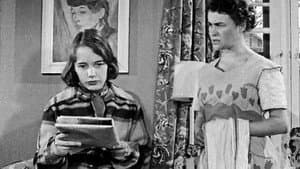
15-yr old Nora is in a home for "problem teens" because of her rebellious nature. The film implies the blame is on her parents' leniency.
A trip along the Rideau Canal leads to a tour of Ottawa including Parliament,various government buildings, surrounding parks and historic sites. A National Film Board production.
A lawyer unexpectedly hangs himself in his home while his wife is running an errand. Why did he do it?
As a "tourist", broadcaster Fred Davis visits Trinity Bay, Nfld. where the residents regularly round up pods of pothead whales (pilot whales) both for their oil and to grind up to feed farmed mink.
This short film is a dramatization of Canadian author W.O. Mitchell's penetrating story about the racial prejudice encountered by a Polish immigrant farmer in a rural Saskatchewan community. Presented with the incisiveness characteristic of Mitchell's Jake and the Kid radio series, this film story employs homespun events of a farming community to lay bare some universal truths about the unthinking discrimination practiced against a man who is different from his English-speaking fellow farmers.
This short film from the Perspective series highlights social and economic development in Haiti circa 1957. It depicts customs and traditions used to pass along the history of a people, and offers a look into their daily lives — lives that looks very different from their experiences today.
This documentary short presents the dilemma of a teenager caught in the crossfire of adult opinions and youthful enthusiasm. Howard, just out of high school, is slated for college and a career as a chemist. But he first wants to embark on a summer-long, foot-loose tour of Canada with a school pal. This plan, however, meets with strong resistance from his socially conformist parents. The film's depiction of Howard's resultant confusion illustrates the inner conflicts that can arise in teenagers when every carefree impulse is rationalized out of existence.
This short fictional film features the picturesque seaside landscape of Prince Edward Island as the setting for a summer romance between a girl from Winnipeg and a young fisherman from North Rustico, PEI. The young couple visits historic and scenic sites such as Government House in Charlottetown and Cavendish, of Green Gables fame. The film is a classic summertime romance and a nostalgic visit to the delightfully sun-soaked PEI of the past.
Dramatises the psychological problems of two teenagers in love who try to counterbalance with their relationship the drabness of their home life. Contrasts the teen-ager's need for absolute rules with the confusion of adult standards.
This short documentary brings to the screen a great seasonal event in the Québec spruce forest—the log drive. In lyrics set to a sprightly tune, ballad singer describes this annual spectacle. A vast aggregation of logs moves downstream on a river, spurred by dynamite and sharp-tipped cant hooks, tossed and twirled by the boots of leaping men.
In this documentary short, Canadian mime Guy Hoffman, acting as Pierrot, introduces us to the art of pantomime. The streets of Montreal and the Belmont Amusement Park are the backdrop for the traditional story of Pierrot, who loses his love, Columbine, to Harlequin.
A young businessman begins drinking to cope with the stresses in his life. His wife struggles to get him to stop as he begins to embarrass himself in public and to lose effectiveness at work. He is not helped by his friend Pete, who continually eggs him on to drink more. But with the help of a doctor and his wife's encouragement, the young man begins to see hope for an end to his addiction.
This short drama profiles a fugitive who skipped out on parole 28 years ago and now finds that he must finish his prison term. The film is based on a case from the files of the John Howard Society, whose mission is to advocate for humane prison reform and provide practical assistance to prisoners and ex-prisoners.
A suspenseful story by Arthur Hailey about the excitement and hazards of being an aircraft test pilot.
This historical short looks at the circumstances, the plans, and speculates on the thoughts of the the two generals leading up to the historic battle on the Plains of Abraham in 1759.
A small town Canadian prairie pastor needs to decide whether to accept a position in the big city, or to continue the struggles of small town life.
1956
An illustration of the rather unique way in which the day hospital of the Allan Memorial Institute in Montréal helps patients back to mental and emotional health. Patients not requiring full hospitalization come for daytime treatment and return to their homes at night. The case presented is that of a young woman who is under severe emotional stress. Interviews with a psychiatrist and group therapy sessions reveal the root of her trouble and set her on the path to overcoming her problem.
This short documentary from 1956 examines the phenomenon of "the gilded cage." Are the strain and tension worth the lifestyle a well-paid job provides? As we follow the story of Hugh Martin, a capable executive caught on the treadmill of our competitive society, we're forced to conclude that there must be another way. A film still as relevant today as the day it was made.
This short documentary from 1956 catches up with several talented Canadians who have found a home in the entertainment or arts scenes of London and Paris. Among them are Toronto-born Beverley Baxter, a baronet and MP who claims that London has a history of being invaded (first the Romans, now the Canadians), and then-aspiring novelist Mordecai Richler, who feels he has a better chance of making a living in England than he does back home.
In this film, Jack Scott, a Vancouver newspaper columnist, visits Bolivia, South America, to bring us a report on conditions in that country and on the technical assistance program undertaken in the late 1950s by member countries of the United Nations, including Canada. We hear from Canada's Dr. Hugh Keenleyside, who headed a U.N. Commission, and from specialists from other countries who are helping to create a new economy for Bolivia.
This short drama highlights the work of the Family Welfare Service in its compassionate tale of a husband who abandons his wife and children. Part of the Perspective series.
This film indulges in some playful lampooning of the self-deluding tactics of the escape artist. A glib-tongued exponent of escapism, delivering a public lecture, illustrates his contentions with filmed episodes that show how clever people are at running away from reality. The mirror he holds up for us reflects some familiar faces; not our own, of course, but of people we all know.
In this short documentary, Fred Davis introduces us to Canadian Air Force operations in Zweibrucken, West Germany. Follow Green Section as they perform drills and explain what it takes to be a fighter pilot. Part of the Perspective series.
This short documentary from the Perspective television series examines the dangerous practices that can cause tragic and costly fires. The film follows Inspector Joe Fletcher as he investigates fires that have happened, are happening, or could happen. It shows how frequently fires are actually crimes of carelessness, which, if prevented, could have saved life and property.
A story about a young Indigenous man from a reserve near Calgary and the problems he faces when he finds himself thrust into the world of the white man. Joe Lonecloud contracts tuberculosis and is taken to the Charles Camsell Indian Hospital in Edmonton. There he learns that he will never be able to return to the vigorous activity of the outdoors. In learning a trade and getting a job he encounters prejudice, which makes his adjustment all the more difficult.
This film brings a report from Jack Scott, a Vancouver newspaper columnist, about a United Nations-sponsored migration program in Bolivia in which icampesinos r--tin miners of the Andes mountains--are being moved from the desolate Altiplano to more fertile lowlands. We hear most of the story from one of the miners who describes the skepticism with which his people first met the ideas and what it eventually came to mean to them in terms of new dwellings, land to cultivate, and work to support their families.
Based on the real-life experiences of a drug addict, this film shows the nature of addiction as both a social and human problem.
The Christmas story, presented in the form of a medieval York mystery, or miracle play, by a cast of junior school children. They follow the text, in verse and prose, used by strolling players five centuries ago when a miracle play meant the portrayal of the mystery of Christ's birth. The story is divided into scenes, with costumes and settings patterned after biblical times. Between acts a children's "angel choir" sings familiar Christmas carols to introduce each scene.
This short drama presents the story of a case worker with a Children's Aid Society and the children she helps. Working round the clock, the Society receives appeals of every sort. The film shows how the Society follows through in the case of a little girl found wandering alone on downtown streets at night and in other cases of children abandoned, uncared for, the victims of their environment.
This short documentary illustrates the impact of new developments on the Inuit of Baffin Island, as well as the local reaction to the decision to move the settlement of Aklavik across the Mackenzie River.
Interviews with residents of Melville, Sask. about various jobs related to the railroad, and about the gradual conversion from steam engines to diesel.

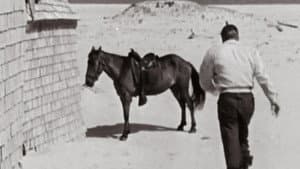
This short documentary profiles the uniquely cloistered wildlife of Sable Island, known as the “Atlantic graveyard” due to its inhospitable conditions. Barren sands and endless gales proved too much for human settlement on this island off the coast of Nova Scotia. Only a small group of researchers and maintenance people occupy the island; horses run wild, seals and birds multiply profusely, and the Ipswich sparrow has found a fruitful breeding ground for itself. Sable Island provides a perfect opportunity to observe nature in an untouched, organic laboratory.
The film follows a grocery salesman as he calls on merchants in small prairie communities, showing some of the people and problems he encounters. His time-tested techniques are contrasted with those of his brash young understudy.
'60' refers to 60-degree north latitude, north of which is generally referred to as the Arctic in Canada in being the dividing geopolitical line in Western Canada between the "sub-Arctic" provinces and "Arctic" territories. General life in Arctic Canada is presented, it which is primarily populated by approximately ten thousand indigenous peoples, known at the time of filming as Eskimos. Non-indigenous persons of various stripes also live in Arctic Canada in interacting with the indigenous population for business, culture and/or other reasons. The geographical dominance of the Soviet Union and Canada over the Arctic, and the reasons for Canada's lagging development in Arctic concerns compared to all other Arctic countries are discussed.
Man's exploration of the Canadian Arctic was initially to discover the Northwest Passage, a shorter possible trade route between the Atlantic and the Pacific Oceans than had existed at the time. While many men died in that quest, the passage was eventually discovered and traversed in the early twentieth century. In many of the obstacles of Arctic marine travel having been overcome in subsequent decades, one of the last obstacles was making the trek via larger ships, the HMCS Labrador one of the first to do so. This film follows the Labrador on one of its more recent voyages, largely a research and fact finding mission to determine the viability of certain economic endeavors in the region, such as fishing. The expedition is also to establish infrastructure in the Arctic to make sailing its waters for the Labrador and other vessels easier in the future.
1955
A small-town museum finds itself the centre of suspenseful melodrama when an enterprising reporter plunges it into local headlines over the authenticity of one of its prize exhibits, a human skull. An act of diplomacy saves the fate of the museum's fund-raising campaign and the brash young reporter learns a lesson.
A fully functional blind teacher works with more recently blinded individuals and their families, helping them to adjust emotionally and practically.
1958
A young man gives up a steady job to tackle the uncertain task of writing for a living.
Looks at the landscape and wildlife of Canada's Queen Elizabeth Islands in the Arctic Circle, narrated mostly using historical observations.
This short fiction film profiles the controversial figure of Judge Matthew Bailie Begbie, who was tasked with bringing law and order to the gold-mining camps of British Columbia more than 150 years ago.
A dramatized flight of the Neptune, a military aircraft that monitored for foreign submarine activity off Canada's East Coast.
A look into the lives of some Canadian students as they study acting at the Royal Academy of Dramatic Art in London, England.
A 'Ticket of Leave' means parole. Bonner (James Doohan) is outraged to discover the teen who robbed him three years ago is on parole after serving half his sentence.
An account of a Canadian National Railways freight train on a run from Toronto to Halifax in the winter of 1957, with glimpses of the vast amount of organization necessary in the operation of a country-wide transportation network.
This short dramatic film illustrates a cooperative program of fire protection that was carried out across Alberta in the late 1950s. It presents the problems inherent in a voluntary fire brigade, as well as the everyday heroes who step up and get the job done. The film is an entertaining look at how a crew that was once considered to be the joke of the town can evolve into the best fire brigade in the West!
Streaming availability information not available