Loading...
Loading...

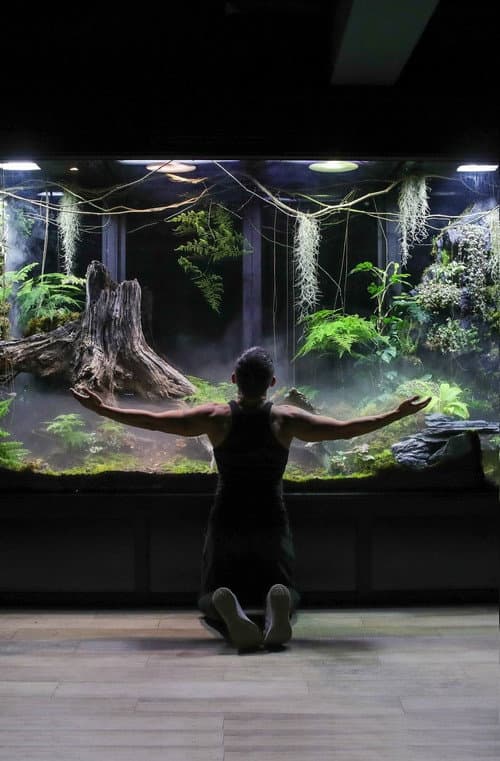
Welcome to 'Pantdora', my 1000 gallon cloud rainforest vivarium.
2023
I've always wanted to try creating the ultimate ecosystem vivarium, but I felt I wasn't quite ready to take on such a complicated project. A successful ecosystem tank would require a very large setup and a working knowledge on biology and the husbandry of various species of animals. But after over 14 years of keeping ant colonies and many other creatures, and now that I have moved the Ant Room to a larger space, I felt it was officially time to attempt the biggest project of my life - the ultimate ecosystem vivarium. This is Part 1 of making the plans and I will be needing the help of the AC Family, my subscribers, to construct it and choose which ant colonies will be living inside the vivarium.
I am creating the ultimate ecosystem vivarium in my home, an over 1,200 gallon tank complete with interdependent species of tropical plants, fungi, and animals. It's a project that challenges my decades worth of skills and knowledge on ant keeping and animal husbandry. But i knew in order for this vivarium project to work, one of the aspects I needed to decide on was the team of the vivarium's predators. I caught two from my yard, give them a home, feed them, and talk about other potential predators I hope for our vivarium. I will be needing the help of the AC Family, my subscribers, to choose which predators will be living inside the vivarium in this Part 2 episode of the vivarium series.
Building an ecosystem vivarium is no easy task. It requires an intrinsic understanding of biology, animal husbandry, and the food web. I am on a mission to construct a 1,200 gallon ecosystem vivarium with a many plant and animal species living within. I do have a strategy to ensure the greatest amount of success. This is Part 3 of the Ecosystem Vivarium Series in celebration of 5 Million Subscribers.
I created my dream tank, a cloud rainforest terrarium in an over 1,000 gallon custom built tank. Landscaping and construction of the habitat took months of planning, a lot of hard work, and days of terrarium building. But the final result was all worth the challenges. The tank hosts a variety of plants, and possesses an automated climate mimicking that of a cloud rainforest.
In my giant cloud rainforest vivarium, I call Pantdora, an unexpected war of creatures broke out, with an unfolding of a epic tale of animals vying to conquer highly coveted land and resources within the rainforest. I was shocked to discover a plethora of animals within the vivarium, each occupying different niches in the habitat as they would in the wild. But this biological experiment opened my eyes to the harsh realities of ecosystems in a way I never before considered. Hope you enjoy Part 5 of our Ecosystem Vivarium Series. Ant love forever! This video was shot in 4K Ultra HD resolution.
I created my dream tank, a 1000 gallon cloud rainforest vivarium, and constructing it has been quite a journey. It is fully stocked with tropical plants, automated climate control, and even some creatures that managed to sneak in through the terrarium decor. However, the goal of the vivarium experiment was to recreate and study a rainforest ecosystem so to complete the project, I needed to add more animals. Little did I know, doing so would amp up the biological action within the vivarium in a way that I could never have predicted. Hope you enjoy Part 6 of my ecosystem vivarium series. Ant love forever! This video was shot in 4K Ultra HD resolution.
I created my dream tank, a 1000 gallon cloud rainforest vivarium, called Pantdora, and it's purpose is to study how tropical ants and other exotic creatures live in the wild. I already added an initial team of animals into the terrarium, but it was missing a very important player in the food chain: an apex predator. In this episode, we release my chosen apex predator into the Pantdoran rainforest, and the result was pretty awesome. Hope you enjoy this week's episode, Part 7 of my Ecosystem Vivarium Series. Ant love forever! This video was shot in 4K Ultra HD resolution.
In my giant cloud rainforest vivarium, I call Pantdora, an unexpected revival of an ant war broke out, after adding a team of aquatic creatures to the pond. I was shocked to discover the truth about relations between three existing ant colonies within the vivarium, and watched an intense showdown of ants take place. It opened my eyes to the chilling realities of invasive vs native animal wars that occur in ecosystems, as they compete for resources, food, and space. Hope you enjoy Part 8 of our Ecosystem Vivarium Series. Ant love forever! This video was shot in 4K Ultra HD resolution.
In my giant 1000 gallon cloud rainforest vivarium, called Pantdora, the established ecosystem faces the addition of a 'grim reaper', a notorious insect predator known as a praying mantis, as well as, a colony of crickets. But with the addition of these new animals, came a surprising discovery regarding the Great Ant War that was taking place within Pantdora. Hope you enjoy this episode, Part 9 of my Ecosystem Vivarium Series. Ant love forever! This video was shot in 4K Ultra HD resolution.
I created my dream rainforest vivarium, named Pantdora, but it has completely been taken over by invasive black crazy ants, who occupy one of the most coveted spots in the terrarium: the Hallelujah Tree Stump, a giant piece of driftwood hallowed out by termites that many of the inhabitants of the rainforest call home. In this episode, we use an endoscopic probe camera to look into the stump and learn about the nesting behaviours of the invasive ants in hopes to stop them from dominating the ecosystem. Hope you enjoy this week's episode, Part 10 of my Ecosystem Vivarium Series. Ant love forever! This video was shot in 4K Ultra HD resolution.
In my giant cloud rainforest vivarium of various animals and plants, an unintentionally introduced colony of invasive black crazy ants has completely taken over the tank, so my ecological solution was to add carnivorous pitcher plants (Nepenthes sp.) to the rainforest in hopes to curb the population growth of the black crazy ants. What ended up happening to the black crazy ants, after uncovering the feeding secrets of the pitcher plants, was nothing short of an adventure! Hope you enjoy this week's botanical episode, Part 11 of my Ecosystem Vivarium Series. Ant love forever! This video was shot in 4K Ultra HD resolution.
I created my dream tank, a 1000 gallon cloud rainforest ecosystem vivarium. The ecosystem within has had two months to mature, and there are new animals, plants, and updates to show you. Join me on a full tour of Pantdora, and witness some of the most incredible biological events never before seen. This is Part 12 of my Ecosystem Vivarium Series. Ant love forever! This video was shot in 4K Ultra HD resolution.
The War of Pantdora continues after unleashing a spider apocalypse. My giant cloud rainforest vivarium has evolved into an utter dream tank, full of interdependent flora and fauna. However, the time had come to finally add a swarm of huntsmen spiders, to would become important predators controlling populations of prey creatures within the ecosystem. But after adding in the arachnids, a war of ant powers was once again brewing, and I could do nothing also but watch the biological drama play out. Hope you enjoy this week's episode, Part 13 of my ecosystem vivarium series. Ant love forever! This video was shot in 4K Ultra HD resolution.
In my giant cloud rainforest vivarium (Pantdora), I attempted the dangerous task of setting up the stage for two adult praying mantises to breed, in hopes to secure a future generation of praying mantis babies for Pantdora's rainforest ecosystem. The entire mantis courtship process was a nail-biting journey with a result I didn't expect. But after it all, I ended up with the biggest crisis in the history of Pantdora. Hope you enjoy this week's episode, Part 14 of my Ecosystem Vivarium Series. Ant love forever! This video was shot in 4K Ultra HD resolution.
It was a nightmare discovering that the doors to my giant cloud rainforest vivarium, Pantdora, were wide open, giving all the creatures within a chance to freedom into my home. It spurred an entire journey of taking inventory of the animals that were still inside the tank and an epic search for those that had escaped, not without some interesting surprises along the way. Hope you enjoy this week's episode, Part 15 of my Ecosystem Vivarium Series. Ant love forever! This video was shot in 4K Ultra HD resolution.
2025
I've built my next giant ecosystem vivarium, and it is the biggest, most complex vivarium structure I've ever built. It will house a plethora of different species of animals, plants, and fungi, creating a habitat for plenty of life. But the construction of this highly unique tank came with its own set of challenges.
I'm creating the ultimate tropical wetlands vivarium, starting with the hardscape! These wetlands will host an ecosystem of tropical plants and animals. Failing a water leak test did not stop me from proceeding with the aquascaping process within the tank. Using driftwood, rocks, soil, and lots of glue, we created an epic hardscape, the skeleton to our giant wetlands vivarium.
I've finally completed my dream Tropical Wetlands Vivarium! After months of planning, tank construction, and hardscaping, it was time to add in our vast collection of terrestrial and aquatic plants. From Bromeliads to Bucephilandras, mosses to vines, Korean ferns to java ferns, the collection of plants in this paludarium aquascape was a total dream. It required me and my team to apply principles of aquascape, as pioneered by the godfather of modern aquascaping, the late Takashi Amano. Once completed, our beautiful wetlands were ready for the addition of animals (GAIA 3) to complete the wetlands ecosystem.
I released a set of new creatures into my new Giant Tropical Wetlands Vivarium! My new tank was ready now to accept its first set of aquatic creatures. In the aquarium hobby, it's rule that animals and fish need to be added slowly into a tank so it can cycle. However, it seems Mother Nature was way ahead of me, having introduced a set of creatures of her own, introduced via the plants and decor, including a hidden dragon for me to discover.
I can't believe I found a flying dragon (Draco sp.) living in my Giant Tropical Wetlands Vivarium! As crazy at it sounds, I suspect it snuck into the tank via the driftwood. This incredible reptile was a dream lizard. It also eats ants and was perfect for my canopy vivarium. But in trying to catch it, it eventually showed me something that made me change my mind regarding my future plans for it. Meanwhile, below the waters, a 'Green War' was taking place, for which I had to ensure the right team won. New aquatic creatures were sent into battle!
A disastrous leak ended the Bermuda Rectangle, my Giant Tropical Wetlands Vivarium. The glass of the tank separated at one section and caused all water and gravel to spill out onto the floor. The leak had to be repaired but not without the challenge of having to keep the vast array of aquatic plants and animals alive during the process.
I released many schools of fish into my Giant Tropical Wetlands Vivarium and the result was stunning! Various fish of differing species, from catfish to tetras, newly occupied the waters and brought new life and vibrancy to the tank. It was an aquarium lover's dream! But my dream tank, quickly turned into a nightmare with the discovery of an invasion by creatures that I least expected!
A swarm of aggressive fire ants have broken into and invaded my Giant Tropical Wetlands Vivarium, named Hydromeda. This fire ant invasion posed a crisis for all life living within the tank, as well as the future of my biological ecosystem project. But despite my attempts to problem-solve, things weren't quite what they seemed, and in the end, the vivarium suffered a tragic loss.
I had a major snail problem in my giant tropical wetlands vivarium, and so I sent Mother Nature's best snail-eaters to deal with the outbreak within the tank. The dwarf pea pufferfish explored their home and immediately began to hunt for snails. The result was quite a sight!
My giant cloud rainforest vivarium is about to undergo a major change. After a year and a half since its creation, this massive rainforest ecosystem tank, named Pantdora, has developed into something truly biologically spectacular. It contains a complex foodweb of various organisms, including animals, plants, and fungi that have established an ecological balance. But even still, this once dynamic ecosystem has reached a standstill, and I realized a change had to be made in order to solve the issue.
I removed my growing baby crocodilian, Godzilla, a spectacled caiman from my giant rainforest vivarium, the only home he's ever known. It was terrifying, but the story began as soon as he was rehomed. It was all part of a major renovation project my tropical vivarium and all its animals, plants, and fungi have needed for a long time. Check out how moving the apex predator out of the rainforest, led to the complete transformation of the entire ecosystem.
It's the Age of the Frogs in my Giant Rainforest Vivaria. Frogs are keystone animals, vital to healthy ecosystems, and I felt my three tropical, rainforest vivariums, Pantdora, Orchadia, and Hydromeda needed more frogs. So I added them, and in the process, witnessed something truly new and mind-blowing that I didn't know about frogs.
I released mammals into my Giant Rainforest Canopy Vivarium and observed the result. Orchadia, home to an ecosystem of plants, fungi, and animals was ready for the introduction of mammals, and so I added in three microsquirrels (a.k.a African Dormice), arboreal rodents that eat insects. I was worried they might eat everything in sight and cause an ecosystem collapse. This experiment proved to reveal some unexpected results.
I created the ultimate cockroach cave tunnel as a connection to my giant vivariums. My three giant vivaria have been longing for a connection, where the plethora of life within could have free access to all three living spaces, each of which offer differing habitats. After months of planning, I built the ultimate cave tunnel which would house a colony of cockroaches, acting as a refugium for the highly important creatures in the forest.
I finally connected my three giant ecosystem vivariums together, and the result was unbelievable. My long term plan had come to completion when my rainforest floor vivarium, canopy vivarium, and tropical wetlands vivarium became a single space, with shared animals freely able to cross over to the different habitats. I was shocked at what animals crossed over through the new cave tunnel bridge. Our rainforest ecosystem within glass has been forever changed.
Streaming availability information not available
2026
My Giant Lagoon Vivarium, Lumantia, is finally ready to be populated by creatures. After cycling the tank for over a month, the brackish habitat is ready to house an ecosystem of aquatic organisms. There is just one problem: an outbreak of diatoms (brown hair algae), marking the "ugly stage" of the lagoon's saltwater cycle period. But I had just the plan and creatures to help clean up the mess. Question is: will they be able to handle the dangers associated with the changing tides?
We hit the big 7 million subscribers mark, a jihe milestone for this channel, so to celebrate I have chosen my top 7 favourite marine fish species to move into my Giant Lagoon Vivarium. The fish were stunning as they integrated into the brackish lagoon ecosystem, but a tragic event was a reminder of the sometimes hard realities of the aquarium fish keeping hobby.
I simulated low tide in my Giant Lagoon Vivarium (Lumantia). But would the newly added marine fish be able to handle the lagoon's drastic decrease in water? Watch as the fish and creatures react to the lagoon transformation of their brackish coastal habitat. The outcome truly surprised me.
2026
A major change is coming to my four giant ecosystem vivariums, affecting all the life living within. The creatures of the ecosystem have begun altering their behaviour, retreating below ground, and even dying off. A natural process? The answer is quite surprising, and Mother Nature left me speechless once again, as I surveyed my four giant ecosystem vivaria for the ominous signs of this 'Great Change'.
It's the return of the controversial beast. Godzilla, my 2 yr old spectacled caiman who had exited our rainforest ecosystem last year to undergo socialization training, is now ready to come back to the ecosystem, but there's a catch.
All four of my giant ecosystem vivariums have become one with the building of a new glass bridge that connects Verdantia, my Grasslands Vivarium, which was formerly a solo tank, to PANTGEA, my superbiome of three other tanks. The glass bridge took months of planning and features a surprise addition to its design. I couldn't wait to watch what animals would migrate to new lands, but funny enough, in the end things didn't quite happen how I thought they might.
I connected my indoor ecosystem vivariums to the outside world, giving full access to wild animals to enter my tanks. I made sure to ensure all precautions were taken to ensure this experiment was ecologically safe, and that my pets could not escape from my home. After naturallistically decorating one of the glass bridges, the hole invited some incredible creatures into the setup.
I added an beehive to my giant ecosystem vivariums, in an experiment to see if I could achieve my dream of integrating pollinators to the ecosystem. The mature stingless beehive, of the native species Tetragonula biroi, was placed into a chamber with access to the outdoors, for local flower foraging, as well as to a network of four giant ecosystem vivariums I care for, each containing a plethora of newly planted flowers. In this experiment I determine if my unorthodox, semi-indoor bee setup was viable for a stingless bee colony. The welcome from the resident species, however, was a bit mixed, but it all brought the brilliance of these unique bees to light.
In an experiment to see if my new bee colony would enter my giant ecosystem vivariums to pollinate flowers I had planted inside them, I go to great lengths to understand how pollination works and how the bees select their preferred flower species to visit. It turns out, bee pollination is a lot more complicated than I ever imagined, which ultimately lead me on an adventure of biological discovery ending with the creation of a coconut tree in one of the tanks to test a theory.
Ever since installing a new bee hole for my bee colony to exit and forage for outdoor flowers, it became a portal for creatures to enter our giant ecosystem vivariums, PANTGEA. I was stunned by the number of new species I spotted this week in the tanks, most especially the last creature which completely threw me off guard! Mother Nature is so chaotic and unpredictable.
When a weak and starving crested lizard wandered into my multi-vivarium setup from the outside, I immediately identified that it needed my help. On the brink of death, I fed the lizard, gave it a grassland habitat and tree in which to rest, provided warmth and UV lighting, humidity, and did everything I could to save this struggling reptile's life. In the end, the emotional rollercoaster left me with a valuable lesson I will never forget.
Tokay geckoes are sometimes called the "Reptilian Pitbull" known for their aggressive nature and powerful bite, which is why when I found an adult tokay gecko in my giant ecosystem vivarium, I freaked out! It had entered through the bee hole to a bee hive portion recently installed in the system. The tokay lizard adventure that ensued, was full of surprises and discovery, truly one of the most insane events to ever happen in this biological experiment!
I'm building my next dream ecosystem vivarium! After having created four incredible vivaria of different biomes, each with its own resident species of plants, fungi, and animals, I now reveal my starting plans for Vivarium 5, a very different, hi-tech, and ultra biodiverse biome, which I am reconstructing in a tank and attaching to the whole vivarium system (Pantgea). I cover what the biome of this vivarium is, the many aspects that make it unique, the different niches is offers its resident organisms, as well as the possible creatures I hope to add in to form a flourishing, multi-faceted ecosystem.
A colossal subterranean bamboo rat has entered Pantgea, bulldozing through the soil to overhaul the entire ecosystem. I was shocked at its integration, but after witnessing its impact on the ecosystem on the grassland organisms, from plants to the ants, I was left with the decision to either let this mammal stay or ultimately evict.
I'm building the ultimate lagoon ecosystem vivarium! The construction of Vivarium 5, a very different, hi-tech, and ultra biodiverse lagoon vivarium, was no easy feat. This brackish biome composed of a jungle, tidepool, estuary, beach, mangrove area, and ocean make it the most unique tank I've ever worked on. Together with Billy from Aquarium Philippines, we begin crafting one of the most challenging habitats we've ever created.
Five ant species and their colonies dominate in my giant indoor ecosystem of connected vivariums. These ants are engaged in a constant war for survival, at odds with each other and their environment. I visit these various ant empires, delve into the habitats and ecological niches they occupy to uncover what has led to their success. But after one ant superpower summoned a swarm which broke out into my home, I knew I needed to execute an Antpocalypse.
I built the impossible tank - a beach lagoon complete with rocky and sandy shore, waves, changing tides, tidepools, mangroves, and more. It's part of a complex project to create the ultimate lagoon ecosystem vivarium, which will house brackish-loving animals like mudskippers, crabs, and bamboo sharks. This sit the moment I realized that we had created a real beach in my home. In the end, I reveal which creature will be the first to be introduced to the lagoon.
Viv V, my new giant Lagoon Ecosystem Vivarium is complete. This giant tank simulates a brackish habitat where a beach meets a mangrove forest, tidepools, jungle, and oceanic lagoon, offering a variety of ecological niches for many animals, macroalgae, and more. But what makes this tank more than just your average saltwater aquarium is the rising and falling of tides, but getting it to work, was the challenge.
2024
My giant cloud rainforest vivarium, Pantdora, has been constantly transforming since its creation. The plants, fungi, and animals are involved in an interdependent, never-ending biological cycle. But, after watching the animals in the vivarium live out their lives over time, it becomes hard to say goodbye to them when they die. A new season brings new life to the ecosystem, and it was a bitter sweet reality to learn, as we say goodbye to some Pantdoran OG's in the rainforest, but not without a surprise Easter egg. Hope you enjoy Season 2, Episode 1 of my Ecosystem Vivarium Series. Ant love forever! This video was shot in 4K Ultra HD resolution.
My giant cloud rainforest vivarium, Pantdora, has been facing a threat of mites infecting a colony of ants. On my quest to find out what kind of mites they are, I attempt to affect environmental conditions and observe how the mites react to the changes. In this episode, I learn and gain insight into the role of parasites in nature, as well as discover some new surprising species appearing in the rainforest. I hope you enjoy this Season 2, episode 2 of my Ecosystem Vivarium Series. Ant love forever! This video was shot in 4K Ultra HD resolution.
My giant cloud rainforest vivarium, Pantdora, has been developing and evolving as an ecosystem over the past four months, but for the first time, some intruders have found their way inside the vivarium: ghost ants, some of the worlds most invasive tropical ant species enter Pantdora in search of valuable resources for their colony. Will they find something worth summoning their entire colony? What new discoveries and surprises will we find in the rainforest? Hope you enjoy today's video, Season 2 Episode 3 of my Ecosystem Vivarium Series. Ant love forever! This video was shot in 4K Ultra HD resolution.
Enter the dragon! My giant cloud rainforest vivarium, Pantdora, is home to an incredible ecosystem, ever changing especially in light of the scorching summer temperatures, but the apex predator of the lands, a male sun skink, has been patiently waiting for his queen to mate with, in order to create the next generation of sun skinks in the rainforest. But the pairing didn't exactly go as planned, and the events that ensued was an epic story full of twists and turns. Hope you enjoy Episode 4, Season 2 of my Ecosystem Vivarium Series. Ant love forever! This video was shot in 4K Ultra HD resolution.
My giant cloud rainforest vivarium, Pantdora, is a biological dream project, full of discovery and surprises! This week, I discover a giant huntsman that I thought had died weeks ago. I address the numerous theories you had about this mystery of the spider's resurrection. It was a complete adventure I will never forget. So many plot twists! Hope you enjoy Season 2, Ep. 5. Ant love forever! This video was shot in 4K Ultra HD resolution.
My giant cloud rainforest ecosystem vivarium, Pantdora, has been a dream tank. Its unique plethora of flora and fauna, all connected via the food web, and lead to some amazing insights into the workings of Mother Nature! But the time has come to create a second ecosystem vivarium, an attachment to Pantdora, as an extension to the biological world we created. In this episode, I travel to the biodiverse island of Borneo and Australia to explore different biomes, and decide on what animals, plants, and fungi, I might be able to house in our next world. Hope you enjoy this Episode 5, Season 2 of my ecosystem vivarium series. Ant love forever! This video was shot in 4K Ultra HD resolution.
The rainy season has officially come to my giant cloud rainforest vivarium Pantdora, which has opened a new chapter in the evolution of the tropical ecosystem within. This is the story of how the vivarium reawakens in this new cooler, wetter season, and how I support its come back using some cool biological methods with the help of some animal friends. Hope you enjoy this 7th episode of the Second Season of my Ecosystem Vivarium Series. Ant love forever! This video was shot in 4K Ultra HD resolution.
I'm building another giant ecosystem vivarium to attach to my current giant vivarium, Pantdora. I've begun making the plans, adding more neat fauna to our tropical ecosystem, but the process of preparation has already proven to be quite an adventure and journey on its own, perhaps foreshadowing the crazy events to that are to come when the second giant vivarium finally arrives. Hope you enjoy this 8th episode of the Second Season of my Ecosystem Vivarium Series. Ant love forever! This video was shot in 4K Ultra HD resolution.
I added a baby crocodilian to my giant ecosystem rainforest vivarium, Pantdora. The purpose was to address the many random insects that fall into and drown in the rainforest's blackwater pond 'Aqua Noctis', and my hopes was that a baby caiman could eat them. The adventure of discovery that ensued was unpredictable, unforgettable, and utterly life-changing. Hope you enjoy this Episode 9 of Season 2 of my Ecosystem Vivarium Series. Ant love forever! This video was shot in 4K Ultra HD resolution.
My new baby crocodilian (spectacled caiman) has officially learned how to crawl onto the land and hunt for the various creatures within my giant cloud rainforest vivarium, Pantdora. The rainforest ecosystem is forever changed, and I didn't expect the little croc to ever be so land born, but it turns out, it is an avid hunter in both water and land. This is a story of how I discovered what my baby croc has been up to at night during his terrestrial sprees, what creatures he's been eating, and the secrets he's been hiding. Hope you enjoy Season 2, Episode 10 of my Ecosystem Vivarium Series. Ant love forever! This video was shot in 4K Ultra HD resolution.
After months of planning and anticipation, I've built my second giant ecosystem vivarium, which will be an extened biological world of my cloud rainforest vivarium, Pantdora, however this new vivarium will simulate a tree canopy. Building the structure for the tank was truly a mission, and I couldn't wait to start landscaping, but a certain volcanic eruption event nearby had greatly altered my plans. Hope you enjoy this Season 2, Episode 11 of my Ecosystem Vivarium Series. Ant love forever! This video was shot in 4K Ultra HD resolution.
A swarm of fire ants had a nuptial flight in my home. The Crimson Knights, my ravenous pet fire ant colony living on their open-concept, volcanic island ant farm, called Volcania, decided to spontaneously launch a nuptial flight, i.e. an annual ant breeding event. Usually captive ant colonies don't have nuptial flights indoors, but this fire ant colony unexpectedly did, and the escaped fire ant queens and males were everywhere. What was worse was that a pregnant queen ant may have gotten into my giant ecosystem vivarium, Pantdora, which if so, would be disasterous for my ecosystem project. But I had a wicked solution! Hope you enjoy this Season 2, Episode 12 of my Ecosystem Vivarium Series. Ant love forever! This video was shot in 4K Ultra HD resolution.
I created the ultimate tree canopy vivarium, called Orchadia, a world of trees, an extension vivarium to my first giant cloud rainforest vivarium, Pantdora. The whole biological project of executing a canopy habitat was extremely challenging to construct, requiring me to stretch my terrarium-building skills. There were unique obstacles I faced creating this tree layer, which science knows contains the highest concentration of life in the rainforest. I researched, constructed, and even got a tip from a special creature already living within the vivarium. Hope you enjoy this Episode 13, Season 2 of my Ecosystem Vivarium Series. Ant love forever! This video was shot in 4K Ultra HD resolution.
I created a giant 2-storey cloud rainforest ecosystem vivarium and the result blew my mind. The double vivarium world consists of a rainforest floor vivarium (Pantdora) on the first floor and my new tree top canopy vivarium (Orchadia) on the second floor. Upon unblocking the glass bridge that joins the two biological worlds, I was shocked by all the life that moved upward into the trees, as well as the variety of new creatures already existing in the new canopy vivarium. Hope you enjoy this Season 2, Episode 14 of my Ecosystem Vivarium Series. Ant love forever! This video was shot in 4K Ultra HD resolution.
I added more animals into Orchadia, my new giant rainforest canopy vivarium. It was an event I call GAIA II, i.e. the second Great Animal Integration Advent, whose purpose is to seed the treetop ecosystem with life. But with the addition of these new and exciting creatures, the resident caiman had adapted a new diurnal schedule for hunting and exploring on land. This new behaviour put pressure on the sunk skinks, who were now direct competitors for food and territory, forcing me to come up with a really tough solution lest things got grim. In the end, everything changed! Hope you enjoy this Season 2 finale of my Ecosystem Vivarium Series. Ant love forever! This video was shot in 4K Ultra HD resolution.
2024
The most unexpected baby creature was born in my gaint rainforest vivarium, and there may possibly be more! It seems to be breeding season for many of the exotic animals living within our double rainforest vivarium kingdom of Pantdora & Orchadia. But with the new animals emerging into our forest, comes a special newborn that could change the course of this whole biological project. Hope you enjoy Season 3, Episode of 1 of my Ecosystem Vivarium Series. Ant love forever! This video was shot in 4K Ultra HD resolution.
I'm conspiring with special termites to grow a highly valued mushroom species called Termitomyces. It's a fungus that is known to only be cultivated in the wild by termites, who farm the fungus as a food source within their nests. Scientists still don't know how to artificially cultivate the fungus in a lab or grow it agriculturally like most other edible mushrooms. The issue is that the mushroom and the termites are involved in a symbioitic relationship, where one cannot survive without the other, and so, using the natural conditions of my giant rainforest vivarium, I hope to be the first in the world to grow Termitomyces indoors. This is the epic story of how I intend to do it. Hope you enjoy Season 3, Episode 2 of my Ecosystem Vivarium Series. Ant love forever! This video was shot in 4K Ultra HD resolution.
I started the biggest Ant War in my giant cloud rainforest vivarium. I felt Pantdora and Orchadia, my two connected tropical ecosystem tanks, required a greater biodiversity of ant species, especially because one of the ant species within, i.e Gnome Ants (Pheidole parva) have completely run a monopoly of the rainforest. In an attempt to balance the ant ecology out, I decided to add six more ant species into the vivarium. The result was a war, greater than anything the rainforest had ever seen. Hope you enjoy this Season 3, Episode 3 of my Ecosystem Vivarium Series, and our celebratory video for hitting 6 million subscribers. Ant love forever! This video was shot in 4K Ultra HD resolution.
Weaver ants are some of the most aggressive ants I've ever worked with, but I felt our giant rainforest double vivarium was ready to host such an arboreal ant species. I was curious to see how the weaver ants would integrate into our contained ecosystem. Would they completely eat everything, attack other ant species, and lead to ecosystem collapse, or will they integrate harmoniously into the foodweb? Through this experiment, I was determined to find out, but the weaver ants had a few surprise plans. Hope you enjoy Episode 4, Season 3 of my Ecosystem Vivarium Series. Ant love forever! This video was shot in 4K Ultra HD resolution.
I spotted a species in my giant rainforest vivarium, that could end my whole ecosystem project for good, but the true mystery of its identity required the help of scientists to classify the animal appropriately and determine whether or not the creature was truly a threat to the vivarium and all its creatures within, or if it simply was a false alarm. Hope you enjoy this episode on ant taxonomy and the dangers of invasive species on ecosystems. Special thanks to Dr. Davide General and Perry Buenavente from UPLB National Museum of Natural History Ant love forever! This video was shot in 4K Ultra HD resolution.
My giant cloud rainforest ecosystem vivarium has hit 9 months of age, and has certainly evolved into a biological wonder in such a short amount of time. The flora and fauna within have become so biodiverse, the relationships and symbioses complex, and the tropical ecosystem robust. Walking through our rainforest within glass today is a truly mind blowing experience, as I continue to discover new creatures never before seen, and plants growing from places I least expected. But our 9 monthsary tour was not without some surprises. Hope you enjoy this Season 3, Episode 6 of my Ecosystem Vivarium Series. Ant love forever! This video was shot in 4K Ultra HD resolution.
I found a mysterious egg in my yard and I couldn't figure out what animal it was. I wanted to add it to my giant rainforest vivarium, but before doing that I needed to seek the help of some animal experts to help me identify the egg. Their analysis was interesting, to say the least! Big thank you to Tyler Nolan, Jay Brewer of Prehistoric Pets, Clint's Reptiles, Dingo Dinkelman, and Coyote Peterson of Brave Wilderness for the help! Ant love forever! This video was shot in 4K Ultra HD resolution.
I am leaving my giant rainforest vivarium Pantdora on autopilot, as I travel to Canada and the US to attend Animal Con USA. However, a crisis has hit the rainforest and there couldn't be a worse time. Will our rainforest be able to survive without me? Ant love forever! This video was shot in 4K Ultra HD resolution.
I was speechless finding a new baby creature inside my giant rainforest vivarium (called Pantdora), after leaving for 18 days. Returning from abroad, I needed to assess if there had been any damages to the ecosystem while I was away. It turns out, inspecting the vivaria and taking inventory of its various animals was quite the adventure, especially what I discovered regarding a certain mystery egg. Hope you enjoy Episode 9, Season 3 of my Ecosystem Vivarium Series. Ant love forever! This video was shot in 4K Ultra HD resolution.
I dug up a mystery reptilian egg that I found in my yard, from my giant rainforest vivarium, Pantdora. I had thought it was dead, but it seems the ecosystem and conditions within the vivarium were perfect for the egg's incubation, as it failed to rot and decompose even after over a month later. I felt, for my safety and that of the animals within the vivarium, it was time to take matters into my own hands and dig up the mystery egg to candle it and check for a living fetus. Doing so was quite the adventure. Hope you enjoy this Episode 10, Season 3 of my Eocsystem Vivarium Series. Ant love forever! This video was shot in 4K Ultra HD resolution.
Journey with me on a full tour inside my two-story, giant rainforest vivarium called Pantdora and Orchadia. The rainforest will be hitting its 1 year anniversary next month, so I felt it was the perfect time to do a complete tour of the lands, its creatures, and updates. One such update also involves a mystery egg I found my yard. I found out if it was alive and the animal that laid it! Hope you enjoy this Season 3, Episode 12 of my Ecosystem Vivarium Series. Ant love forever! This video was shot in 4K Ultra HD resolution.
An ant war between invasive and native ants was brewing in my giant rainforest vivarium. A red ant colony known scientifically as Tetramorium insolens is an invasive species and posed a danger to the balanced ecosystem within our rainforest floor vivarium, Pantdora. I had to execute with a plan to stop the invasion. Turns out, Mother Nature had some plans of the own. Enjoy this Season 3, Episode 12 of my Ecosystem Vivarium Series. Ant love forever! This video was shot in 4K Ultra HD resolution.
I discovered a ton of new animals in my giant rainforest canopy vivarium. After some renovations to my canopy vivarium, which involved moving in a large banyan tree, I was surprised to discover many species of animals had been introduced into the ecosystem. Ant love forever! This video was shot in 4K Ultra HD resolution.
My giant rainforest vivarium becomes an entirely different beast at night, I explored my ecosystem vivaria, Orchadia and Pantdora, to see what life was like in the night. The nocturnal species of animals in our rainforest was mind blowing! Hope you enjoy Episode 14, Season 3 of my Ecosystem Vivarium Series. Ant love forever! This video was shot in 4K Ultra HD resolution.
The rainforest vivarium hits 1 year old, but something had caused an extinction event. The cause of the species disappearances was not known, but after researching the state of the ecosystem and its biological relationships further, the rainforest provided me with the clues I needed to piece the puzzle together. Hope you enjoy this Season 3 Finale of my Ecosystem Vivarium Series. Ant love forever! This video was shot in 4K Ultra HD resolution.
2025
I created a wheel, I call the Wheel of GAIA, to help me choose the fate of my giant ecosystem vivariums. I felt my past experiments on my simulated rainforest within glass, full of its exotic animals, plants, and fungi all involved in a complex food web, were somewhat biased. So to eliminate that, I decided to create a wheel with 15 different ecological events. Spinning the wheel would determine what happens in the vivaria.
I released a green predator into my giant cloud rainforest vivarium and observed how it integrated into our ecosystem of animals, plants, and fungi. The outcome wasn't at all what I expected.
I added a swarm of tadpoles in my giant tropical wetlands vivarium (Hydromeda). The tadpoles are the larval stage of golden tree frogs, which hatched from eggs laid in Hydromeda. I was amazed by the amphibians, but was conerned they may not be able to survive the hostile wetlands, due to predation. Little did I know, Mother Nature had her own plans for the tadpoles.
I added a baby tortoise into my giant rainforest vivarium, my ultimate dream pet since I was 9 yrs old. I did wonder however if the young red-footed tortoise had what it took to survive the rainforest ecosystem of plants, animals, and fungi. It was a journey of turtle discovery I was not expecting!
I added a pair of birds into my Giant Rainforest Ecosystem Vivarium, two cute button quails, to join the food web of fungi, plant, and animal species. But how would the birds respond to life in our rainforest? Would the birds be able to manage life in a terrarium with its various creatures. In the end, after all that I saw, my plans for the birds changed drastically.
An algae outbreak was imminent in my giant tropical wetlands vivarium, Hydromeda. I needed to do something soon, and with the Wheel of GAIA (an ecological event randomizer) indicating to add in new aquatic species into the vivarium, I decided to add in some ant-algae agents. But once released, the way things played out was both unexpected and mind blowing!
I simulated a typhoon in my Giant Rainforest Vivarium, a hurricane and massive flood event, to see how the ecosystem with all its plants, fungi, and animals would respond and react to such an ecological event. I was convinced that tropical storms of typhonic magnitude must have had a purpose in nature. I was determined to find out, but nothing could have prepared me for the plot twists during this very intense weather experiment.
I added a snake into my Giant Rainforest Vivarium, bound to change the ecosystem of plants, fungi, and animals living within. But before adding the new snake in, I need to test its dietary preferences first to see if it could acquire the prey it needed in our rainforest vivaria.
I added an invasive species into my giant rainforest vivarium. Although these invasive insects have managed to conquer all sub-tropical and tropical territories of the world, I felt our ecosystem was robust and healthy enough to handle their integration. Meanwhile, a television network had expressed interest in turning our Ecosystem Vivarium Series into a tv show. It has been quite an emotional rollercoaster and interesting week indeed.
I can't believe our Ecosystem Vivarium project has come to this. A mass extinction of species has occurred and taking inventory of the creatures in each vivarium helped me determine the cause and the next course of action to save our rainforest. We say goodbye to many beloved creatures this week, but in the end, I found hope in ecological rehabilitation.
A new ant war has started. I had no idea what was truly happening in the ant world within our rainforest vivaria. Amidst the waning ant biodiversity, with certain species disappearing from the forest, a new rising ant empire emerged from the leaf litter, officially a new crisis in our ecosystem.
The rare Blue Ant (Polyrhachis cyaniventris) has always been my dream ant species, but I formerly refused to keep them after discovering how biodiverse and specific their natural habitat, a cloud rainforest, is. But now that I actually had a fully developed cloud rainforest ecosystem in which I could house a colony of blue ants, I jumped on the opportunity when a friend sent me a colony he had collected. It was a total dream come true and I couldn't wait to learn more about them, specifically their nesting behaviours.
A rogue population of microsquirrels are quickly taking over my giant rainforest ecosystem vivarium, and it's time for some drastic measures to stop them! The addition of microsquirrels, a type of cute arboreal mammal also known as African pygmy dormice, into our three vivaria five months ago truly transformed the ecosystem of plants, fungi, and animals. They ate a lot and led to the extinction of prey insects. But how does one go about removing the quick and intelligent microsquirrels? I resort to a trapping method, and with a little help from the rainforest, I was able to begin the extraction process, and even fulfill a long time promise to a pet snake.
Trapping a colony of microsquirrels that were given free roam and resources for five months within my giant rainforest vivaria was an eye-opening biological adventure! The microsquirrels had caused an extinction of prey insects, and had been secretly busy since I added them into our rainforest ecosystem but I truly had no idea just how busy. Trapping them one by one revealed the truth as to how prolific the tiny mammals truly are.
I added a green tree python into my rainforest vivarium and the events that occured after were full of suspense, adventure, emotion, baby mantises, and ANT WAR! Although, Valentino, my python wasn't quite fond of the new space full of other animals, plants, and fungi, he ended surprising me.
2025
I've created the largest vivarium I've ever made, an over 2000 gallon tank which will house an entire biome and ecosystem of flora and fauna. My plan for this massive enclosure is to create a habitat that will connect to my three other vivariums, forming a massive biological space that will help me study how wild ecosystems work - the beginning of a new chapter! But what biome will this new vivarium be?
The grasslands biome is the second largest land biome on Earth, and so for my fourth giant vivarium, I wanted to create the ultimate grassland ecosystem vivarium to attach to my other ecosystem vivaria. I had all my creatures and plants prepared and landscaped the grassland terrarium with my team. The result was a beautiful slice of nature that was ready to house its new menagerie of animals. Little did I know, Mother Nature had a surprise waiting for me in the grass.
The creatures living in my new Giant Grasslands Vivarium are unreal. Surveying my new giant ecosystem vivarium, I was surprised to find that a whole menagerie of fauna had been imported into the tank by way of the decor. I also noticed many ant species and set off to lay baits to lure them out of the grass. I also added to the fauna by introducing detritivores.
I'm attempting to do something scientists haven't been able to figure out how to do: grow Termite mushrooms indoors. Using the natural habitat provided by my new giant grassland vivarium, Verdantia, I set off to extract a wild termite colony of fungus-farming termites and move them into the setup. Meanwhile, another colony of termites in my other vivaria were on their own ambitious mission.
I have been on a multi-year quest to grow termite mushrooms and this week I finally did it! Termitomyces is a species of medically and agriculturally significant mushroom that is cultivated by a symbiotic species of termite underground. The termites farm combs of the fungus and eat parts of it, and the fungus sprouts its mushrooms from the top of these termites' nests. My dream was to try to grow these termite mushrooms in an indoor setup, so that we could learn how to mass grow them indoors, instead of foraging for them in the wild from termite nests during rainy season. When mushrooms began to grow from a new termite colony I transplanted into my giant grasslands vivarium, Verdantia, I was thrilled, but a later discovery cut my celebration for short.
I added Rhino Beetles into my giant grasslands vivarium, Verdantia, and the insane drama that ensured was one of the most memorable experiences of my life as an pet insect owner and entomology enthusiast. It has always been a scientific dream of mine to breed rhino beetles, as well as watch the males joust over food and territory. This is the story of a rhino beetle love triangle of rhinoceros proportions!
Added herbivores to my Giant Grasslands Vivarium to further complete the ecosystem was an adventure. Collecting the various creatures in the field was dangerous and scary but the creatures I was able to find were truly spectacular. Placing them into our ever diversifying grasslands was a dream, except for one shocking surprise from Mother Nature.
An Ant War broke out in my new Giant Grasslands Vivarium. A ravenous supercolony of black crazy ants has invaded my new Grasslands Vivarium, Verdanita. Their presence proved life-threatening to the entire grasslands ecosystem, as they ran havoc within the grassland ecosystem tank I constructed. My solution was a plan to deploy a colony of native marauder ants to retaliate against their invasion. The ant war that ensued after adding them in, was one I will never forget
This is my second attempt at eliminating an invasion of black crazy ants, named the Sagittarius Army, who broke into my giant grasslands ecosystem vivarium. The black crazy ants have been busy killing isopods and stealing resources from the native fauna and so I knew they had to be stopped. My method of extermination was something new I hadn't tried before, but what shocked me most was the sheer number of them living inside the great tree of the grasslands.
Arachnophobes, don't look away! The arachnids within my giant vivaria are thriving, and I was stunned checking out some of the new and old spiders living their lives, webbing up prey, feeding on insects, and breeding within my vivariums. Spiders are important predators in the ecosystem, so for this Episode 10, Season 6, we delve into the incredible and biodiverse world of spiders in my ecosystem vivaria. I'll also be adding in a giant forest scorpion named Thorn, but not before doing something important first.
An overgrowth of an invasive species of killer basil threatened the plant biodiversity of Verdantia, my giant grassland ecosystem vivarium, so I decided to use two select herbivores, namely a goat and a family of guinea pigs, to alter the grasslands and restore natural order back to the chaotic landscape. The result of the introduction of these grazers to the grasslands was drastic and quite surprising!
I released a small flock of society finches into my Giant Grasslands Vivarium (Verdantia) and the result and impact on the ecosystem within left me stunned. An emergency situation in my Giant Home Aviary required me to rehome some birds that were caring for babies in a nest. Adding birds into my vivarium was a long time plan since the start of Verdantia. In this episode, we also welcome back some old bird friends to the grasslands.
Laying down the plans for how my Giant Grasslands Vivarium will connect to my other three giant vivaria, each ecosystem tank biodiverse and bursting with life, with a plethora of plant, fungi, and animal species, is no easy task. I therefore cover all my options so you, the AC Family, can weigh in on your favourite and preferred way of connection. Some of the options are easy and straight forward, while others are complex and will require multiple phases to construct. But speaking of biodiversity, I have an exciting surprise to reveal at the end of the video.
I ventured into a real cloud rainforest in search of creatures to add to my giant ecosystem vivariums. While exploring the wildlife, Mother Nature had many surprises for me. The animals, plants, and fungi I found living in the most unique tropical habitat were out of this world! I also got to the bottom of some ecological mysteries I've been wondering about, and went home with a precious biological collection!
For over two years, I've been building a network of Giant Ecosystem Vivariums in my home complete with a menagerie of animals, plants, and fungi, on a quest to better understand how ecosystems work in the wild. The life within the tanks have developed into a complex ecosystem involving many species, as well as a fresh new batch of critters and biologics, scheduled to be added in. This is a full tour of all four my Giant Ecosystem Vivaria: Pantdora, the cloud rainforest floor; Orchadia, the tree top canopy; Hydromeda, the wetlands; and Verdantia, the grasslands.