Loading...
Loading...

You’ll get fresh and in-depth biblical insight from our popular Bible school program in time for your weekly lessons! (60 minutes). Get into the Bible and grow in your faith.

2023
Scripture: Ephesians 1:9-10 How can the message of Ephesians be summarized? From prison, Paul sets forth a vision of God’s Christ-centered plan for the fullness of time and the church’s role in it.
Scripture: Ephesians 1:3 What does it mean to you that through Christ’s atoning sacrifice you are forgiven and redeemed? What if you feel that you are unworthy of it? (Hint: you are unworthy; that’s the whole point of the cross.)
Scripture: Ephesians 1:19-20 Why is it important always to thank God in prayer for what you have to be thankful for?
Scripture: Ephesians 2:4-5 Who hasn’t experienced just how corrupted our own nature is, even after we have given ourselves to Jesus? What should this teach us about how important it is that we cling to Him every moment of our lives?
Scripture: Ephesians 2:13-14 How might your church play a positive role in actualizing the unifying work Christ already has accomplished on the cross? How might you participate in that work?
Scripture: Ephesians 3:20-21 How can we learn to trust God and His ways amid what can be very trying circumstances?
Scripture: Ephesians 4:11-12 Paul’s picture of a healthy, unified body helps us understand God’s goal for us: to be parts of a fruitful church united in Christ.
Scripture: Ephesians 4:22-24 Think about the power of your words. How can you use them to be uplifting, encouraging, and faith-building?
Scripture: Ephesians 5:15-17 What are some of the “empty words” that in our day and age we need to be wary of? What strategies might believers today employ to “discern what is pleasing to the Lord”
Scripture: Ephesians 5:25-27 Paul cites the example of Jesus to both wives and husbands. What can you learn from Jesus about loving those in your own family circle?
Scripture: Ephesians 6:9 Practicing Supreme Loyalty to Christ
Scripture: Ephesians 6:10-11 What should Paul's warning that we fight not against flesh and blood but against supernatural enemies teach us about where our only hope of victory is?
Scripture: Ephesians 6:16-17 In what ways can we, as a corporate body, work together in the great controversy, in order to help each other in our struggles against evil, in whatever form it comes?

Scripture: Ephesians 2:8-10 What important truths embedded in Ephesians should continue to shape our lives as believers?

2004
“For God so loved the world, that He gave His only begotten Son, that whosoever believeth in Him should not perish, but have everlasting life.” John 3:16.
“But God commendeth His love toward us, in that, while we were yet sinners, Christ died for us.” Romans 5:8.
“Philip findeth Nathanael, and saith unto him, We have found Him, of whom Moses in the law, and the prophets, did write, Jesus of Nazareth…” John 1:45.
“Therefore being justified by faith, we have peace with God through our Lord Jesus Christ.” Romans 5:1
“…It is the work of every one to whom the message of warning has come, to lift up Jesus, to present Him to the world as revealed in types, as shadowed in symbols, as manifested in the revelations of the prophets, as unveiled in the lessons given to His disciples and in the wonderful miracles wrought for the sons of men.” –Selected Messages, vol. 1, p. 363.
“Wash me thoroughly from mine iniquity, and cleanse me from my sin. For I acknowledge my transgressions: and my sin is ever before me.” Psalm 51:2, 3
“Blessed are they that keep His testimonies, and that seek Him with the whole heart.” Psalm 119:2.
And Jesus said unto him, Go thy way; thy faith hath made thee whole. And immediately he received his sight, and followed Jesus in the way.” Mark 10:52
“A new heart also will I give you, and a new spirit will I put within you: and I will take away the stony heart out of your flesh, and I will give you a heart of flesh. And I will put My Spirit within you, and cause you to walk in My statutes, and ye shall keep My judgments, and do them.” Ezekiel 36:26, 27.
“But speaking the truth in love, may grow up into Him in all things, which is the head, even Christ.” Ephesians 4:15.
“But this I say, He which soweth sparingly shall reap also sparingly; and he which soweth bountifully shall reap also bountifully.” 2 Corinthians 9:6.
“Confess your faults one to another, and pray one for another, that ye may be healed. The effectual fervent prayer of a righteous man availeth much.” James 5:16.
“Obey My voice, and I will be your God, and ye shall be My people: and walk ye in all the ways that I have commanded you, that it may be well unto you.” Jeremiah 7:23.

2023

Scripture: Genesis 3:9 What are ways that you experience God’s presence in your life?

Scripture: Matthew 28:19 God has chosen to manifest Himself to us in such a way that we can understand His nature and purpose.

Scripture: Acts 1:8 How would you define the word “mission” as you apply it to your own life? In what ways could you, daily, express mission in your attitude and behavior? How can you be more mission minded in your day-by-day tasks?

Scripture: John 13:34-35 How can praying for others in need help us grow spiritually and experience more the reality of God’s love for sinners?

Scripture: Isaiah 6:8 Winning souls is hard, too hard for humans to do on their own. How can we learn, instead, to let God win souls, but through us and our life and witness?

Scripture: Luke 24:44 What are some of the experiences you have had with the reality of God and His love? Why are these times so precious to you, and how do they motivate you to reach out to others with the good news?

How can we learn to distinguish between working for salvation, which is a fatal mistake, and revealing in our lives the salvation that we already have in Jesus?

Scripture: Matthew 25:40 Whatever the situation, we are called to be God’s helpers for all people in need, regardless of their background. Whatever the needs are, we must be ready to do what we can to help. This is a central part of what it means to be a Christian and what mission must include.

Scripture: Matthew 16:26 Why must we be careful of the trap of thinking that because “we have the truth”, then the knowledge of this truth alone is enough to save us? How many souls will be lost who had more than enough knowledge, even of the three angels’ messages, to be saved?

Scripture: Acts 17:24 What bridges and points of contact can you think of that would open opportunities for deeper conversation with others with whom you come in contact?

Scripture: Matthew 15:28 What is the difference between faith and belief? Why might people who have the correct belief be found void of faith when Christ returns?

Scripture: Isaiah 49:6 In its own unique way, this story shows how God’s people, even in foreign environments, can witness for truth. What are some of the challenges to your faith that you face in your own culture? How do you respond to them?

Scripture: 2 Peter 3:11-12 In this quarter’s final lesson, we will see that Revelation is a missionary book focused on a missionary God who is calling us to be a missionary church.

2024

Scripture: Revelation 12:7-8 If God is so good, why is the world so bad? How can a God of love allow so much evil to exist? Why do bad things happen to good people? In this week’s lesson, we will explore the age-long conflict between good and evil.

Scripture: Isaiah 41:10 We will study Satan’s twofold strategy both to deceive and destroy God’s people. What the evil one fails to accomplish through persecution, he hopes to achieve through compromise. God is never caught by surprise, and even in the most challenging times He preserves His people. Study this week’s lesson, based on The Great Controversy, chapters 1–2

Scripture: John 12:35 Yet even in life’s most difficult times, God was continually with His people. They found Jesus, “the way, the truth and the life” and, through the power of the Holy Spirit, they stood firm, even in the face of overwhelming pressure to yield their conscientious convictions. They stayed loyal to God’s revealed will in Scripture and unflinchingly stood for the truth of His Word, regardless of the pressure placed on them, either overtly or subtly. This week’s lesson is based on The Great Controversy, chapter 3.

Scripture: John 3:14-15 This week we will look at some biblical principles that motivated the Waldenses and later Reformers, such as Huss and Jerome, to stay faithful to the Lord no matter what—even at the threat of death from the same power that killed Polycarp: Rome, but now the papal phase. Study this week’s lesson which is based on The Great Controversy, chapters 4–6

Scripture: Psalm 119:11 In this week’s study, with examples from the Reformation, we will explore how the life-changing teachings of Scripture provide the basis for genuine purpose and true meaning in life. *Study this week’s lesson, based on chapters 7–11 of The Great Controversy.

Scripture: Isaiah 40:8 This week, we explore one of the most vicious attacks on the Scriptures and the Christian faith. *Study this week’s lesson, based on chapters 12-17 of The Great Controversy.

Scripture: Isaiah 25:9 In this week’s lesson we will examine why the second coming of Christ has filled the hearts of believers with joy through the centuries and how we can be ready for that great event. *Study this week’s lesson, based on chapters 18–21 of The Great Controversy.

Scripture: Hebrews 8:1-2 This week we explore Christ’s ministry in heaven. *Study this week’s lesson, based on chapters 22–24 and 28 of The Great Controve

Scripture: Revelation 12:17 The aim of this lesson is to show the link between the sanctuary, God’s law, the Sabbath, and the coming crisis over the mark of the beast. We will also explore the relevance of the Sabbath to an end-time generation. *Study this week’s lesson, based on chapters 25–27 of The Great Controversy.

Scripture: 1 Thessalonians 4:16-17 The aim of this lesson is to show that our only safeguard against Satan’s last-day delusions is a personal relationship with Christ and a solid grounding in the teachings of the Bible. This includes its teaching about death, regardless of what our eyes and ears and hearts might try to tell us. *Study this week’s lesson, based on chapters 31–34 of The Great Controversy.

Scripture: John 17:17 Lesson: 11 The aim of this week’s lesson is to reveal the coming conflict over worship. This week’s study emphasizes Jesus’ strength to take us through earth’s final conflict. *Study this week’s lesson, based on chapters 35 and 36 of The Great Controversy.

Scripture: Proverbs 23:23 The aim of this week’s lesson is to reveal what the prophetic Word says about the closing events and discover a new Christ’s strength to take us through earth’s final conflict and get us home. *Study this week’s lesson, based on chapters 37 and 38 of The Great Controversy.

Scripture: Revelation 21:3-4 In this quarter’s final lesson, we will see Christ’s steadfast love during the most exciting time in the history of the universe and His complete and total triumph in the great controversy between good and evil. The Bible’s last book, Revelation, gives us hope for today, tomorrow, and forever. *Study this week’s lesson, based on chapters 39-42 of The Great Controversy.
Streaming availability information not available

2024

This week's first step will be to learn about Mark as reported in Scripture, to see his early failure and eventual recovery. Then the study will turn to the opening section of Mark with a look forward to where the story is headed and a look backward at why a failed and then restored missionary would write such a text.

Scripture: Mark 1:17 The Gospel of Mark recounts the calling of four disciples and describes a Sabbath in Capernaum and what followed. This “Sabbath with Jesus” at the beginning of Mark gives the reader a sense of who Jesus is. In the entire section for this week’s lesson there are very few of His words recorded: a brief call to discipleship, a command to a demon, a plan to visit other locations, and the healing of a leper with instructions to show himself before a priest to be clean. The emphasis is on action, particularly healing people. The Gospel writer likes to use the word immediately to illustrate the fast-action movement of Jesus’ ministry.

The Gospel writer uses a technique that is called “Sandwich Stories.” This narrative pattern appears at least six times in Mark. In each case some important aspect of the nature of Jesus and His role as Messiah, or the nature of discipleship, is the focus. This week, we will read some accounts about Jesus and see what we can learn from them.

Scripture: Mark 4:24-25 For many years scholars have argued over the meaning and interpretation of Jesus’ parables: How to interpret them, what they mean, why Jesus used them, what kind of lessons they were intended to reveal, and how literally they were to be taken, or whether they were purely allegory, and so forth. Obviously we are not going to solve all these issues in this week’s lesson. Instead, we are going to look at them and, by God grace, come away with an understanding of the points Jesus made through these parables.

The main goal of Mark's Chapter 5 dramatic stories is to let the reader see who Jesus is. He is the One able to calm a storm, heal a demoniac, heal a woman who simply touches His clothes, raise a dead girl, preach in His home town, send out His disciples on a preaching mission, feed 5,000 with a few loaves and fishes, and walk on water—incredible displays of power that are drawing the disciples closer to an understanding that He is the Son of God.

Scripture: Mark 7:15 This week’s study is Mark 7 and the first half of Mark 8. At the beginning of Mark 7, Jesus stirs up controversy by His rejection of religious tradition. However, He does it in a way that is strikingly supportive of something deeply relevant to Christian life today.

Scripture: Mark 8:34 In the last part of Mark 8 through the end of Mark 10, Jesus focuses on teaching His disciples about His journey. In these chapters, He will give predictions about the cross. These will be followed by special instruction on discipleship. These powerful lessons remain relevant today.

Scripture: Mark 10:45 This week covers Mark 10, completing the special section in which Jesus teaches His disciples in preparation for the cross. About half of the chapter deals with the disciples themselves, and the rest with issues important to discipleship but told through the lens of others who interact with Jesus. Pharisees come and argue with Him over the subject of divorce. Parents bring their children for Jesus to bless. A rich man asks about eternal life, and a blind man asks for sight. This chapter of Mark carries important teachings about what it means to follow Jesus, particularly as it relates to living in the here and now: marriage, children, how to relate to riches, and the reward and cost of following Him.

Scripture: Mark 11:25 Lesson: 9 In this week’s lesson, when Jesus arrives in Jerusalem, He has a series of six controversies with the religious leaders. The religious leaders come to confront, confound, and defeat Jesus, but they never succeed. Part of this week’s lesson will include analyzing just what it is that brings people into opposition to God and consideration of what Christians can do to break through prejudice and speak to the hearts of those resisting the Spirit’s call.

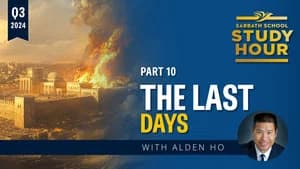
Scripture: Mark 13:26-27 This week’s lesson starts with a very brief story at the end of Mark 12, where Jesus makes a profound statement about a small act by a widow. The main portion of this week’s lesson, however, deals with Mark 13, a striking prophecy about the fate of the Jerusalem temple and more. This chapter, along with its parallels in Matthew 24 and Luke 21, tell about both the fall of Jerusalem and beyond, even to the end of the world. Jesus not only predicts the future but also instructs His disciples both then and now in how to prepare for the coming trials.

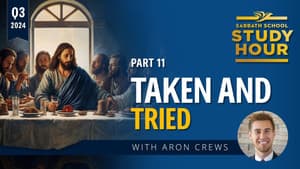
Scripture: Mark 14:36 This week’s lesson focuses on Mark 14, beginning with the fifth Sandwich Story, which interlinks two opposite actions in relation to Jesus. This is followed by the Last Supper, followed by His struggle in Gethsemane. There He is arrested and taken before the leaders to be tried. The trial scene is linked with Peter’s denial of Jesus, forming the sixth and last of the Sandwich Stories in Mark. Again, two opposite actions occur, but by an ironic twist, they affirm the same truth. Throughout the narrative, two contrasting story plots march hand in hand. In a crisp style, Mark sets before the reader these clashing plots while revealing the triumph of Jesus.

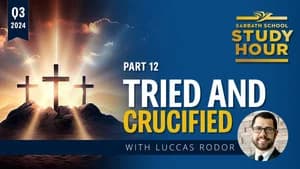
Mark 15 is the heart of the Passion Narrative. It presents the trial of Jesus, His condemnation, the mockery by the soldiers, His crucifixion, and then His death and burial. The events in this chapter are presented in stark, crisp detail, likely because the author let the facts speak for themselves. This week, from the question of Pilate, “ ‘Are you the king of the Jews?’ ” to the mocking soldiers to the sign above the cross to the mocking of the religious leaders, “ ‘He saved others; Himself He cannot save’ ” to the unexpected appearance of Joseph of Arimathea, the chapter is filled with painful ironies that nevertheless reveal powerful truths about the death of Jesus and what it means.
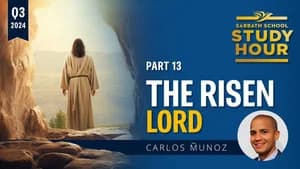
Scripture: Mark 16:6 The crucifixion of Jesus proved the death knell to the hopes and faith of His disciples. It was a dark weekend for them as they not only grappled with their Master’s death but feared for their own lives, as well (John 20:19). In Mark 16, the final chapter in his Gospel, we will look at what followed His death. This study will close with a challenge to the reader of Mark to take the gospel throughout the world.

2024

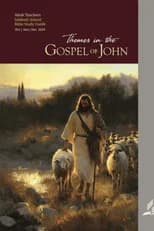
Scripture: John 20:30-31 Why did John write his Gospel? Did he wish to emphasize Jesus’ miracles? Or to emphasize some specific teachings of Jesus? What was the reason for writing what he did? This week we’re going to look in John at some of Jesus’ early miracles—from His turning water to wine at a wedding, to restoring to health someone’s very sick son, to the healing of the man at the pool of Bethesda.

Scripture: John 11:25-26 This week’s lesson looks at three of Jesus’ greatest signs of His divinity. What is striking is that in every case some people did not believe the miracle or perceive its significance. For some it was a time of turning away from Jesus; for others, a time for deepening blindness; and for others, a time to plot Jesus’ death. And, for others—a time to believe that Jesus was the Messiah.

Scripture: John 1:1 This week’s lesson will begin with the Prologue (John 1:1–18) and summarize its major themes. These themes will then be looked at in other places in John’s Gospel, as well.

Scripture: John 3:3 Lesson: 4 This week begins with the powerful witness of John the Baptist. Other witnesses come on the stage as well: Andrew and Simon Peter, Philip and Nathaniel, and a most unexpected witness, the Pharisee Nicodemus. But another witness stands back in the shadows (that other disciple with Andrew, in John 1:35, 40)—John himself.

Scripture: John 4:42 Lesson: 5 At the time of Christ, this animosity continued. The Jews avoided Samaria as much as possible. Though commerce may have gone on, other interaction was taboo. The Jews would not borrow from Samaritans or even receive a favor from them. Within this context, John recounts the encounter between Jesus, the woman by the well, and the people of the Samaritan city of Sychar.

Scripture: John 12:32 This week’s lesson looks at some of those who witnessed and testified about Jesus. In each of these incidents, some aspects of who Jesus really is are revealed, and together they create a deeper vision of Jesus, the Messiah.

Scripture: John 20:29 Throughout his Gospel, John has a diversity of people—people with different backgrounds, beliefs, and experiences—all testifying to who Jesus was. Who were some of these people, and why did they testify as they did to the identity of Jesus?

Scripture: John 5:36 Lesson: 8 This week we will look at more ways John revealed Jesus as the Messiah, and also, we will look at why some people still continued to reject Him—despite all the powerful reasons affirming Him as the Christ. What can we learn from their mistakes?

Scripture: John 14:6 Lesson: 9 This week continues with the revelation of God as given us in John. We will also more fully explore the flip side of things, in which, despite the powerful evidence for Jesus as the Messiah, some rejected Him. We will study this idea for two reasons: to avoid the same mistake, but also to consider how we might be able to reach out to those in danger of making that mistake, as well.

Scripture: John 1:18 Lesson: 10 This week’s lesson will begin with the purpose of the farewell discourse and its introduction with the significant episode of Jesus’ washing His disciples’ feet. Then it will turn to the “I AM” statement in chapter 14 (“I am the way, the truth, and the life”).
Scripture: John 14:26 Lesson: 11 This week’s lesson looks at how the Gospel of John presents the Father, Son, and Holy Spirit, but now within the context of the farewell discourse (John 13–17).

Scripture: John 18:37 Lesson: 12 The four Gospels present the death of Jesus in different ways. But John presents the cross as the enthronement of Jesus, particularly tied to the idea of the hour, which is referred to numerous times throughout the book (John 7:30, John 8:20, John 12:27).

Scripture: John 5:39 Lesson: 13 In this, our last week in John, we will look at some of this Gospel’s key points, which can help us move beyond the mere head knowledge of Jesus to, instead, knowing Him better and more closely abiding in Him and in His Word.

2025

Scripture: Hosea 14:4 Lesson: 1 God not only asks us, “Do you love Me,” but God Himself loves each person, and does so freely. Indeed, He freely loves you and me and every other person more than we could possibly imagine.

Scripture: John 14:23 Lesson: 2 Some might think that they are unlovable, or that God might love everyone else, but not them. Yet, the Bible consistently proclaims that every single person is loved by God. There is no one whom He does not love. And because God loves everyone, He also wants everyone to be saved, as well.

Scripture: Zephaniah 3:17 Lesson: 3 Hard as it is for us to imagine, God considers each person of incalculable value, which is why He rejoices over the salvation of even one soul.

Scripture: Isaiah 49:15 Lesson: 4 How can we model our lives after the life of Christ, focusing on the felt needs of others, and, thus, not merely preaching God’s love but showing it in tangible ways?

Scripture: Psalm 78:38 Lesson: 5 Though God’s compassion is often celebrated, many find the idea of His wrath disturbing. If God is love, they think He should never express wrath. That notion, however, is false. His wrath arises directly from His love.

Scripture: Jeremiah 9:24 Lesson: 6 Throughout Scripture, love and justice go together. True love requires justice, and true justice can be governed by and meted only out in love.

Scripture: Revelation 21:4 Lesson: 7 Perhaps the greatest problem facing Christianity is the problem of evil—how to reconcile the fact that God is perfectly good and loving, with the fact of evil in this world. In briefest terms, if God is all-good and all-powerful, why is there evil, and so much of it, too?

Scripture: Jeremiah 2:24 Lesson: 8 The God of the Bible could not be more different from these demonic forces. Yahweh is perfectly good and His character changeless. And it is only because of God’s constant goodness that we can have any hope, now and for eternity.

Scripture: Genesis 3:15 Lesson: 9 The theme of a cosmic conflict, in which the kingdom of God is opposed by the devil and his angels, is not one that we can neglect without missing a great deal of what the biblical narratives are about. The Gospels alone are filled with references to the devil and demons who oppose God. This week, we will address how the two following questions might be answered according to some crucial biblical passages: 1- Where does Scripture teach that there is a cosmic conflict between God and Satan? 2- According to Scripture, what is the nature of the conflict?

Scripture: 1 John 3:8 Lesson: 10 For the cosmic conflict to occur, God must allow the enemy some freedom and power within certain parameters, though the details are unknown to us. Even God's angels operate within these "rules of engagement." Understanding that God governs by love, not coercion, helps us grasp this concept and better understand the great controversy.

Scripture: John 18:37 Lesson: 11 Many struggle with the question: If God is good, why is there so much suffering? Where is He in the midst of pain? The cosmic conflict helps shed light on this crucial issue, yet many questions remain. But when our search for answers falls short, we can look to Jesus on the cross and see that God is trustworthy, even when some questions remain unanswered—for now.

Scripture: 1 John 4:20 Lesson: 12 Part of loving one another is sharing a concern for the well-being of those around us. When others are afflicted by poverty, oppression, or any kind of injustice, we should be concerned. When others are oppressed, we should not turn a blind eye. Instead, we should ask ourselves what we can do, individually and corporately, to advance God’s love and justice in a way that reflects to our broken world our Lord’s perfect character of righteousness and love.

Scripture: Romans 13:8 Lesson: 13 God’s law is not a set of abstract principles but commands and instructions intended for our flourishing. God’s law is, in its totality, an expression of love as God Himself expresses it.

2024

Scripture: Luke 24:44-45 The Psalms are inspired prayers and praises of Israel, and so in the Psalms the voice is that of God intermingled with that of His people.

Scripture: Luke 11:1 This week we will look at the role the Psalms played in helping God’s people traverse their life journey and grow in their relationship with God.

Scripture: Psalm 34:17 God has both the perfect knowledge of us and of our circumstances, and also the means to help us. Therefore, His promises of help and deliverance are not shallow platitudes but firm assurances.

Scripture: Psalm 34:17 We should remember that the proper response to the Lord’s nearness consists in a life of faith in Him, and of obedience to His commandments.

Scripture: Psalm 137:4 As we already have seen, the psalmists acknowledge God’s sovereign rule and power, as well as His righteous judgments.

Scripture: Psalm 12:5 The Lord is longsuffering and holds His wrath in His great forbearance, not wanting anyone to perish but to repent and change their ways (2 Pet. 3:9–15).

Scripture: Psalm 57:9-10 God’s people take comfort in the fact that the Lord is faithful to His covenant.

Scripture: Psalm 90:12 Wisdom for righteous living is gained through the dynamics of life with God amid temptations and challenges.

Scripture: Psalm 118:22-23 In all the Psalms, through the psalmists’ laments, thanksgivings, praises, and cries for justice and deliverance, we can hear the echoes of Christ’s prayer for the salvation of the world.

Scripture: Psalm 78:3-4 Each generation of God’s people plays a small but significant part in the grand historical unfolding of God’s sovereign purposes in the great controversy.

Scripture: Psalm 84:2 The blessings of Zion overflow to the ends of the earth because the Lord’s person and grace exceed the boundaries of any holy place. Zion is the joy of all the earth (Ps. 48:2), affirming that the whole earth belongs to God.

Scripture: Psalm 104:33 The Lord’s people are identified with the righteous, who worship the Lord and whose hope is in Him and in His love.

Scripture: Psalm 27:14 If there is a final word that we can draw from the Psalms, it should be “wait on the Lord.” Waiting on the Lord is not an idle and desperate biding of one’s time. Instead, waiting on the Lord is an act full of trust and faith, a trust and faith revealed in action.

2025

Scripture: Jeremiah 9:24 Lesson: 1 Why does Bible prophecy cause so much confusion—even among Christians? Some avoid it altogether, thinking it's too complicated or divisive. But that wasn’t always the case. For centuries, believers found unity and clarity in God’s prophetic Word. In this week’s lesson, we’ll explore simple, powerful principles that bring prophecy into focus—and show how it can still inspire faith and understanding today.

Scripture: John 1:29 Lesson: 2 This week, we are going to study a handful of big concepts at the core of Revelation. There are many, and so we will choose a few to illustrate the all-important point that understanding the ancient foundations behind Revelation enables the student to see countless nuances in the text, each of which can yield important lessons about the nature of humanity, of God, and of the conflict being waged in our universe and, thus, in our lives, as well.

Scripture: Revelation 19:9 Lesson: 3 This week we will explore different ways the Word of God talks about marriages, good and bad. We can then draw lessons from these examples to understand better how God relates to His people, even when they fall short, and we can learn some truths about His love that can help us better grasp last-day events.

Scripture: Daniel 7:14 Lesson: 4 In this lesson, we will explore humanity’s long and often tragic journey of self-government through the lens of Scripture. From the table of nations in Genesis to the hopeful vision in Revelation, this lesson traces how human attempts to rule without God have consistently fallen short. With key texts from Genesis, Samuel, Daniel, and Revelation, we uncover the contrast between earthly kingdoms and the everlasting kingdom of Christ—one that will never be destroyed. Join us as we reflect on God’s ultimate solution to our broken world and the hope of His eternal reign.

Scripture: Psalms 46:10 Lesson: 5 This week, we will continue looking at the problems caused by the Fall and the desire for human government as opposed to God’s governance. These truths are powerfully revealed in the book of Daniel, which shows that God was right when He warned His people about what would happen when they turned away from Him and chose earthly monarchs instead. This is exactly what they got: earthly monarchs instead, and sinners lording it over sinners—never a good combination.

Scripture: Revelation 5:9 Lesson: 6 This week we will look at some of the themes of sacrifice that inform our understanding of Jesus, the slain Lamb, the clear protagonist of the throne room scene. He is accepted as worthy, where no one else is, and His unique worthiness speaks volumes about what the Lord was doing through the sacrificial system. It reveals Him as a God of infinite love who made the ultimate sacrifice, an act that we, and the other intelligences in the universe, will marvel at for eternity.

Scripture: Isaiah 6:8 Lesson: 7 This week, we move further into the vision of the throne room and consider how the human race relates to a holy God and how the sacrifice of Christ restores us and brings us close to the throne. God plans to restore us, not just as individuals but also as a race, so that we once again reveal His glory to the rest of Creation. By searching through the rest of the Bible, we can find important clues that help us understand and begin to appreciate the high calling that God has extended to us, a race of forgiven and redeemed sinners.

Scripture: Revelation 14:1 Lesson: 8 The book of Psalms offers rich spiritual insights that deepen our understanding of Revelation, especially chapter 14. This inspired poetry reflects the human journey with God and highlights themes of worship, repentance, and salvation. As God's people are called to share a final message with the world, the Psalms provide meaningful context and encouragement for that mission. We’ll explore this connection further throughout the week.

Scripture: Psalms 67:3-4 Lesson: 9 The Psalms also deal with these issues in great depth, exploring nearly every possible human emotion—from dark despondency to unbridled joy. We see Israel preparing for battle against the forces of darkness. We read about individuals wrestling with the question of why doesn’t God address evil more directly and immediately, a question that no doubt we all have asked. We are directed to the sanctuary for answers, and there are also repeated appeals to God’s status as Creator. Are these not issues and questions that we, in our context today, wrestle with, as well? Of course—which is why we will continue unpacking Psalms in order to learn more about these crucial truths.
Scripture: 1 Corinthians 10:11-12 Lesson: 10 Over the next couple of weeks, we will be searching through a number of key stories in order to see what they might have to say about events such as the Second Coming, the investigative judgment, the final crisis, and more. And, through it all, we find Christ as the center, for He must be the foundation as well as the end goal of all our prophetic endeavors.

Scripture: Esther 5:2 Lesson: 11 In prophecy, a woman is a powerful symbol for God’s church, shedding much light on how God regards His people. Let’s look at the biblical accounts of these two women, whose life circumstances have been immortalized in the Word of God, and seek to draw whatever lessons we can from their experiences.
Scripture: 2 Timothy 1:7 Lesson: 12 Over and over, Jesus said things like “Do not fear,” and “Why do your thoughts trouble you?” It is important to remember that the focus of prophecy is Christ, and, as such, we must be able to find the same counsel throughout the scenes portrayed in earth’s closing moments. “ ‘Let not your heart be troubled,’ ” He taught His disciples, “ ‘you believe in God, believe also in Me’ ” (John 14:1, NKJV). In other words, yes, last-day events will be difficult and trying for those who seek to stay faithful to God. But ultimately, we should view these events with hope, not fear.

Scripture: Jonah 1:9 Lesson: 13 At the same time we must remember one thing for all these stories that appear to foreshadow last-day events: we must be careful to look at broad themes and allusions and not try to parse every detail to the point of creating prophetic absurdities. As in the parables of Jesus, we should look for the major points and principles. We should not milk every detail in hopes of finding some hidden truth. Instead, we should look for the outlines, the principles; and from these we can discover elements relevant for the last days.

2025

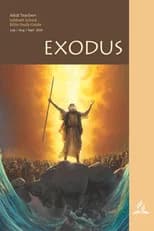
Scripture: Exodus 2:23-25 Lesson: 1 The book of Exodus is a powerful reminder that God sees, hears, and acts on behalf of the suffering. Its stories of deliverance speak to anyone who feels forgotten, oppressed, or burdened by life’s injustices. Just as God rescued the Israelites, He is still working today to redeem and restore. Exodus is more than ancient history—it points us to Jesus, our ultimate Deliverer, and reminds us that through faith, we too can experience freedom and salvation. In life’s darkest moments, we can find hope by fixing our eyes on God, who leads us toward His eternal Promised Land.


Scripture: Exodus 3:7-8 Lesson: 2 When God appeared to Moses in the burning bush, He wasn’t just showing a miracle—He was calling Moses to a new purpose. At first, Moses hesitated, unsure about such a radical change. Like him, we often have our own plans, but God may lead us in a different direction—one that’s harder, but better. Following His call may not always be easy, but it’s the path to true purpose and blessing.

Scripture: Exodus 5:1-2 Lesson: 3 Many believers think that when one decides to follow God, he or she will experience only happiness, prosperity, and success. That’s not necessarily the case, however, as the Bible itself often shows. Sometimes many obstacles appear, as well as new difficulties. Those who trust in God will face numerous trials. When we persevere, however, God brings solutions that come on His terms and in His time. His ways may conflict with our expectations for quick and instantaneous solutions, but we must learn to trust Him, regardless.

Scripture: Exodus 9:35 Lesson: 4 Pharaoh does not want to let God’s people go. The Scriptures never explicitly explain why Pharaoh was so reluctant, despite the military threat that the Egyptians feared the Hebrews could pose (see Exod. 1:10). Most likely, as is often the case with slavery, it was pure economics. They were cheap labor, and so he didn’t want to lose whatever economic advantages these slaves gave him. Thus, he was going to need some persuasion not only to get his attention but also to change his mind.

The tenth and last plague is about to fall. The last warning is given; the final decision must be made. It’s truly a matter of life or death. Not only the life of an individual, but the prosperity of families and the entire nation is at stake. Pharaoh and his officials will be responsible for the fate of many people, either for life or for death. His attitude toward the living God of Israel will determine not just his future but that of his nation.

The Exodus is the most dramatic and glorious experience of God’s people in the Old Testament. This event is the divine model of how God defeated the Hebrews’ enemies and brought the Israelites victoriously into the Promised Land. It’s also a symbol of salvation and redemption in Christ.

After leaving Egypt, Israel was on an unknown journey to the Promised Land. The people faced a demanding and long trek, and they needed to learn a multitude of new lessons. The Lord would lead and care for them; and, yes, He desired to help them grow, but they must learn discipline, self-control, sacrifice, unselfishness, trust in the Lord, and especially obedience.

Where did God lead Israel after He had liberated them from Egypt? To the Promised Land—where else? However geographically correct, that answer is theologically wrong. God Himself answers it: “ ‘ “You yourselves have seen what I did to Egypt, and how I carried you on eagles’ wings and brought you to myself” ’ ” (Exod. 19:4, NIV; emphasis added). Thus, the biblical-theological answer to the question reveals God’s priority and goal: the Lord brought them to Himself.

God desired His people to be different from the surrounding nations. He wanted them established as a devoted community of faith who would live under His leadership and authority. Everyone would be subject to His law. Judges were to be appointed as administrators of the law, and the priests were to teach it. Parents also played a crucial role.

As their God, Creator, and Redeemer, the Lord desired to be with His people and to dwell in their midst. He created us to be in close fellowship with Him. Yet, if meaningful relationships with other people can be built only with time and effort, the same is true with our vertical relationship with God. It can be an uplifting and growth-filled experience, but only if we spend time with Him. In practical terms, this means studying His Word (God speaking to us), praying (opening our hearts to God), and witnessing to others about Christ’s death, resurrection, and return (engaging in God’s mission). As God blesses us, we will be a channel of blessings to others.

Moses had been absent from the camp of Israel for only 40 days and what happened? God’s people had turned away from Him and worshiped a human-made idol, the golden calf. After so many mighty signs, experiences, and miracles, how could they have done that? Whatever the reasons for this terrible apostasy, what lessons can we draw from it, not only about human sinfulness but about God’s gracious love for humans, despite their sinfulness?

The principal task of God’s people in the Old Testament (as well as for us today) was to live in close relationship with the Lord; to worship and serve Him; and, also, to present the right picture of God to others (Deut. 4:5–8). The sanctuary demonstrated God’s closeness to humanity and revealed the greatest truths to them, which is how He saves those who come to Him in faith.

2025

The book of Joshua is about new possibilities. Moses, who had dominated 40 years of Israel’s history, belonged in the past. The Exodus from Egypt and the wanderings in the wilderness, tragically marked by rebellion and stubbornness, had ended. A new generation, willing to obey God, was ready to enter the Promised Land, not as an expectation to live up to but as a possibility to live into. Let’s study the way God opened up a new chapter in Israel’s life, and how He can do the same in ours as well.

Israel has a second chance of entering the Promised Land, and Joshua takes this mission seriously. Expectations run high, but the last time Israel was at the border and had the same task, it resulted in an abysmal failure. This week, we will explore two of the most fascinating stories of the book of Joshua and discover their relevance to our faith today. God’s grace has infinite possibilities to surprise us.

As human beings, we are prone to forget things that are not constantly in our sight. We forget to return phone calls, respond to emails, water the plants, send birthday wishes, and so forth. The list could go on. Forgetting about our spiritual needs, however, could have more severe consequences than simply receiving a fine, especially because we are dealing with what is, literally, our eternal destiny. Let’s study the crossing of the Jordan by the Hebrews and see what we can learn from their experiences.

How can we understand that God’s chosen people carried out such practices in Old Testament times? How is it possible to reconcile the image of a “warlike” God with His character of love (for example, Exod. 34:6, Ps. 86:15, Ps. 103:8, Ps. 108:4) without diluting the credibility, authority, and historicity of the Old Testament? This week and next, we are going to explore the difficult question of divinely commanded wars in the book of Joshua and elsewhere.

Last week, we saw that God Himself is involved in a conflict that is far greater than any war or battle fought in human history, a battle that permeates every aspect of our lives. We saw, too, that the events of both biblical and secular history can be fully understood only in light of this conflict. This week, we continue to explore the complexity of divinely sanctioned wars, the limitations and conditions of divine war, the final vision of peace offered by the Old Testament prophets, and the spiritual implications of such wars.


This week we are going to look at some key moments during Israel's presence in the Promised Land, when Israel rededicated themselves to the Lord, sometimes in the face of impending danger. Joshua took the seemingly irrational decision to circumcise the Israelites on enemy territory (Josh. 5:1–9); to celebrate the Passover in the face of imminent danger (Josh. 5:10–12); to build an altar and worship the Lord while the conquest was in full swing (Josh. 8:30–35); and to set up the tabernacle of the Lord when seven tribes in Israel had not yet received their inheritance (Josh. 18:1, 2).

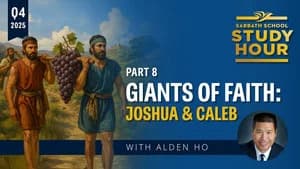
This week, we will take a deeper look into the personal examples of two giants of faith in the book of Joshua: Caleb and Joshua. What is it that made them stand out in their generation and play a key role in the life of God’s people during one of the most crucial periods of Israel’s history?
Joshua 13–21 contains long lists of geographical boundary markers that delineate portions of land allocated to the tribes of Israel. For the modern reader, these lists might seem irrelevant, but they are based on a theological understanding of the Promised Land that is significant for us today. This week we will look at some theological concepts related to the Promised Land and their spiritual implications for those who claim all the promises found in Jesus.