Loading...
Loading...


One Foot in the Past was a British television series on BBC 2. It considered the cultural heritage and history of England. Each programme ran for 30 minutes.
1994
The demolition of the huge, neo-classical Euston Arch in the 1960s to make way for the new railway terminus in north London, is still ruefully cited as a prime example of architectural vandalism. In the first series, Dan Cruickshank tracked down some of the masonry to a garden in Kent. Now, as the programme returns for a second season, divers are delving into east London's River Lea, hoping to raise the rest of the Arch.
Kirsty Wark reports on Nancy Buckle's battle to remain as sole resident of the House on the Rock in Knaresborough, the extraordinary folly built by her ancestors 200 years ago, which still lacks all 20th century amenities. Plus, reports on the restoration debate - has the cult of restoring gone too far turning historic buildings into over-dressed theatre sets? And Alan Clark revisits the historic race track at Brooklands.
Kirsty Wark reports on the councils accused of vandalising their historic cemeteries; Betty Boothroyd, Speaker of the House of Commons, gives Dan Cruickshank a glimpse of the gothic splendour of her private apartments in the Palace of Westminster, and Peter York goes shopping for heritage souvenirs.
This week: Betty Boothroyd, Speaker of the House of Commons, shows Dan Cruickshank her apartments designed by Augustus Pugin and author Margaret Drabble returns to Filey, the holiday resort of her youth. With Kirsty Wark.
This week Kirsty Wark is joined by Loyd Grossman to confront heritage experts with some of the weird and wonderful post-war buildings suggested by viewers in the "List It" campaign.
Jonathan Meades goes to Dorset in search of the English baroque and Gavin Stamp bemoans the state of buildings by Scottish architect Alexander "Greek" Thompson.
Germaine Greer sings the praises of the original site of the British Library in Bloomsbury.
Jools Holland travels to Portmeirion in Wales, on the trail of his architectural hero Clough Williams Ellis. And as Britain's centuries-old freehold estates face break-up, Peter York investigates the claim of their owners to be the true guardians of the nation's heritage.
Dan Cruickshank hunts for the Skylon, centrepiece of the Festival of Britain and not seen since it was dismantled in 1951.
Architect Richard Rogers gives a guided tour around the house he built for his parents, and travel writer Eric Newby visits the island of St Kilda. Last in the series. With Kirsty Wark.
1993
This week, presenter Kirsty Wark investigates why churches are a law unto themselves when it comes to conservation. And Loyd Grossman weighs up the evidence in the great British pebbledash debate.
Magazine series in which Kirsty Wark is your guide to the people and issues that shape Britain's heritage. This week Lucinda Lambton unveils her very personal selection of heritage heroes, starting with Victorian engineer Sir Joseph Bazalgette, the man who masterminded the London sewage system.
This week: the threat to what has been described as the greatest power station ever built; meet the Gibsons, who discovered to their cost that their Welsh dream home was sitting on a site of major historical significance; and singer Marianne Faithfull retraces a very personal journey along the Ridgeway.
This week: Number 7 Blythe Grove - the suburban semi that time forgot, now rescued by the National Trust; how history has buried Britain's unsavoury role in the slave trade; and the fashions and fascinations of the nation's ruins.
This week: is London's crumbling Albert Memorial doomed to stay under wraps, without the funds to restore it? Denis Healey returns to a childhood haunt - Bolton Abbey in Yorkshire. And Loyd Grossman explores the pleasures and pitfalls of living with a listed building.
This week: restoration or innovation? Controversial plans for the future of St George's Hall, Windsor Castle; Lucinda Lambton salutes another heritage hero; and a visit to Northern Ireland's latest multi-media visitors' centre at Navan, the ancient mound in Armagh. With Kirsty Wark.
This week's programme includes an exclusive visit by Lucinda Lambton to the gothic wonders of Sir George Gilbert Scott's Midland Grand Hotel at St Pancras Station in London. It is currently receiving a million face-lift and may possibly open as a hotel again if St Pancras becomes the terminus for the channel tunnel. With Kirsty Wark.
In the last programmes of the series a report on Scotland's controversial programme of cleaning historic buildings, and how a castle can pay its way.
1995
The controversial restoration of Westminster Abbey is due to be unveiled by the Queen this year but some critics feel it is a reconstruction rather than just redecoration. Architect Donald Buttress defends his radical approach. Series presenter Kirsty Wark goes in search of the few remaining blue police boxes and actor Neil Pearson visits his old school, Woolverstone Hall in Suffolk.
The programme uncovering Britain's heritage. Presenter Kirsty Wark asks just how did King Henry VIII go to the lavatory? At Hampton Court Palace Simon Thurley reveals an underground network of tunnels dealing with Tudor waste and sewage, and lifts the lid on an ancient royal convenience. The programme recreates the lost Great House of Easement - Hampton Court's 28-seater communal lavatory. Liz Dawn , Coronation Street's Vera Duckworth , time travels to Temple Newsam House, just outside Leeds, for an 18th century-style "make-over". Plus there's an exploration of that surreal form of gardening, the art of hedge-cutting ortopiary.
This week, Lucinda Lambton visits Brodsworth House in Yorkshire, a mid- 1 9th century house packed with crumbling Victoriana which has been gradually decaying as years of rot and damp took theirtoll. English Heritage has managed to rescue the house and arrest the decay, but this is no ordinary restoration programme. Spike Milligan , meanwhile, embarks on a second campaign to save the Elfin Oak, the burned-out trunk of a huge oak tree in London's Kensington Gardens whose twisted contours were carved into an intricate scene of pixies and goblins at the turn of the century by woodcarver Ivor Innes. In the sixties, Milligan led a campaign to save the oak from rotting away, but can he save it a second time? Presenter Kirsty Wark takes the West Highland line sleeper service to Fort William, Britain's most awe-inspiring railway journey and the focus of protests in the face of efforts to close the service.
Food writer Jennifer Paterson visits the town of Bakewell in Derbyshire to investigate a feud between three rival makers of a celebrated tart, the historic Bakewell pudding; the programme goes in search of Italian-style water cascades, a fashionable but expensive accessory in 17th-century mansion house gardens; and Kirsty Wark reveals the threat hanging over a brilliant neo-classical temple, the Countess of Bridgewater's Chapel of Ease at Dodington in Shropshire.
The programme looking at Britain's heritage and history makes a visit to London's Barts Hospital with Lucinda Lambton, and follows Lady Barbara Castle on a trip up the River Thames to Kelmscott Manor in Gloucestershire. Presented by Kirsty Wark.
This week, Penelope Keith visits Folly Farm in Berkshire, which represents two different phases in the working partnership of architect Sir Edwin Lutyens and garden designer Gertrude Jekyll. In 1906, the duo created the Elizabethan look, with two cottage courtyard gardens. But by 1912 they were exploring larger-scale formality in the sunken rose garden. Also, do ordinary people's views count for anything when it comes to listing a building? Nuneaton might not be the heritage capital of the country but, as Kirsty Wark reports, local people were determined to save the biggest structure on their horizon when it came under threat. Plus a visit to the Walpole Bay Hotel in Cliftonville, Kent, a building which embodies the heyday of the British seaside holiday.
Up and down the country, sad but heroic ruins dot the landscape. Kirsty Wark guides us through some of Britain's forgotten buildings.
This special edition reports on an important heritage battle of the Second World War. In spring 1942, the Nazis declared war on Britain's historic cities, decreeing that any building marked with three stars in the popular Baedeker guide books was earmarked for destruction by bombing. Dan Cruickshank tells the story of how Britain's treasured buildings came into the firing line, and how our ancient towns still bear the scars today.
This week, Patrick Moore from the BBC's Sky at Night visits the now redundant Equatorial Telescopes Buildings at Herstmonceux in Sussex. Built by a designer known for creating ship's interiors, the complex owes more to navigational design than to the modern era. Sheffield's Parkhill estate will be the biggest structure ever listed in Britain, but should English Heritage be proposing such a move for the 1960s estate, which is regarded as run down even by its own residents? Architect Carolyn Steele investigates. Plus a look at topiary, the art of hedge sculpture, including a giant chess set fashioned in Oxfordshire.
Kirsty Wark introduces the last in the series of programmes celebrating classic buildings. Britain's greatest railway monument, the Euston Arch, is set to be reclaimed from its resting place on a riverbed in east London and rebuilt at Euston Station. Will the Heritage Lottery Fund help to finance this? This year marks the centenary of the birth of architect Wintemute Wells Coates. Elain Harwood visits three of his stylish buildings in London and Brighton, memories of a designer who was decades ahead of his time. Plus, jazz trumpeter Humphrey Lyttelton recalls his fond feelings for Birmingham's Town Hall.
1996
Tonight, Jack Charlton visits his childhood haunts in Northumberland, while Kirsty Wark looks at gasometers at London's King's Cross rail station.
Tonight Kirsty Wark visits Wormwood Scrubs in west London to reveal a hidden heritage. Dame Thora Hird dances the night away at the Midland Hotel, built in 1933 in Morecambe, Lancashire. And Dan Cruickshank reviews the Georgian age and its town houses.
Kirsty Wark tells the story of model villages, Sir Bernard Ingham visits the Stoodley Pike obelisk, while Ptolemy Dean reveals the state of neglect of many of architect Sir John Soane 's buildings
Unlikely romantic Ross Kemp, who plays Grant Mitchell in EastEnders, visits Cliveden in Berkshire, a 19th-century house built by the Duke of Buckingham to house his mistress, and home to politicians the Astors in the thirties. Kirsty Wark reports on plans to reflood the moat at the Tower of London. Plus, a look at life inside Britain's oldest almshouse.
Actor Ralph Fiennes visits Clouds Hill in Dorset, the tiny cottage home of T.E. Lawrence, better known as Lawrence of Arabia. Fiennes, who has played Lawrence on stage and screen, has a long-standing affinity for the soldier, writer and leader. He retraces his hero's last years, leading to his fatal motorbike crash in 1935. For the first time, the humble post-war council house is about to be officially recognised as part of Britain's architectural heritage.
Birnbeck Pier in Weston-super-Mare, Somerset, is a beautiful, but little-known pier. It is the work of the Victorian pier designer Eugenius Birch and a favourite place of actor Rupert Graves, who revisits his childhood haunt. On the south coast of England sit the strange and menacing great sound mirrors that were supposed to be the cutting edge of Britain's defence in the years leading up to the Second World War. Dan Cruickshank reports. The gigantic statue of the first Duke of Sutherland at Golspie is a grim reminder of the Highland clearances of the early 19th century, in which he took part. Plans to have the statue moved and replaced by a Celtic cross, as a memorial to those who suffered in the clearances, have caused great controversy. Kirsty Wark investigates.
Behind the closed doors of modern government are the forgotten remnants of Henry Vlll's great lost palace - Whitehall. Simon Thurley explains how the palace was destroyed. Elain Harwood enters the world of the Victorian lunatic asylum, visiting the Claybury hospital in Middlesex. Finally, following Sunderland FC's promotion to the Premier League, a farewell to an old ground with an impressive history. With Kirsty Wark.
In the wake of the controversy stirred up by the Heritage Lottery Fund's multi-million pound award to purchase the Churchill papers for the nation, Kirsty Wark follows another application for funds: the troubled Llangollen steam railway in North Wales. Also, two items held over from last week. Elain Harwood visits the Claybury hospital in Middlesex to see a Victorian lunatic asylum that practised an unusually benevolent and enlightened approach. And, following Sunderland FC's promotion to the Premier League and a move to new premises, a farewell to Roker Park, their old ground with a history stretching back almost 100 years.
Lucinda Lambton travels to Ireland to visit Castle Leslie in County Monaghan, now open to payingguests. There, she talks to the present owner, Sir John Leslie Bt, about its history and the ghost said to roam the castle. Plus, a look at the role played by the village hall within communities. There are 8,500 of them in Britain and most need renovating; f 40 million of Lottery cash has been set aside for this purpose. Finally, an item postponed from 27 June. Gavin Stamp looks at the history of the rusty Firth of Forth Bridge. Does the Government care enough to help save it? Last in the series.
1997
Tonight, former Defence Secretary Michael Portillo celebrates the charms of Wotton House in Buckinghamshire. Dan Cruickshank tracks down the panelled walls and contents of stately homes that are now languishing in museums around the country, and Kirsty Wark visits Highbury, the Arsenal FC stadium.
Tonight Kirsty Wark looks into a dispute over the future of an old cinema in Devon and Simon Thurley goes on a subterranean exploration for the remains of London's River Fleet. Also, Raine, Countess Spencer enjoys Cheltenham, a town with which her family has many links.
Kirsty Wark visits a National Trust-owned former Victorian workhouse. Gavin Stamp considers the life of architect George Gilbert Scott Jr, forgotten while the world remembers his father (who built London's Albert Memorial), and his son (designer of Liverpool's Anglican cathedral and the red telephone box). Actress Miriam Margolyes returns to Broadstairs on the Kent coast, which she frequently visited as a child.
Tonight Avengers star Patrick Macnee returns to his childhood haunt, the seaside town of Bosham in West Sussex, where King Canute vainly ordered back the waves. Kirsty Wark reports on plans to move a historic pub in the centre of Manchester to a new location brick by brick. Alexander Stoddart appeals for more monuments to be built in honour of great men and women.
Tonight lifelong dance-lover and popular actress Dora Bryan explores the sometimes-faded glamour of Britain's old ballrooms, from the disused Co-op Ballroom in Oldham to the Ritz Ballroom in Manchester and the present-day glories of the Tower Ballroom in Blackpool. Kirsty Wark investigates the problem of an unwanted monument, built in 1968 in Peterlee, County Durham. It was originally intended to symbolise hope for the town, but the half-building, half-sculpture has now fallen into disrepair. Many local people want it to be demolished, but English Heritage has decided to list it. Lucinda Lambton gets a preview of the completed restoration work on the rich interior of the Foreign and Commonwealth Office. This temple to the might of the British Empire, displaying Victorian decoration at its most opulent and including impressive sculptures and ceilings studded with gold stars, is to be opened to the public later this year.
This week Dan Cruickshank reveals the untold story of Britain's imperial strength when he visits what was the Royal Gunpowder factory at Waltham Abbey in Essex. Actress Sorcha Cusack journeys back to her childhood home in Dalkey lsland, near Dublin. And Newsnight presenter Kirsty Wark investigates the rebuilding of a medieval palace in London on the banks of the River Thames.
This week Richard Wilson takes a step back in time as he explores the gothic splendour of Glasgow University. Simon Thurley embraces the postwar "enemy" of old buildings - the skyscraper. And Kirsty Wark probes the furore surrounding plans to ring in the new millennium.
Comedian Bob Monkhouse oversees a guided tour around Pinewood Studios in Buckinghamshire, where he made films in the late fifties. Lucinda Lambton looks around Chastleton House, a Jacobean manor in Oxfordshire reopening after a lengthy restoration. And Kirsty Wark explores the mausoleums of the aristocracy.
Streaming availability information not available
1998
The heritage and architecture show returns for an eight-part series, beginning with a glimpse of the restoration performed on the Albert Memorial. Lucinda Lambton tours Sunnycroft, a Victorian house in Shropshire left untouched for generations, while actor Sir Derek Jacobi returns to Devon, where he spent happy family holidays with his parents in the forties.
The heritage series continues as Raine, Countess Spencer traces the history of London's Claridges hotel in the year of its 100th birthday. Plus a behind-the-scenes view of the process for choosing the architect to design the new Scottish Parliament building, and a look around Duncombe Park with actor Ian Carmichael, who was billeted at the North Yorkshire stately home during the Second World War.
The heritage and architecture series continues as Esther Rantzen finds peace and tranquility in Salisbury Cathedral, Dan Cruickshank follows the trail of the culprit who destroyed Bradenstoke Priory in Wiltshire, and Kirsty Wark steps back to the thirties to a public-health experiment in Peckham, south London.

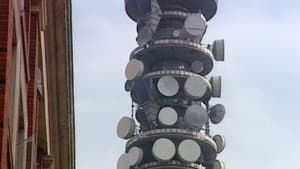
The heritage and architecture series continues as actress Jean Alexander reveals her former career when she returns to Liverpool, Kirsty Wark visits some endangered buildings, and Tony Benn pays tribute to his favourite edifice, the Post Office Tower in central London.
The heritage and architecture series continues as Dame Kiri Te Kanawa reveals her favourite building. Once a cinema, it was, when Dame Kiri first arrived in Britain in 1966, the home of the London Opera Centre, where fledgling singers trained. Presented by Kirsty Wark, with Dan Cruickshank.
The heritage and architecture series continues as Kirsty Wark argues for a meaningful monument to Diana, Princess of Wales. Dan Cruickshank advocates the preservation of disused military bases, and Lucinda Lambton revels in the lakes and miniature temples of an ornamental farm at Larchill in Ireland.
The heritage and architecture series concludes with an investigation into the closure of Britain's historic courthouses. Kirsty Wark visits Marlborough Street Magistrates' Court in London, scene of Oscar Wilde 's famous libel case, which shut for good just eight weeks ago. Dan Cruickshank goes back to the thirties to celebrate the romantic age of motoring, and actress Nicola Pagett visits picturesque Newstead Abbey in Nottinghamshire, once the home of romantic poet Lord Byron.
1999
In the first of seven programmes Kirsty Wark recounts the turbulent history of the Scottish crown jewels, and asks whether the Queen should wear them at the opening of the new Scottish parliament. Nigel Havers returns for the first time in 30 years to Ickworth House, home of his boyhood friend the Marquess of Bristol, who died in January. Dan Cruickshank offers a potted history of the chimney stack.
Kirsty Wark looks at the uncertain future of Wentworth Woodhouse, the vast Georgian Palace in Yorkshire; actor Michael Elphick recalls idyllic childhood days when he revisits Goodwood racecourse in Sussex; and Dan Cruickshank argues that Oliver Cromwell has been much maligned by history.
Simon Thurley travels to three of Britain's great architectural triumphs: the domes of St Paul 's in London, Howard Castle in Yorkshire and Radcliffe Camera in Oxford. Kirsty Wark looks back at the horrors of tuberculosis, and actor Leslie Phillips visits Wilton House.
Each year thousands of National Trust members spend their holidays working on stately homes. Kirsty Wark joins one group of volunteers helping out at Petworth House in West Sussex. Actress Patricia Hodge returns to her home town of Grimsby to see how it has changed, and new presenter Roger Bowdler travels to a crypt in Northampton and a north London catacomb to see how the overcrowding of cemeteries was dealt with in the past.
Raine Spencer absorbs the grandeur of Brighton Pavilion, an edifice that bears witness to George IV's hedonistic lifestyle, in which every room reflects his tastes. Kirsty Wark investigates debtors' prisons of the past and asks whether they were really as bad as their literary portrayal has suggested. And, in the picturesque village of Clovelly, where life has remained largely unchanged for centuries, resident Joss Ackland delves into the singular history of this north Devon community.
Steam trains are making a comeback - Kirsty Wark reports on a breakthrough that means the latest locomotives are efficient, eco-friendly and can compete with their diesel and electric counterparts. Dan Cruickshank investigates the legacy of architect Edward Godwin , and Ainsley Harriott celebrates his two great loves - cookery and cricket at Lord's, where he worked in the kitchens for 19 years.
In this last programme in the series, Kirsty Wark looks into the requisitioning of railings during the Second World War that amounted to a propaganda stunt, and offers a preview of the meticulously refurbished Eltham Palace in south London. Dan Cruickshank travels back to the year 999 to find medieval pre-millennium society gripped by apocalyptic fear. Ludovic Kennedy returns to Edinburgh and, as he revisits his family's Georgian homes, tells the story of the city's glorious past.
2000
As it returns for a new, eight-part run, the heritage series looks at buildings inspired by animals, starting an animal-themed mini-evening of history. Kirsty Wark sees how hunting has laid the foundations for a wealth of lavish architecture, while Lucinda Lambton looks for Britain's grandest animal monuments and Dan Cruickshank assesses an avant-garde builder's contribution to architecture through his work at London Zoo.
Behind their elegant Georgian facades, 18th-century cities were built on the profits of the sex industry, where prostitution was a sophisticated, lucrative and surprisingly respectable trade. Dan Cruickshank charts the rise to fame and fortune of two prostitutes, and sees how the obsession with sex extended to art, architecture and even landscape gardens.
Tonight's film celebrates the golden age of public transport - when railway stations were cathedrals, journeys were to be enjoyed not endured and inventors sought new and better ways of getting around. Kirsty Wark visits Newcastle's grand Victorian railway station and Derby's Art Deco bus depot, Joan Bakewell argues that people have forgotten the thrill of travel, while Dan Cruickshank investigates lost transport visions that were considered too advanced for their time.
Traditionally, architecture has been a profession dominated by men. But Joan Bakewell digs into the profession's history to identify the women who have helped shape the British landscape, from medieval prioresses to powerful aristocrats, and uncovers a wealth of innovative design.
Nelson is seen as the classic British hero, yet, as this film recalls, he also shocked polite society when, at the height of his fame, he began an adulterous affair with Lady Emma Hamilton.
Kirsty Wark asks why Britain has never embraced fountains as enthusiastically as the continent, plus a look at the hidden depths of Canova and the mysterious world of gargoyles.
Interiors can say more about how people lived than bricks and mortar. Kirsty Wark discovers a lost tradition of plasterwork in the West Country, Lucinda Lambton visits Islington to see the last surviving traditional wallpaper factory in London, which decorated Buckingham Palace, and Roger Bowdler celebrates the overlooked art form of wall paintings.
In the last of the series, Kirsty Wark follows vital repair work to the Wellington Arch in London, Philippa Gregory explores the lost garden of Hestercombe in Somerset - now being restored by a local farmer- and Dan Cruickshank finds out why a derelict colliery near Stoke is fast becoming the most challenging and expensive current conservation project in the country.