Loading...
Loading...


Realtimehistory creates chronological documentaries such Rhineland 45 and 15 Days in Berlin. They are also know as the team behind the youtube hit series The great War. Now they will cover one of the pivotal wars of the 19th century in real time: the Franco-Prussian War.
“Documentation”
2022

One of the last bastions of French resistance in the new year 1871 is Belfort. A ragtag army called "Army of the East" rushes to free the city near the Swiss border. Meanwhile the Germans prepare to announce their Empire in Versailles.

In minus 20 degrees the rag tag French Armee L'Est still tries to relieve Belfort - which is under siege by the Baden Corps under General von Werder. Belforts resistance against the siege is later immortalized in the Lion of Belfort.

The proclamation of the German Empire on 18 January 1871 is usually portraited as a glorious ceremony. Most people associated it with the famous paintings from Anton von Werner. But the ceremony itself was far from well organized and the soon-to-be Emperor Wilhlem I himself was not to thrilled about the whole affair.
The end of the Franco-Prussian War is marked by humiliation for France. German soldiers march into Paris and the French Army of the East under Bourbaki flees to neutral Switzerland to surrender there.
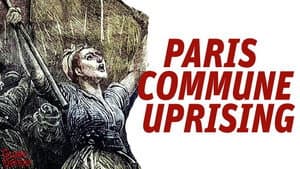
The Siege of Paris and the end of the Franco-Prussian War had brought social unrest in Paris (and other French cities) to a boiling point. Radical citizens take up arms and proclaim La Commune, a self-organized alternative to the French Republic. But soon the French Army is cracking down and Paris experiences a Week of Blood.
When Napoleon's Grande Armee crossed the Nemen river into the Russian Empire in 1812, the die had been cast. In the years between the peace of Tilsit and the war against Russia, Tsar Alexander I and Emperor Napoleon had praised each other and Russia had even joined the continental blockade of Napoleon's arch enemy Great Britain. Still, in 1811 both sides saw war as inevitable.
When Napoleon marched his Grande Armée into Russia in 1812, he had assembled the biggest army in modern European history. Only half of his troops came from territories of the expanded French Empire. Tens of thousands of troops also came from Poland, Prussia, Austria, and the German States as well as Southern Europe.
The Battle of Mir 1812 was the first battle of Napoleon's invasion of Russia. Polish Uhlans ride right into a trap set by Platov's Cossacks and under the Russian summer sun a cavalry skirmish ensues.
In the beginning of Napoleon's invasion of Russia, the Russian Tsar Alexander I was under pressure to rally his people. A months into the campaign he declared the The Patriotic War (Отечественная война) to fight back Napoleon - who was already having serious supply issues and a deteriorating logistics network.
The two Russian Western Armies are trying to join up to mount a defense against Napoleon's invasion of Russia. But the speed of the French advance, particularly Marshal Davout and Marshal Murat, are putting pressure on the Russians. And so late July sees a series of battles at Mogilev/Saltanovka and Vitebsk/Ostrovno. Meanwhile the Russian 3rd Observation Army is dangerously close to the border of the Duchy of Warsaw - the Austrians under Schwarzenberg and Reynier's Corps need to stand and fight around Kobryn.
Smolensk is an important symbolic city to the Russians in 1812, for Napoleon it's a strategic objective he wants to conquer to improve is deteriorating supply situation. The Battle of Smolensk leads to an inferno in the city, it gets virtually destroyed and nearly all residents flee.
French general Junot and Emperor Napoleon I had a bit of a history by the time of the 1812 campaign. Even though Junot has been in Napoleon's service for years, he hadn't been promoted to Marshal. At the Battle of Lubino (Battle of Valutino-Gora) Junot stands idly by as the Grande Armee is missing their best chance yet to win a decisive victory over the Russians. To the north, at Polotsk the French and Russians are also clashing.
he face of war was changing in 1812. While the Russian Army retreated and left behind scorched earth, Russian partisans took up arms against Napoleon's troops. They harassed and attacked vital supply lines and we a true menace to the Grande Armée's rear.
Napoleon's advancing army had finally spotted the entire Russian Army before them, the stage was set for the deciding clash of the Russian campaign at the small village of Borodino. Before the armies could duke it out, Napoleon wanted to eliminate a forward defensive position on the Russian left flank: The Shevardino Redoubt.
The Battle of Borodino was the deadliest single day in history until the outbreak of the First World War. It was the culmination of Napoleon's advance on Moscow. Due to the terrain and the Russian positions, it was a gigantic battle of attrition - which Napoleon won at a high cost.
After the Battle of Borodino, both sides are badly mauled. Napoleon's Army marches on and reaches Moscow, the old Russian capital. In the Emperor's eyes, capturing the city should win him the war. But while the local Russians set fire to the city, the Tsar in St. Petersburg and the Russian Army command are thinking about turning the tide of the war - and not about accepting a French victory.
When Napoleon took Moscow, he expected victory over Russia was just a matter of time. But six weeks later he has to flee the city as his entire Russia campaign collapses. The strengthened Russian Army is attacking from three sides, winter is coming and in far away Paris a coup is underway.
Napoleon's retreat from Moscow and from Russia as a whole is one of the most dramatic scenes in history. Starving and freezing, the French Grande Armee is desperately trying to reach the Berezina River. The revitalized Russian Army is on their heels and almost catches their prey in the 2nd Battle of Krasny. But it wasn't just "General Winter" that defeated Napoleon in Russia.
The two Schleswig Wars of 1848-51 and 1864 mark an important period in European History. Intertwined with the 1848 revolutions, the First Schleswig War's settlement tries to uphold the European status quo. But the unhappy belligerents soon find themselves at war again in 1864 when Prussian Prime Minister Otto von Bismarck uses the Second Schleswig War as a first step towards German unification.
After settling the Schleswig-Holstein question in 1864, Austria and Prussia are uneasy allies. Both are the biggest players in the German confederation. In Bismarck's dream of a united Germany, he sees Prussia as the only leader and wants to force the so called "small German solution" without Austria. And so, in 1866 a war between Austria and Prussia (plus other German states like Bavaria, Baden, Württemberg, Saxony, Hanover) breaks out to settle this question once and for all.
The Battle of the Bulge was one of the last German offensives during the Second World War. It caught the US Army off guard in the Ardennes sector but ultimately the Allies prevailed. But did Unternehmen Wacht am Rhein ('Operation Watch on the Rhine') ever have a chance to succeed and reach Antwerp?
The American invasion of Okinawa was the last big island operation on the Pacific Front. It took the US Marines and Army troops several months to defeat the last Japanese resistance on the island in one of the costliest American victories of the 2nd World War - but in the end not even Japanese Kamikaze attacks and using the civilian population could avert the outcome.
After Napoleon's defeat in Russia in 1812, the situation on the European continent is rapidly shifting. Prussia and Austria are leaving their unhappy alliance with the French. Prussian general Yorck even pledges his support to the Russian Army which is on the move towards Berlin. In Lützen and Bautzen Napoleon still manages to beat the new coalition, but his losses from Russia put him on the backfoot.
Streaming availability information not available
2025
In the summer of 1940, Great Britain is under attack in the air and at sea. German U-Boat wolf packs prowl the Atlantic and sink over a million tons of shipping. German skippers call this the “happy time” — but was the German Navy actually that successful early in the Battle of the Atlantic?
The Russian Federation is at war with Ukraine, and some of its supporters insist it will win because Russia doesn’t lose wars. They point to its vast territory, its cold climate, its manpower reserves, or its people’s ability to endure hardship and accept death – and they point to great Russian victories of the past. So let’s put this claim to the test and see what history has to say about Russia’s record on the battlefield.
With the Japanese surrender in September 1945, the Second World War comes to an end. But for China there won't be peace right away because the nationalists under Chiang Kai-Shek and the communists under Mao Zedong still haven't resolved their struggle and so the Chinese Civil War will flare up once again.
The Battle of Norway in Spring 1940 cemented the reputation of the daring and invincible German war machine under Adolf Hitler. But while Denmark and Norway were successfully occupied by Germany, the campaign came at a heavy cost. This was especially true for the German Kriegsmarine which lost a significant amount of warships including the Blücher - losses that essentially crippled them for the remainder of the war.
In September 1980, Iraq invades Iran. Iraqi leader Saddam Hussein is convinced that now is the time to strike, since Iran is still shaken by its Islamic Revolution, and he expects victory within weeks. Instead, the conflict will last 8 years, cost hundreds of thousands of lives , threaten world oil markets, and draw the US into the Persian Gulf for good. It’s the last total war of the 20th century.
Hitler's victories in 1940 present a historic opportunity to Italian Dictator Benito Mussolini to expand the Italian Empire. Instead, Italy suffers a series of humiliating disasters in Greece and North Africa. So why did Mussolini declare war on the Allies at this moment, and could Germany be ultimately responsible for the Italian fiasco?
In 1894, tensions are rising in East Asia. There’s trouble in the small but strategically-located Kingdom of Korea, as rival factions in the royal family fight for power and against popular uprisings. Shaken by a major revolt, Korea’s King Kojong calls on China for help – but Japan intervenes, setting off a war that will devastate Korea and upend the old order in Asia.
In the early 19th century, the United States and Mexico share a massive cross- continental border, but US settlement in Mexico, expansionist ideals and religious differences put the young republics on a collision course. As tensions boil over into bloodshed, the tiny, inexperienced US army marches to a war which will forge the modern United States.
On October 6, 1973, Israelis celebrating the holiday of Yom Kippur are shocked by news of a mass two front attack in the Sinai and Golan Heights. Egypt and Syria, two nations still reeling from their humiliating defeat by Israel in 1967, smash through Israeli defenses.
On September 1, 1939, Germany invades Poland, setting off the Second World War. Two days later, Britain and France declare war on Germany. As the German army races towards Warsaw, many German generals are worried the French might simply walk into western Germany, and there’s not much the Wehrmacht can do about if they do. But instead of a powerful Allied counteroffensive, the French and British mostly sit back and wait during the so-called Phoney War – so why didn’t the Allies attack Germany in 1939?
In the summer of 1940, the British Empire faces German attacks against the home islands a new Italian adversary in the Mediterranean Sea, the lifeline to its colonies around the globe. In a series of campaigns the British beat back the Italians and eliminate parts of the French fleet. But the service of its overseas subjects won't come for free.
In September 1944, the US 1st Marine Division is on its way to another amphibious invasion in the Pacific – the tiny island of Peleliu. For almost half the Marines it will be their baptism of fire against veteran Japanese troops with a new defensive doctrine. Some American commanders call for the operation to be cancelled, but it goes ahead. By its end, half the Marines and all the Japanese will be killed or wounded – but was Peleliu worth it?
Germany and the Soviet Union both regarded the Polish state as a creation of the post-WW1 system, and both had claims on Polish territory. In the summer of 1939, Adolf Hitler decided to invade Poland in a fait acompli against the Allies. In a secret agreement between Germany and the Soviet Union they agreed on dividing up the Polish state and Eastern Europe.
China was constantly at war from the late 1920s to the early 1950s, including becoming one of the largest fronts of the Second World War. The Japanese invasion and followed by the resumption of the Chinese Civil War between nationalists and communists would have huge global ramifications. But to understand how the wars for China began, we need to go a little further back to a time of great Chinese vulnerability.
In Fall 1944, Japan is set on stopping the US from re-capturing the Philippines, a vital trade route between the Japanese home islands and the resource rich occupied territories to the south. With a complex plan they want to strike the US Navy as it's landing on Leyte island. The resulting series of battles is today known as the Battle of Leyte Gulf, the biggest naval battle in history.
The Battle of Manila 1945 was the only urban battle in the American Pacific War comparable with Stalingrad, Berlin or other European battles. In gruelling weeks of fighting the 6th Army fought in house-to-house combat against entrenched Japanese.
Christmas 1979. Soviet armor pours across the Afghan border towards Kabul as helicopters secure the mountain passes through the Hindukush mountains. In Moscow, the Politburo has decided to save Afghanistan’s communist government from collapse. Afghan rebels have taken up arms against the unpopular regime and control most of the countryside. But the Red Army leadership doubts it can pacify the country - so why did the Soviet Union invade Afghanistan?
In 1939, Germany plunges Europe into war by breaking their promises for peace and marching into Poland. By the end of 1940 though, Britain is the only Great Power still standing against a seemingly invincible German juggernaut. On the surface, the war’s opening phase seems like Hitler’s crowning achievement, but did the first 16 months of WW2 actually lay the groundwork for his ultimate defeat?
The US invasion of Iraq was the culmination of several developments that started at the end of the Gulf War in 1991. In 2002, the Bush administration used the excuse of Weapons of Mass Destruction (WMDs) and claimed links between Saddam Hussein and al Qaeda to justify the invasion.
The Marine and US Army landing on the Tarawa Atoll's Betio and Makin islands were the first operations in the new Central Pacific front of the Pacific War. Tarawa was one of the deadliest amphibious landings for the Marine Corps which hadn't yet perfected such complex operations. But the lessons learned at Tarawa would already be applied a few months later at Kwajalein and Eniwetok.
After over 25 years in power, the Shah of Iran was ousted by the Iranian Revolution which also established an Islamic Republic under Ruhollah Khomeini.
2023
When Nazi Germany attacked the Soviet Union in 1941, Napoleon's failed campaign was on many minds. Hitler specifically wanted to avoid a repetition of 1812 and even when his luck ran out was adamant to avoid any comparisons.
After the brief summer 1813 cease fire, Napoleon's campaign in Germany resumes. Surrounded by the Allies - which also manage to slowly turn the tide at Großbeeren, Dennewitz, Kulm and Dresden, his only remaining option is the ultimate battle which takes place in October 1813 at Leipzig: The Battle of Nations.
It's common wisdom that the nuclear bombs dropped over Hiroshima and Nagasaki caused the Japanese surrender at the end of the 2nd World War. However, there has been a fierce historical debate if this narrative omits the role of the Soviet invasion of Manchuria in August 1945 - or if this invasion was actually the main cause for the surrender.
The Crimean War between the Ottoman Empire and Russia (and later the UK and France) has been called the last crusade and the first modern war at the same time.
The question about the first modern war has caused lively debates among historians and YouTube comment sections alike. In this video we take a look at a few candidates and some arguments why they are or aren't modern wars.
After the Warlord Era, the Chinese Civil War was primarily fought between the Kuomintang under Chiang Kai-Shek and the Chinese Communists. Several attempts to defeat the Communists failed because they used effective guerilla tactics or simply evaded the enemy to fight another day, like during the famous Long March.
The North African campaign of WW2 is one of the most famous ones. The almost mythical story of the British "Desert Rats" defeating Erwin Rommel's Afrika Korps. But why did Rommel loose in North Africa?
The summer of 1944 saw the Allies land in France not once but twice. Two months after Operation Overlord, the Allies also landed in Southern France during Operation Dragoon. It was "the perfect landing" and opened up the important ports of Marseille and Toulon for Allied logistics.
In 1937 Japan invaded the Republic of China after already annexing Manchuria in 1931. With the international settlements in Shanghai, the military support through Nazi Germany and the Soviet Union and the general escalation of the war, many argue that 1937 marked the start of the Second World War in Asia.
Since the inception of the nuclear bomb, military strategists have tried to figure out how to use them best. During the Cold War, this led to two very different doctrines but on both sides of the Iron Curtain the military wasn't sure of you could actually win Nuclear War.
After Napoleon's disastrous retreat from Russia he was still able to put up a fight and was determined to beat the enemy coalition in the German lands. But after a spring campaign and the battle of Grossbeeren, and the later battles of Bautzen and the Katzbach, the Emperor was beaten at the Battle of Leipzig 1813
After defeating the Axis in North Africa, the stage was set for the first Allied landing in Europe. The target was Sicily and in summer 1943 Allied generals Patton and Montgomery set their sights on the island off the Italian peninsular.
After the Second World War multiple French colonies were pushing towards independence, among them Indochina. The Viet Minh movement under Ho Chi Minh was clashing with French aspirations to save their crumbling Empire.
After the French success in the Battle of Na San, the battle of Dien Bien Phu is supposed to defeat the Viet Minh once and for all. But instead the weeks long siege becomes a symbol of the French defeat in Vietnam.
In 1965, US troops officially landed in Vietnam, but American involvement in the ongoing conflict between the Communist North and the Anti-Communist South had started more than a decade earlier. So, why did the US-Vietnam War break out in the first place?
The Anglo-Zulu War in 1879 is one of the most well known colonial wars of the British Empire. And while the British ultimately won and annexed the Zulu Kingdom, at the Battle of Isandlwana they suffered one of their worst defeats.
In summer 1943, Germany and the Soviet Union fought the arguably biggest single battle in history with millions of men, thousands of tanks and artillery guns – the battle of Kursk. The German Army wanted to hit the Red Army so hard that they couldn’t go on the offensive again. And indeed, new research shows that the Soviets suffered shockingly high casualties, up to 6 times more men and equipment. But why then did the Germans lose this historic battle?
In February 1943, Rommel’s panzers are again on the attack in North Africa. This time he’s facing untested US troops in the mountains of Tunisia - but the clock is ticking. As his veterans batter their way through the Kasserine Pass, the British are steadily advancing behind him. The Desert Fox has a bold plan to defeat the Allies in Tunisa for good. Little does he know, however, it will be his last battle in the field - and will soon lead him to total defeat in what some later will call Tunisgrad.
December 7, 1941: The Japanese attack on Pearl Harbor shocked the world and brought the US into the Second World War. But why did the Japanese resort to such an attack against a powerful rival and what did it have to do with the Japanese war in China?
In 1945 US forces are advancing towards Japan, but the road to victory will be bloody.
2024
In 1965, tens of thousands of US troops are heading for war in Vietnam. Backed up by B-52 bombers, helicopters and napalm, many expect the Viet Cong guerillas to crumble in the face of unstoppable US firepower. Instead, in the jungles and swamps of Vietnam, the Americans discover combat is an exhausting slog in which casualties are high and they rarely get to fire first.
2021

Welcome to the first primer episode for Glory & Defeat. In this first primer episode we will take a broad look at the industrial revolution and the emerging new ideologies of the 19th century: Communism and Nationalism.

Fall 1943, Allied bombers are ramping up their daytime raids of Nazi German cities and industry. The bomber crews of the US 8th Air Force will pay the price against the German Luftwaffe. Formations such as the “Bloody Hundredth” 100th Bomber Group suffer some of the highest loss ratios of the Second World War – while in 1943 German war production continues to grow. So, let’s have a look why the 8th Air Force weren’t Masters of the Air over Germany quite yet.
In March 1943, German U-boats are on the attack – they sink 108 Allied vessels that month alone. Some Allied officials fear a German victory in the Atlantic is imminent. If the Allies lose the Atlantic, Britain loses its lifeline – and maybe even the war. But by May 1943, it will be the U-boats limping home in defeat. So how, in just two months, did the U-boats go from hunters to hunted?
After years of boots on the ground and bloody combat in Vietnam, US officials are publicly confident. The strategy of eliminating the Viet Cong is working. The North Vietnamese communist forces are on their last legs and victory is only a matter of time. Or so they say. But as 1968 and the traditional lunar new year festivities begin, US and South Vietnamese troops find themselves on the receiving end of a formidable North Vietnamese surprise attack: The Tet Offensive.
In May 1940, Nazi Germany attacks in the West. The Allied armies of France, Britain, Belgium, and the Netherlands have more men, guns, and tanks than the Germans do – and the French army is considered the best in the world. But in just 6 weeks, German forces shock the world and smash the Allies. So how did Germany win so convincingly, so fast?
Fall 1945: the Second World War is over, but there is fresh fighting in Vietnam. Now, former enemies become allies as British-Indian troops, French Commandoes, and surrendered Japanese soldiers join in a rag-tag alliance against Ho Chi Minh’s Communists in Saigon. The outcome will shape Vietnam’s future for decades to come, in Great Britain’s weird Vietnam War.
The so-called forgotten year of WW2 sees the Allies push the Germans out of North Africa, Sicily, part of Italy, the Atlantic, and smash the Wehrmacht backwards from the Volga and Kursk in Russia to the Dnipro in Ukraine while Allied bombers begin to relentlessly bomb the Reich itself.
With violent anti-war protests at home and discipline problems on US bases, President Nixon promises to withdraw American troops from the Vietnam War. But that doesn’t mean an end to the fighting. As US troop numbers drop, the war expands across borders and in the air as more weapons are pumped into the South
Only five years after the end of WW2, the major nations of the world are once again up in arms. A global UN coalition and an emerging Chinese juggernaut are fighting it out in a war that will see both sides approach the brink of victory - and defeat.
In just six days in 1967 Israel managed to decisively defeat Egypt, Jordan and Syria in the Six Day War. In the process they expand the territory they control with the Golan Heights, Sinai, the West Bank and Gaza.
In late April 1975, dramatic images from Saigon are beamed across the world. North Vietnamese troops proclaimed final victory. Just how did the US lose the Vietnam War?
During Japan's war against South-East Asia during the Second World War, China was one of the earliest battlefields. The nationalists under Chiang Kai-Shek pleaded to get Allied support against the Japanese. But being part of the alliance would have disastrous consequences for the Chinese.
The Indochina War is a pivotal conflict in the Cold War emerging from the end of the Second World War. When the former imperial power France tries to reclaim their former colony of Indochina, they encounter resistance in today's Vietnam by the Viet Minh under Ho Chi Minh.
Summer 1940. The United Kingdom is gripped by the fear of a German invasion. Even if the Luftwaffe secures the sky over Britain, could Germany's Operation Sea Lion ever really work?
The Vietnam War is mainly remembered as a conflict between the Vietnamese and the United States. But both sides received direct and indirect support from other countries.
When Saddam Hussein invaded Kuwait in the summer of 1990, he didn't anticipate a massive international backslash and unanimous Security Council response. Soon a broad military Coalition under leadership of the United States assembled and kicked the Iraqi Army out of Kuwait. In the aftermath several Iraqi groups rose up against Saddam but the Coalition didn't support a regime change.
Despite its name, the Vietnam War is not confined to the territory of North or South Vietnam. As the US and North Vietnamese escalate operations, the war crosses borders, merges with neighboring conflicts and takes on different forms – from CIA-directed secret armies in Laos, to genocide in Cambodia.
In 1953, Iran is at a crossroads. After decades of interference by foreign powers eager to exploit its oil reserves, the government decides it will throw them out and take control of the country’s wealth. But with the super powers’ Cold War paranoia and thirst for oil, it won’t be easy – especially once the CIA gets involved.
November 1939. Germany and the Soviet Union have conquered Poland, and Germany is at war with France and Britain. Moscow is free to do as it pleases in Eastern Europe and sets its sights on Finland – but the Winter War will be a nasty surprise for Stalin.
When the US enters the Vietnam War, it’s confident in its military might, but it soon finds itself struggling with an underestimated enemy, a widening war, and political turmoil at home. North Vietnam has been fighting for an independent and unified Vietnam for decades. As both sides clash in the jungles of Vietnam, Laos, and Cambodia, the war becomes a quagmire in which military power alone cannot secure victory.
In June 1944, an armada of warships and landing craft is getting ready for D-Day. Thousands of American soldiers are about to attack a prepared enemy with formidable defenses. But this isn’t Normandy, this is the island of Saipan. And the bloody battle there will bring total war to the Pacific.
April 1945. After nearly six years of war, the Red Army stands massed on the banks of the Oder River in eastern Germany. The Nazi capital and Hitler’s bunker are just 60km away, but the Nazi Party and the Wehrmacht are preparing to fight to the bitter end in the final struggle of WW2 in Europe – the Battle for Berlin.
The year 1848 was pivotal in European history. All across the continent revolutionary movements erupted and demanded a new order. This would be no different in France and in the German states.

After Napoleon I had conquered and then lost Europe, France went through multiple revolutions. In 1851, Napoleons nephew and French president Louis-Napoléon Bonaparte took control and in 1852 crowned himself Emperor Napoleon III. The new French Empire wanted to regain the glory of Napoleon's uncle and together with his wife Empress Eugenie he ruled a state known for lavish balls and spending.

French and Prussian animosity have been swelling in the background since the German Wars of Unification started in the 1860s. The French Duc de Gramont hopes that a victory over Prussia could restore French prestige while Prussian Chancellor Bismarck needs a reason to fulfill his dream of German unification from above. When the crisis about the Spanish throne escalates with the Ems Dispatch, the die is cast and the Franco-Prussian War begins.

After the failed revolution of 1848, the German states within the German confederation were still moving towards unification. This movement would come from the citizens this time though but from the top. Prussia's chancellor Otto von Bismarck was using clever and aggressive diplomacy to outmaneuver his biggest German rival: Austria.

With the official declaration of war from France, Prussia mobilizes and calls in the defensive alliances with the other German states within the North German Confederation but also with Bavaria, Württemberg and Baden. And while the bigger armies still assemble, the first skirmishes happen near the French border.

While the French and different German Armies are gathering we are taking the time this week to take a look at military organization and warfare in 1870. As a special guest we also have Cap And Ball on the show who introduces the famous Chassepot and Dreyse rifles which will be important in this conflict.

Early August 1870 saw the first series of opening battles of the Franco-Prussian War. The Battle of Saarbrücken was the only battle of the entire war fought on German soil, the following Battle of Wissembourg, the Battle of Wörth and the Battle of Spicheren happened right after and gave a glimpse of the carnage to come.

After the opening battles of the Franco-Prussian War, the German armies have suffered heavy casualties but were also able to stop French plans in their tracks. Now the French are withdrawing towards Metz and the symbolic city of Strasbourg is under siege.

The French Army of Marshal Bazaine was hoping to reach Verdun or even Paris after the first engagements around Metz. But the French troops were exhausted which allowed the Germans to catch up. With the Battle of Gravelotte and the Battle of Mars-la-Tour, the fate of the French Rhine Army is sealed; they are trapped in Metz.

The French Army of the Rhine under Marshal Bazaine is trapped inside Metz - along with civilians and wounded over 250,000 people will need to be fed from the city's dwindling supplies. Surrounding the city is a German Army that cannot force the Metz fortifications and opts for starving it into submission instead.

The Battle of Sedan was one of the pivotal moments in the 19th century. The French 2nd Empire's defeat at Sedan (and the capture of Emperor Napoleon III) unleashed social tensions in Paris and a new French republic was proclaimed. And while the victory of the German Armies was resounding, the cost at places like Bazeilles was also high.

After the French defeat at Sedan, the German states expect peace negotiations. But instead the new French republic declares an early form of "total war" and continues the fight. Meanwhile Empress Eugénie flees the country for Britain.

The German Armies are on their way to encircle the French capital Paris after their victory in Sedan. The new French government is raising new troops all across the country and in Paris itself to stem the tide. Poorly equipped and poorly trained troops fight the Germans at Sceaux/Chatillon. Meanwhile, the German states start their negotiations for German unification.

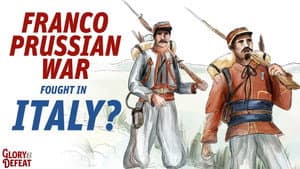
While the Franco-Prussian War was raging in France, another armed conflict to the south was reaching its conclusion. The unification of Italy was not yet complete in the eyes of Italian nationalists because Rome and the Papal State still held out. After the defeat at Rome, the Papal Zouaves went on to France to fight the Prussian.

The symbolic city of Strasbourg had been besieged since the early stages of the Franco-Prussian War. The German siege troops are ready to breach the walls of the city and take it by storm. To avoid the destruction of the city, French general Uhrich surrenders and chooses, in his view, honor above glory.

In early October 1870, the German states are still confident the Franco-Prussian War is as good as over. But two events might cross their plans: One of the leaders of the new French Republic, Leon Gambetta, escapes the Siege of Paris in a hot-air balloon to coordinate the French Armies outside of Paris. And in Ablis, French guerrilla fighters, the so called Franc-Tireurs, ambush a German patrol in their sleep - with swift German retribution.

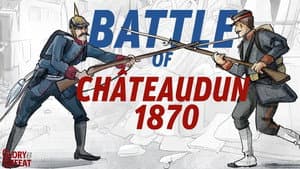
All across France French Armies have been raised from any available troops. From international volunteers to raw teenaged recruits. How these sub-par soldiers fair against professional German soldiers is not hard to guess and we can see how that goes in the first battles for Orléans.

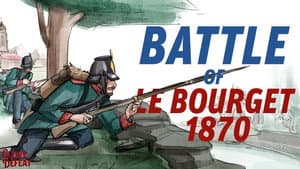
The French increasing reliance on franc-tireurs, guerrilla style fighters, is causing brutal German retaliation and a spiral of violence in the fall phase of the Franco-Prussian War.

Much of the remaining French hope to stem the tide against the German Armies comes from the more than 200.000 professional troops trapped in Metz since August. French Marshal Bazaine tries to negotiate with the German and even offers to march against the French republic. But to no avail.

The Siege of Paris during the Franco-Prussian War 1870 and the downfall of the French Empire after the Battle of Sedan created a volatile social situation in the French capital. And in November 1870 this situation erupted in an attempt to topple the provisional government and create a self-ruling Paris Commune.

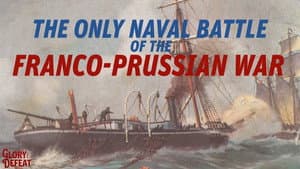
While the fighting on land continued during the Franco-Prussian War in November 1870, the bizarre and only naval battle of the war took place off the coast of Cuba when the German Meteor and the French Bouvet met in the port of Havana.

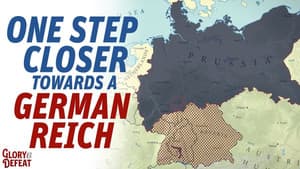
While the Franco-Prussian War is continuing its messy guerilla phase, the German leaders are negotiating towards a united Germany. Hesse and Baden join the promptly renamed German Confederation - but Württemberg and Bavaria still want more concessions. Meanwhile the question of Spanish succession that started the war is solved in Madrid.

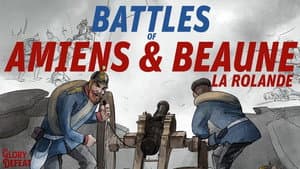
After a brief break in the fighting, the Franco-Prussian War continues in late November with the Battles of Amiens and Beaune-La-Rolande. Both sides are exhausted and the casualties are mounting. In the meantime Bismarck is trying to convince the German states of a new German Emperor.

The Siege of Paris has been going on for months in November 1870 and the population is starving. The French Army has previously tried and failed to break out but this week they are starting their biggest attempt yet - not knowing that it has been doomed from the start.

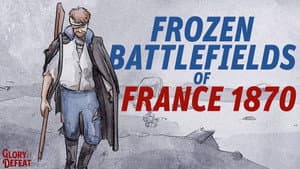
On the frozen battlefields of France, the exhausted German and French armies are still fighting. The Battle of Beaugency sees a desperate struggle in which soldiers on both sides suffer from broken uniform and the harsh winter conditions. Meanwhile, the Siege of Paris continues to starve the population of the French capital.

While the German delegations arrive in Versailles to set in motion the unification of the German states into a German Reich, the people in nearby Paris are starving and their army is still fighting in the countryside.

Christmas 1870 reminded the German and French alike that the Franco-Prussian War was going on for far too long. Soldiers and civilians on both sides tried to make the best of the situation but the grim nature of the last weeks of fighting and the ongoing Siege of Paris made this a memorable Christmas for all the wrong reason.

The new year 1871 is about to bring upon a new German Empire. German leadership, especially Bismarck, is exceedingly frustrated with the dragged out Franco-Prussian War that the Germans have all but won for months now. The decision is finally made to bombard Paris into submission and the German guns surrounding Paris open fire.
2026
The Soviet Invasion of Afghanistan was supposed to be a quick show of force to pacify the country and install a more Moscow-friendly leadership for the Afghan communist regime. But the 40th Army (officially "Limited Contingent of Soviet Troops in Afghanistan") soon found themselves embroiled in a counter insurgency which they weren't prepared for. The tactical successes and increasingly brutal methods against the guerilla mujahedeen tactics didn't win hearts and minds of the Afghan population, however.
On March 28, 1982 almost the entire Argentinian navy, carrying 900 troops, invades the Falkland Islands (Islas Malvinas). The ruling junta is confident Britain won't oppose the Argentinian fait accompli. But Britain's political will and military ability to carry out a successful campaign at the end of an 12,500 km supply line surprises many.
After the defeat in the 1st Sino-Japanese War, the Qing Dynasty is under pressure: Some are calling for domestic reforms and ousting Western influence, while the Great Powers want to further open up China for their businesses. Violence erupts when the so called Boxer
In March 2003, a US-led coalition invades Iraq. US President George W. Bush claims he must disarm Iraqi dictator Saddam Hussein of weapons of mass destruction and depose a brutal regime supporting global terror. But after a lightning capture of Baghdad and other Iraqi cities in the south, the war is far from over.
As the war in the Pacific develops, the United States takes the fight to Japan itself – by crippling its economy, destroying its industry, and crushing civilian morale. To do this, American submarines and heavy bombers wage campaigns beneath the sea and above the clouds. And even 80 years later, there’s a fierce debate about which of these campaigns did more to bring Japan to its knees – perhaps even more than the atomic bombs.
In February 1989, the last Soviet Combat troops leave Afghanistan after almost a decade of war. Despite military superiority, the super power was not able to establish a stable Moscow-friendly regime in the country. Yet, the mujahedeen are also deeply divided and influenced by outside forces such as Pakistan, Saudi Arabia, and Osama Bin Laden.
The War of 1812 broke out after a series of escalations between Great Britain and the still young United States. The impressment of American sailors into the Royal Navy desperate to crew their ships in the ongoing war against Napoleon, the question if the US could trade with Britain and France at the same time and thus profit of the war, all came to a head after failed negotiations.
After the Soviet withdrawal from Afghanistan, the various mujahedeen factions and Afghanistan's neighbours Pakistan, Iran and the USSR are still vying for control. With new weapons still streaming in, some factions are not willing to compromise to achieve their vision of peace and thus Afghanistan descents into civil war.
The 19th century is a time of violent global imperial competition. The Scramble for Africa and the Great Game between the Russian and British Empires over influence in Central Asia are among the best-known examples. But the 2nd half of the century also involved another Great Game – the Great Game for Asia.